

Street Food
Some of the best eating in Morocco happens standing up, at a counter no wider than a shelf, in a lane too narrow to appear on any map. Street food here is not a budget alternative to restaurant dining – it is a parallel food culture with its own rhythms, its own classics, and its own unwritten rules about what is good and what is not.
Understanding Moroccan street food means knowing more than a list of dishes. It means knowing when to eat them, which cities do them best, and how to spot the stalls where the food is genuinely worth stopping for. This guide covers the essentials – from the snacks that fuel a medina morning to the grills that define a Djemaa el-Fna evening.
Why Moroccan Street Food Deserves Serious Attention
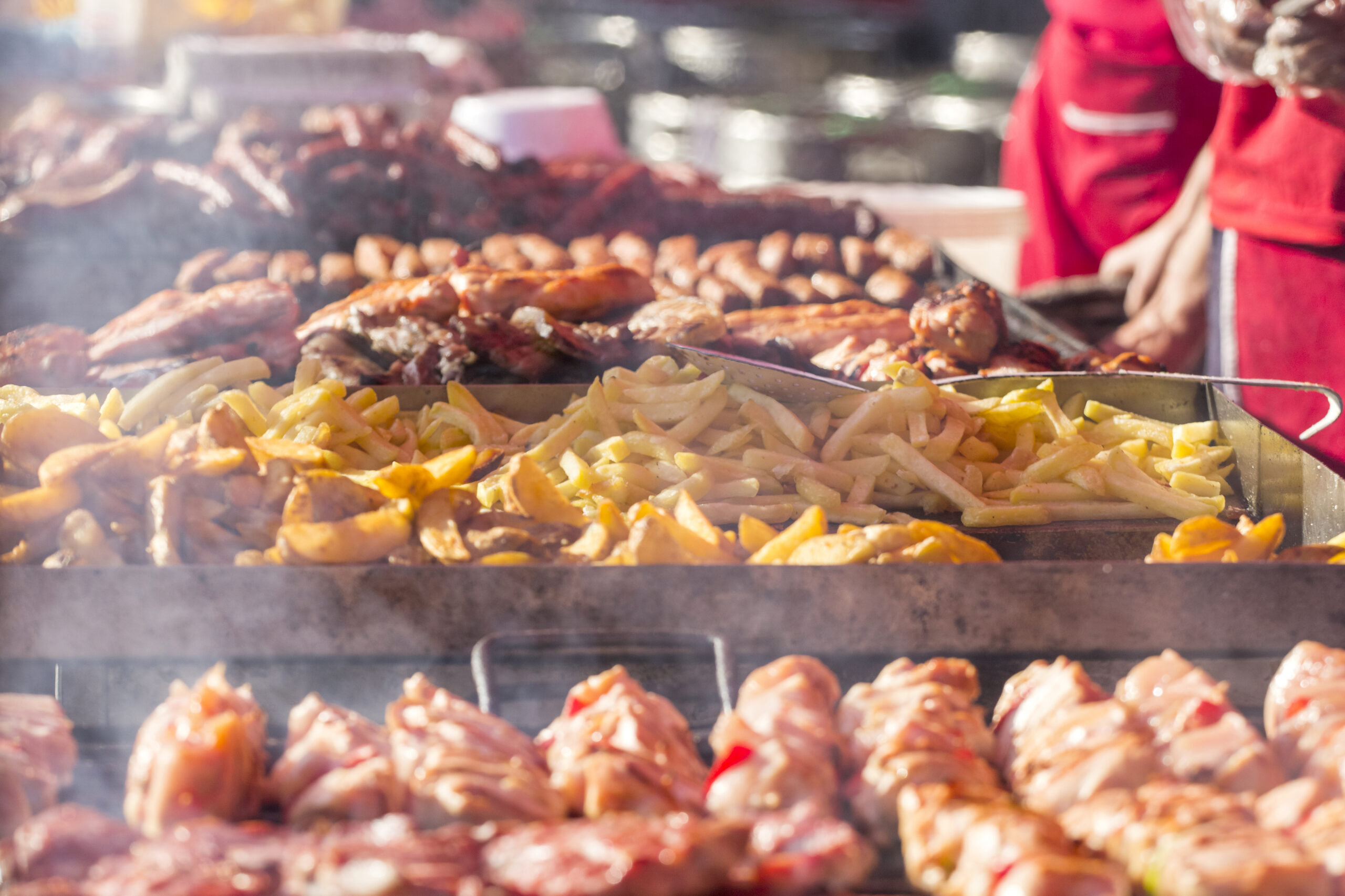
Street food in Morocco is not incidental. It is woven into the structure of daily life in a way that restaurant culture is not. Moroccans eat on the street at every hour – bissara at six in the morning, msemen with honey mid-morning, a sandwich of kefta at noon, a bowl of harira at sunset during Ramadan, grilled meats late into the night. Each of these moments has a place and a format, and understanding that structure makes navigating it far easier for a first-time visitor.
The medinas of Marrakech, Fez, Casablanca, and Tangier are the natural centers of this world, but smaller cities – Meknes, Chefchaouen, Rabat – have their own strong street food identities that reward exploration.
Bissara: Breakfast Before the City Wakes
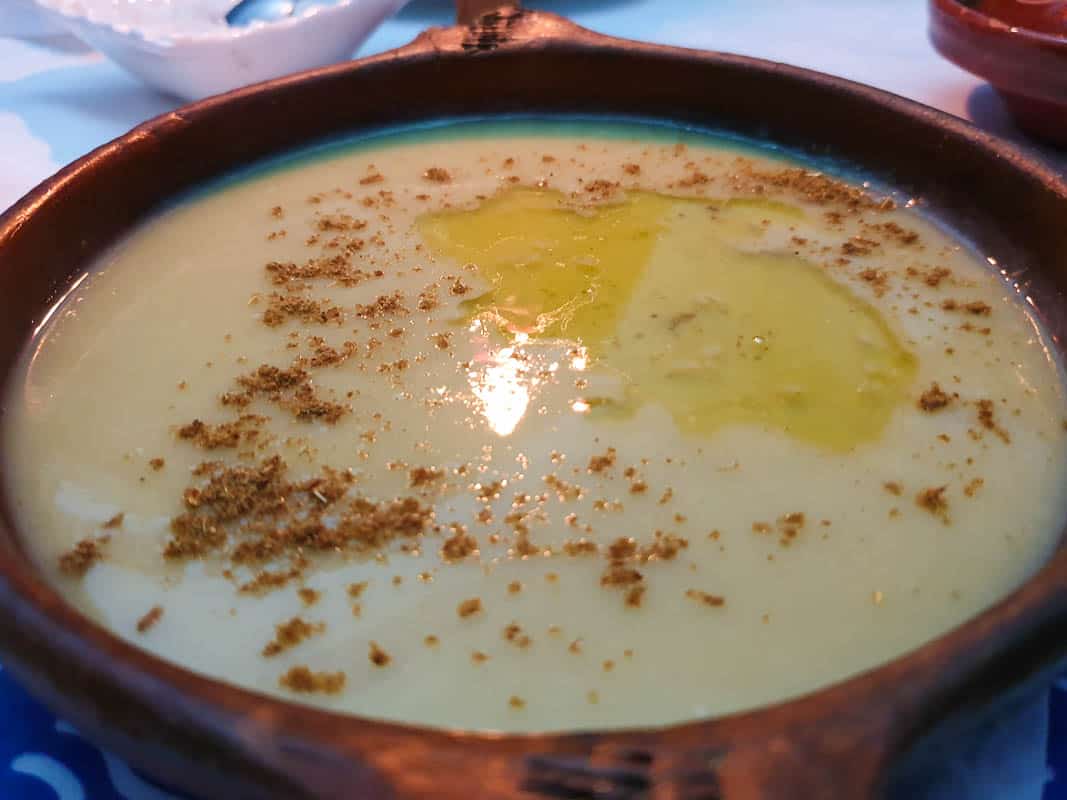
Bissara is a thick purée of dried fava beans or split peas, finished with a generous pour of olive oil and dusted with cumin, sweet paprika, and sometimes a pinch of chili. It is one of the oldest and most honest dishes in the Moroccan kitchen – cheap, filling, and deeply flavored in the way that only slow-cooked legumes can be.
It is eaten primarily in the morning, at small stalls that open before sunrise and often close by mid-morning once the pot is finished. In northern Morocco – particularly in Chefchaouen, Tangier, and Tetouan – bissara is a daily ritual. In Marrakech and Fez, it is less dominant but still findable in the older, less touristic parts of the medina.
The format is simple: a ceramic bowl, a piece of khobz (the round Moroccan flatbread), and nothing else needed. Eat it while it is hot, use the bread to scoop, and do not expect table service.
Msemen and Meloui: The Flatbreads That Run the Morning
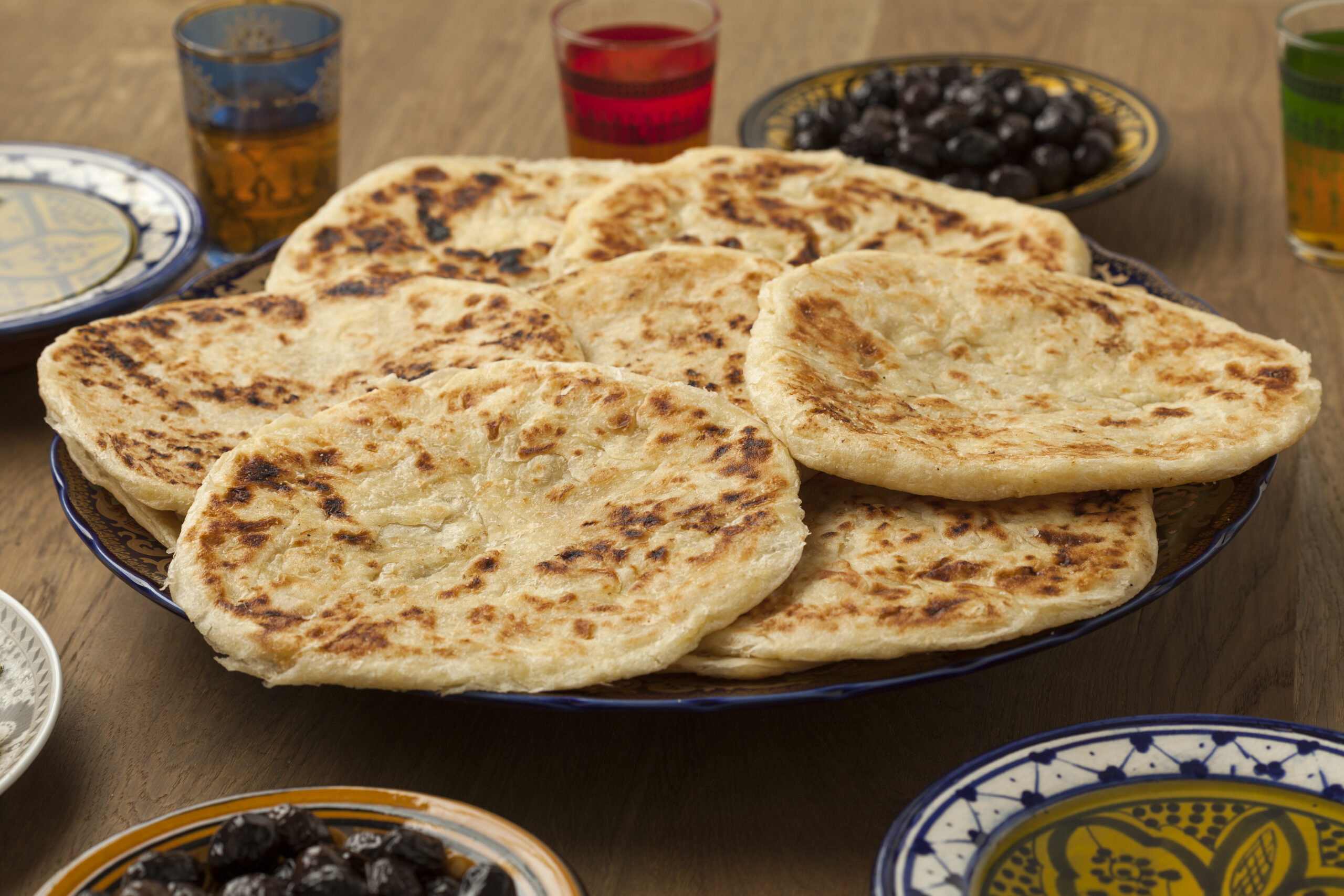
Msemen and meloui are the two great Moroccan street flatbreads, and they are worth distinguishing. Msemen is square and layered – a dough folded multiple times with butter and semolina, then pan-fried on a griddle until the exterior is golden and slightly crisp and the inside is soft and flaky. Meloui is the same principle applied in a coil: the dough is rolled into a spiral and cooked the same way, producing a slightly chewier, more uniform texture.
Both are eaten warm, typically with honey and fresh butter, argan oil, or amlou – a paste of ground almonds, argan oil, and honey that is one of the great undiscussed pleasures of the Moroccan table. At street stalls and small bakeries throughout the country, women cook them to order on flat iron griddles, and the smell of butter hitting hot dough is one of the more reliable sensory memories of a Morocco trip.
They are morning food, primarily – though in some medina cafés they appear throughout the day as a snack.
Kefta Sandwiches and Merguez: The Midday and Night Grill
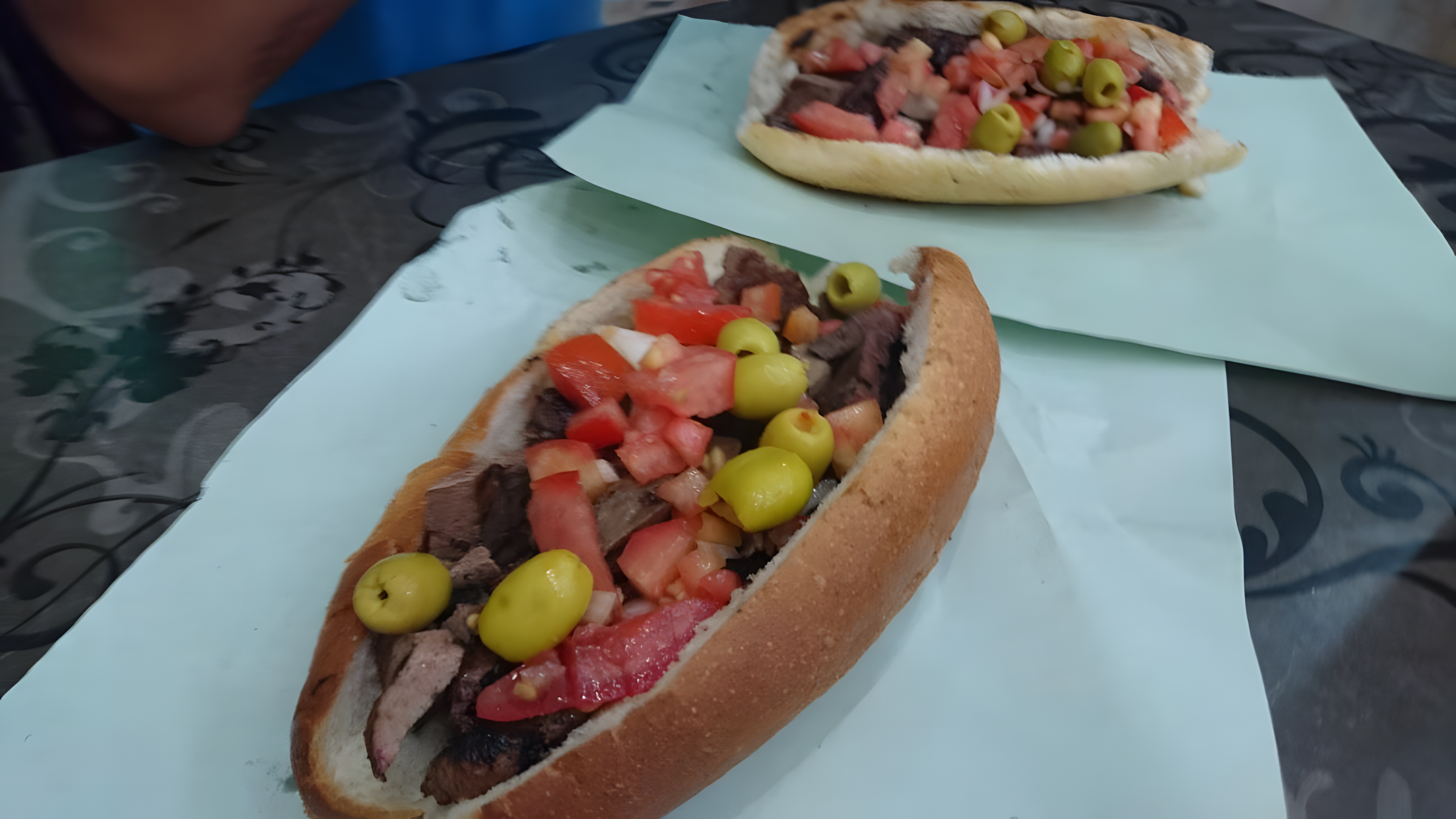
Kefta – spiced ground beef or lamb, shaped into elongated patties or skewers and grilled over charcoal – is one of the most universally present street foods in Morocco. The spicing is typically a blend of cumin, paprika, fresh coriander, onion, and sometimes cinnamon, producing a meat that is fragrant and mildly complex rather than simply seasoned.
At street stalls, kefta is served tucked into a piece of khobz or a half-baguette with tomato, raw onion, harissa, and sometimes a smear of processed cheese – the latter a local preference that surprises some visitors but works better than it has any right to.
Merguez – the thin, fiery lamb sausage with a North African character – appears at similar stalls, particularly in the evening. Grilled until the casing blisters and the fat renders, merguez in a bread roll with harissa is one of the more straightforward pleasures of a Moroccan street evening.
Both kefta and merguez are best eaten as close to the grill as possible. The difference between a freshly made kefta skewer and one that has been sitting is the difference between two entirely different experiences.
Roadside Butcher-and-Grill Stops and Charcoal-Cooked Tagines
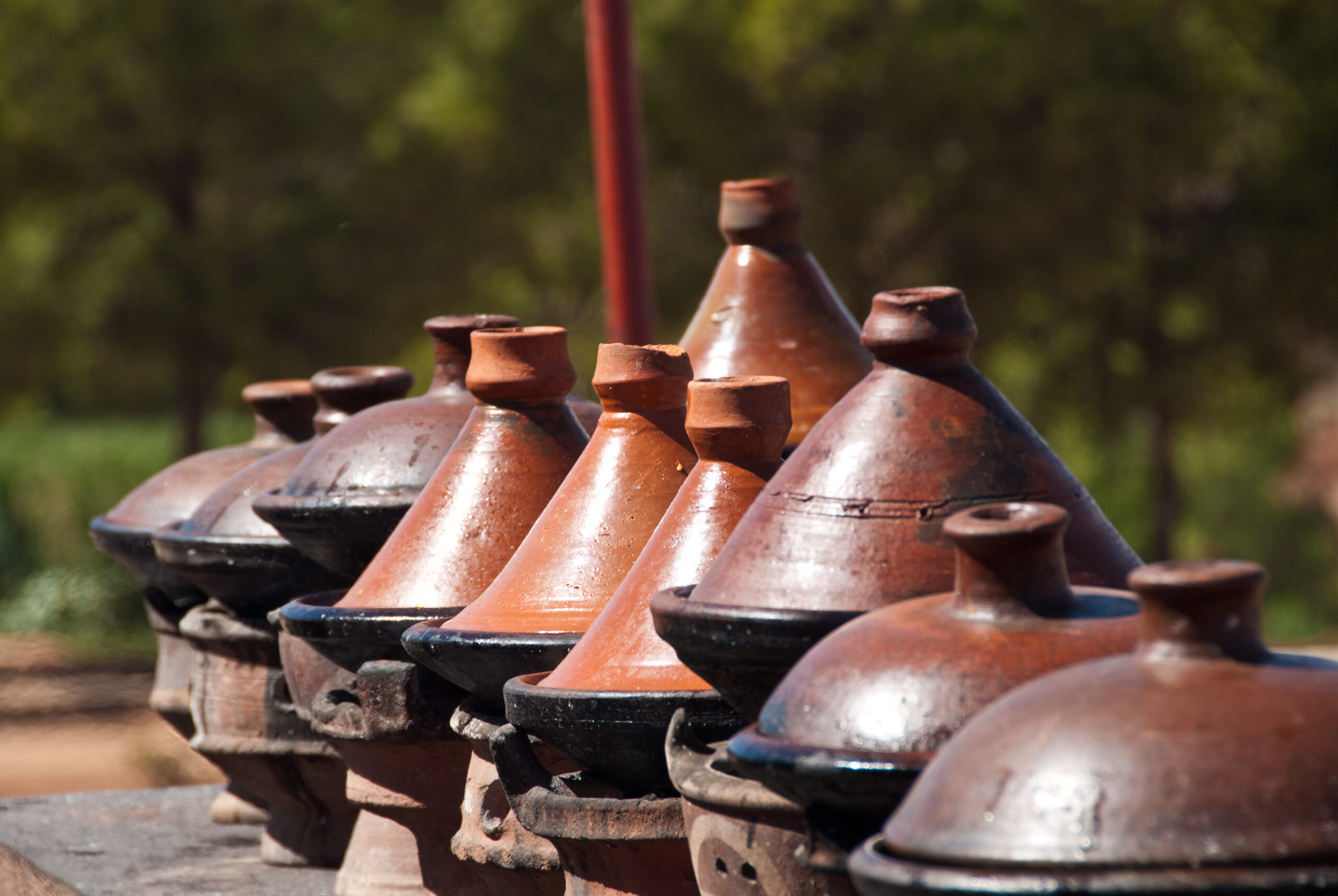
One of the most distinctly local food experiences in Morocco is the butcher-and-grill setup found in some neighborhoods, on the edges of cities, and very often at roadside service stations beyond the main urban centers.
The formula is simple and widely loved: you choose your meat at the butcher, then have it grilled over charcoal at the adjoining or nearby restaurant. In the same places, it is common to find tagines that have been cooking slowly over charcoal for hours.
The appeal is obvious – you see the product before it is cooked, the preparation is straightforward, the flavors are honest, and the whole experience is usually remarkably affordable. It is a very Moroccan kind of meal: practical, popular, and often far better than its modest setting suggests.
Plan your Morocco Trip with our Free Morocco Travel Maps
Ready-made itineraries for 3, 7, 10 and 14 days
Best spots by city, coast, desert & mountains
Handpicked hotels, riads & resorts
Restaurants, viewpoints & activities
Key neighborhoods & transport tips
Free access. Regular updates. No spam.
Snail Soup: The Medina Curiosity
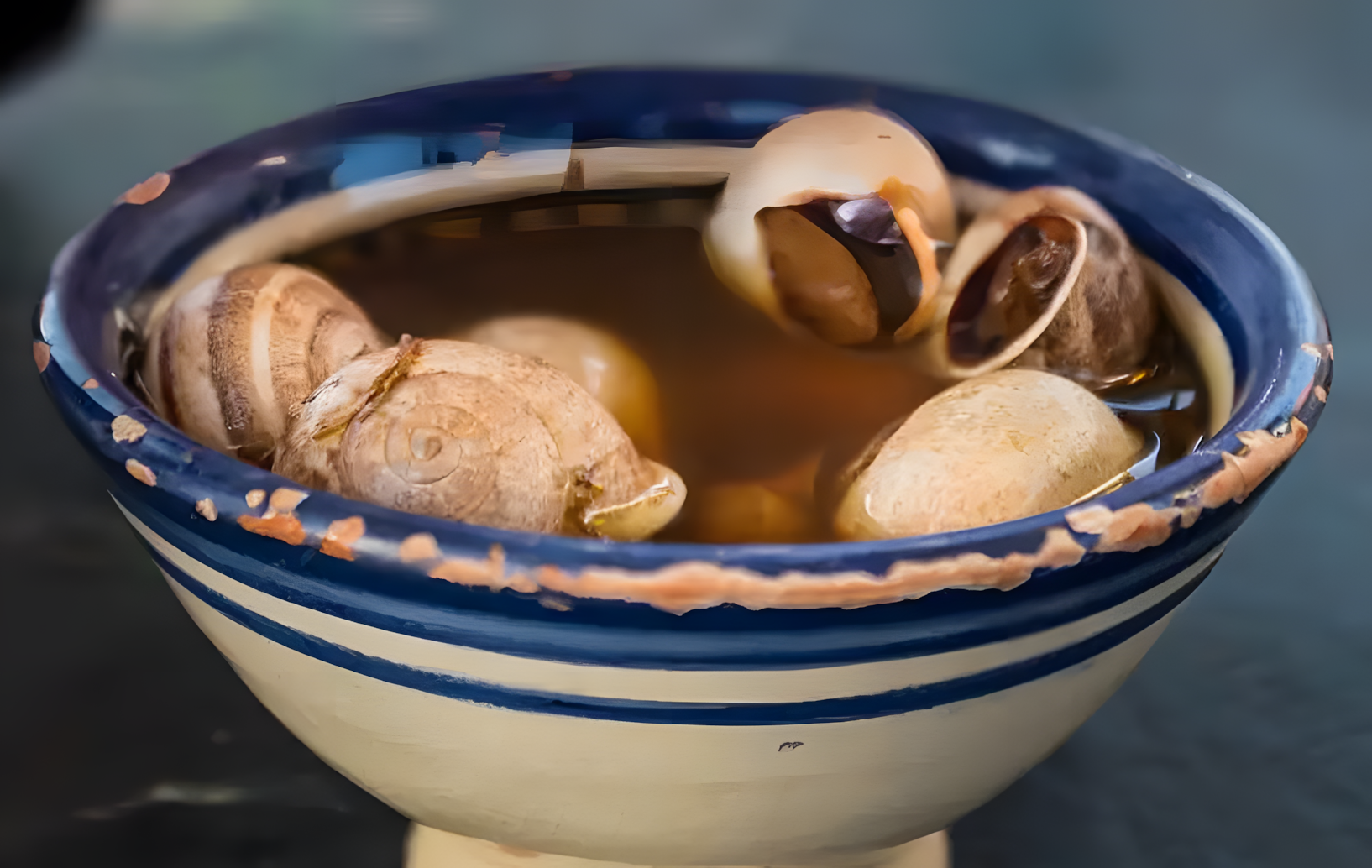
Babbouche – snail soup – is one of those street foods that surprises travelers and tends to produce either immediate enthusiasm or polite refusal. Large snails are simmered in a heavily spiced broth flavored with thyme, pennyroyal, licorice root, gum arabic, orange peel, and a range of herbs and spices that varies by vendor and defies precise replication.
The result is a dark, intensely aromatic broth in which the snails are served in their shells, extracted with a toothpick. The flavor is unlike anything in Western cooking – herbal, slightly medicinal, warming – and the experience of eating it at a street stall is distinctly Moroccan.
Snail soup stalls are most visible in Marrakech, particularly around Djemaa el-Fna, where they operate through the late afternoon and evening. It is worth trying at least once, and many people find themselves returning.
Maakouda: Potato Fritters Worth Knowing
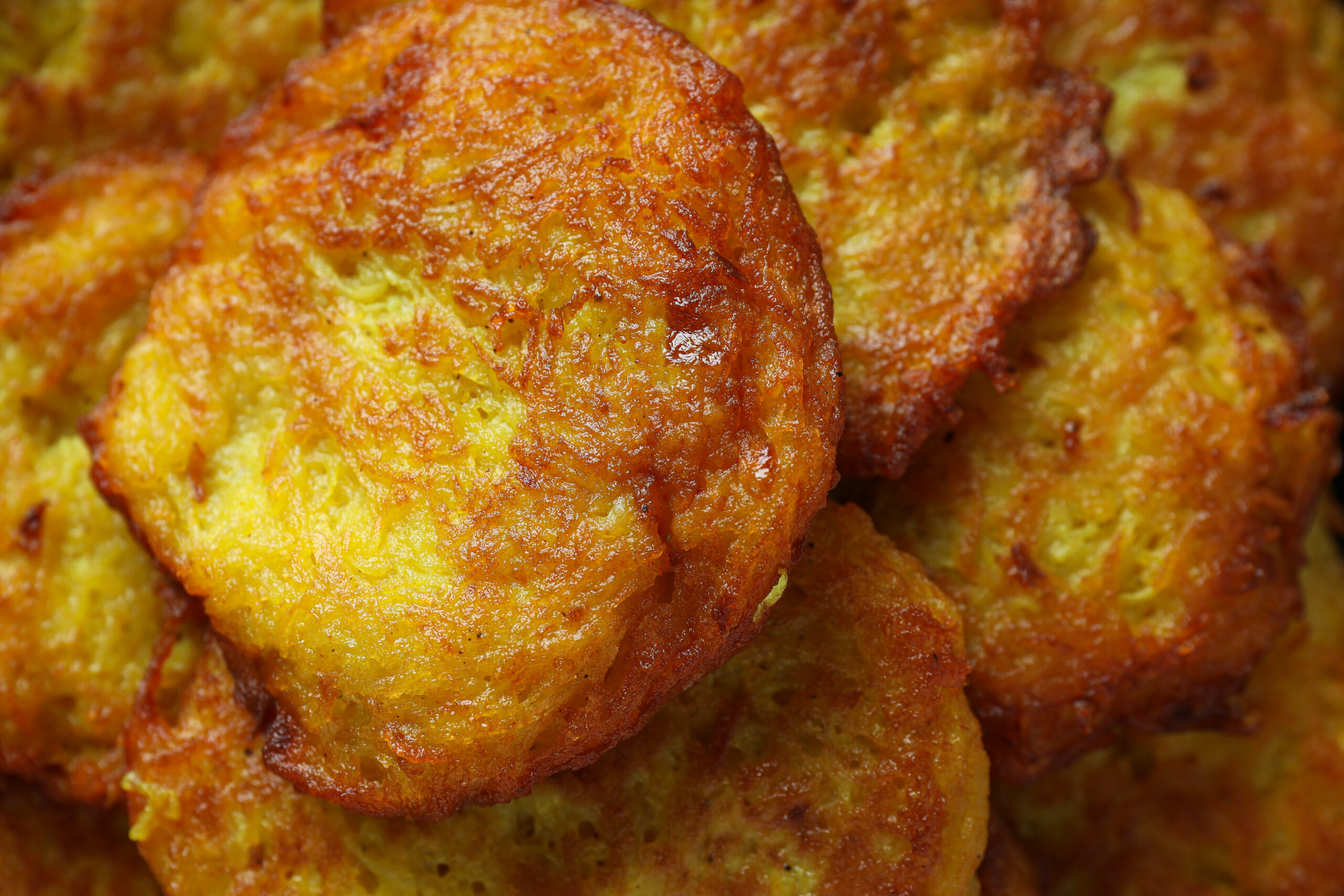
Makouda are small, pan-fried potato fritters – mashed potato seasoned with cumin, coriander, and parsley, formed into patties or balls and fried until the outside is golden and crisp. They are sold at street stalls and small counters, typically stuffed into a bread roll with harissa and olives or served on their own with a paper of salt.
They are humble food – starchy, simple, filling – but well-made makouda, seasoned properly and fried in clean oil, are quietly excellent. They are also among the more affordable things you can eat in any Moroccan medina, which partly explains their staying power.
Corn, Nuts, and Moving Vendors: The Background Texture
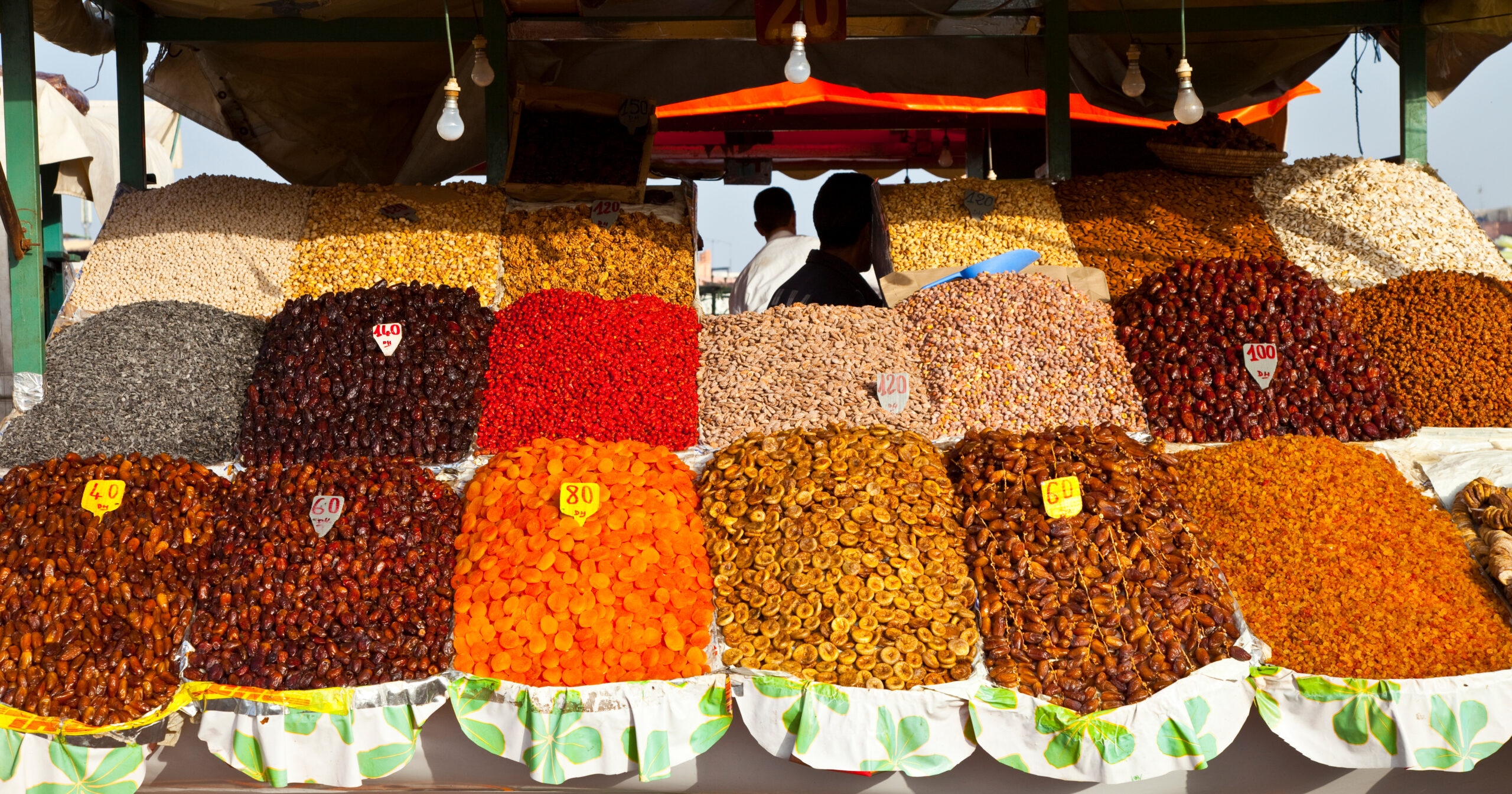
Not all Moroccan street food has a fixed address. Vendors with small carts or baskets sell roasted corn, seasoned chickpeas, boiled lupini beans, seasonal fruits, and mixed nuts throughout the medinas and along seaside promenades. These are not destination foods but they form part of the constant, unhurried rhythm of eating that characterizes Moroccan public life.
Roasted corn rubbed with salt and spice on a Casablanca beach, or a paper cone of warm chickpeas in a Fez alley, are the kind of small pleasures that do not photograph particularly well but anchor the sensory memory of being somewhere specific.
The Best Cities for Street Food in Morocco
- Marrakech is the most famous and, in terms of density and spectacle, the most impressive. Djemaa el-Fna square at night – with its rows of grills, snail soup vendors, orange juice stalls, and the general controlled chaos of several hundred people eating in the open air – is one of the great street food experiences anywhere in the world. It is also, inevitably, tourist-facing in parts. Eating in the streets of the medina away from the square produces a more local and more varied experience.
- Fez has a quieter but deeply authentic street food culture. The medina of Fez el-Bali is large enough and dense enough that tourist-oriented food represents a small fraction of what is actually available. Bissara stalls, msemen vendors, grilled kefta counters, and small harira shops operate as they have for generations, largely indifferent to the tourism economy surrounding them.
- Casablanca is less picturesque than either but has a street food culture shaped by its size and its working-class neighborhoods. The Marché Central area and the older quartiers of the city offer some of the most honest and unperformed street eating in Morocco.
- Tangier has a distinct character influenced by its position as a crossing point between Europe and Africa, and its street food reflects that – sandwiches, grills, and pastries that feel slightly different from those found further south, with a more Mediterranean edge in some preparations.
- Chefchaouen is small but punches above its weight for bissara and msemen, and the slowed-down pace of the city makes eating in its streets a particularly unhurried pleasure.
How to Eat Well on the Street in Morocco
- Follow the crowd, not the signs. The best street food stalls rarely advertise in English or display photographs of their food. The reliable signal is a cluster of locals eating, particularly working men and women at mid-morning or at the lunch hour. A stall with ten Moroccans eating in silence is almost always better than one with a handwritten English sign.
- Eat what is freshly made. This applies especially to fried food and grilled meat. Sfenj eaten cold, kefta that has been sitting on the grill for an hour, and makouda reheated from earlier in the day are all significantly worse than their freshly made equivalents. If you arrive and the stall is quiet, wait or come back.
- Respect the timing. Moroccan street food has a clock. Bissara and msemen are morning foods. Kefta and merguez peak at lunch and late evening. Harira appears in the late afternoon. Djemaa el-Fna’s full spectacle only assembles after dark. Showing up at the wrong time means missing the best version of what you came for.
- Hygiene as context, not concern. The hygiene standards of Moroccan street stalls vary – but high turnover, fresh ingredients, and food cooked to order in front of you are generally reliable indicators of a safe and well-run operation. The stalls that see the most local customers tend to be the most trustworthy. The stalls that see the most tourists tend to be the opposite.
- Carry small change. Street food transactions move quickly and stall vendors rarely have change for large bills. A pocket of small notes makes the interaction faster and more comfortable for everyone.
Note: Stall locations, hours, and specific vendors change frequently. Local recommendations from your riad or a trusted local contact are the most reliable current guide.
A Note on Djemaa el-Fna
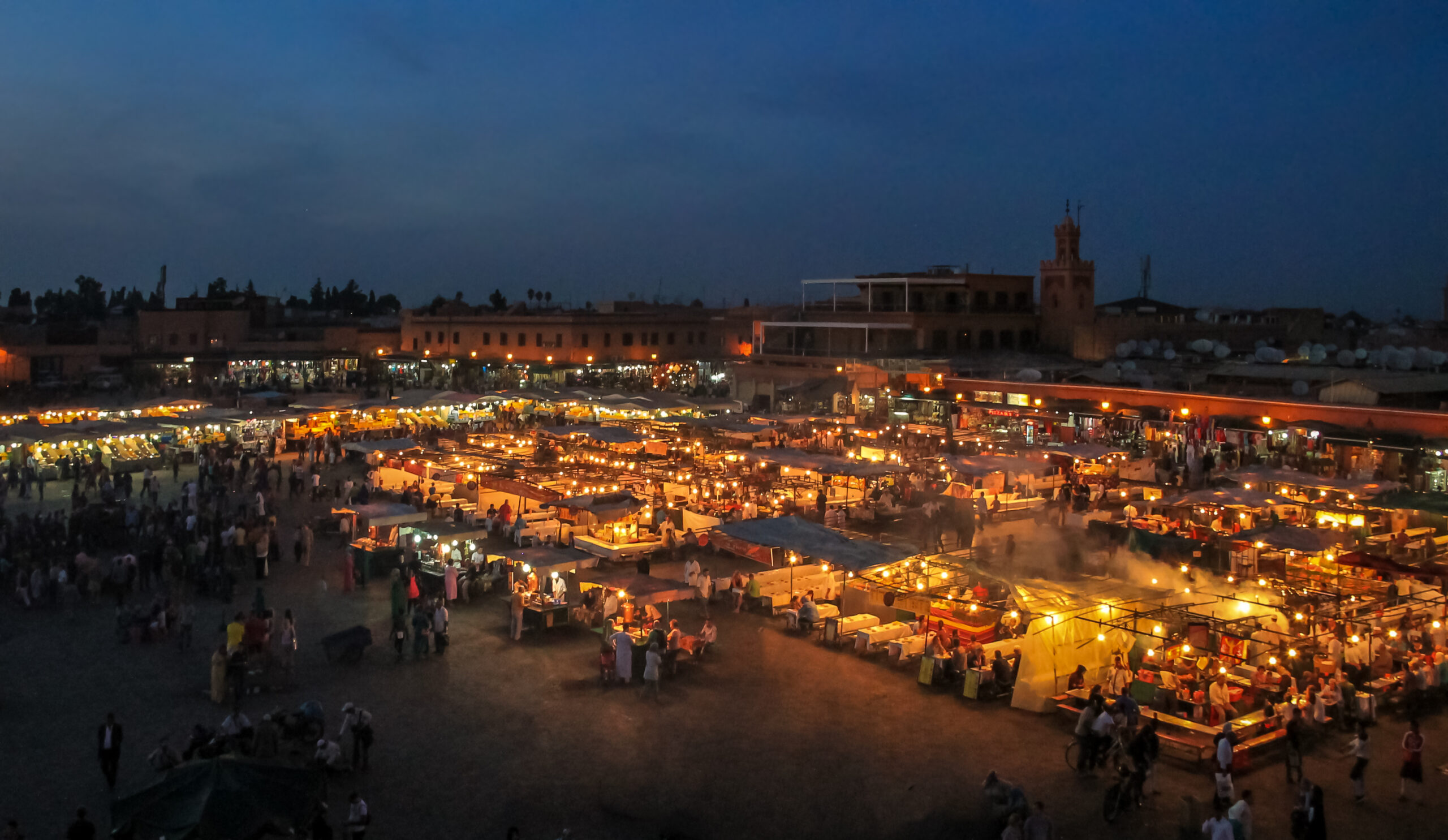
No guide to Moroccan street food can avoid Djemaa el-Fna, and none should try. The square in central Marrakech is, at night, one of the densest and most theatrical food environments in the world – rows of numbered stalls serving grilled meats, snails, sheep’s heads, fried fish, and bread, lit by bare bulbs and attended by vendors whose salesmanship ranges from charming to forceful.
The food is not always the best version of what it is. But the experience of eating there – surrounded by the noise, the smoke, the storytellers and musicians, and the general improbability of the whole thing – is something that belongs to Moroccan street food culture in a way that transcends the quality of any single dish. Go once, eat something, and treat it for what it is: one of the great public food spectacles on earth, not primarily a gastronomic destination.
The more serious street eating happens in the lanes of the medina surrounding the square, where the audience is local and the food has nothing to prove.
Page last updated: June 2026
Anything we can improve? Let us know
Plan Your Morocco Trip
Compare hotels, flights and rental cars
Compare hotels, riads and guesthouses across Morocco on Booking.com:
Compare flights to Morocco on Aviasales:
Find the right rental car for your Morocco trip with EconomyBookings: