
Before you go
Planning a trip to Morocco is relatively straightforward, but knowing a few essentials before departure can save you time, money and unnecessary stress. From entry requirements and what to pack to money, internet and local customs, this guide covers the key things to know before you go.
On this page:
Entry Requirements
Entry requirements for Morocco depend on your nationality, so it is important to check the latest official rules before you travel. Morocco also provides an official online portal, Acces Maroc, where eligible travelers can apply for and track an e-Visa or an AEVM (Electronic Travel Authorization to Morocco).
Tourist stays are generally limited to up to 90 days, depending on the traveler’s status and applicable entry rules. In some cases, an extension request may be made at the nearest police station for an additional stay.
To avoid problems on arrival, make sure your passport is valid for your trip and always verify the latest official requirements before departure.
Always check the latest official information before booking or traveling.
Best Time to Visit
Morocco is a year-round destination, but the best time to visit depends on the kind of trip you are planning.
Spring and autumn are usually the most comfortable seasons for first-time visitors. They are ideal for cities such as Marrakech, Fes and Casablanca, and they also work especially well for road trips and multi-stop itineraries.
Summer can be very hot inland, especially in Marrakech and other interior cities, while coastal destinations such as Essaouira, Agadir and Taghazout usually stay more manageable. Winter is often mild in many parts of the country, but nights can get cold in the desert, the mountains and even some cities.
If you are combining different regions in one trip, expect real contrasts. Morocco is the kind of place where the sun can feel hot even when the air is cold. A sunny beach afternoon, a cool medina evening and a freezing desert night can all happen within the same week.
What to Pack
Packing for Morocco is easy if you keep it practical. Comfortable walking shoes are essential, especially if you plan to spend time in medinas, where streets are often uneven and cars are not always an option. Lightweight clothing works well for most of the year, but layers are important because mornings and evenings can feel much cooler than afternoons.
If you are visiting the desert or the mountains, bring warmer clothes than you think you need. A light jacket or sweater is often useful even when daytime temperatures look pleasant. Sunscreen, sunglasses and a hat are also worth bringing, as the sun can be strong in many regions.
For women and men alike, clothing that feels respectful and reasonably modest is usually the easiest choice, especially outside beach areas and resorts.
Money, Cash and Cards
The local currency is the Moroccan dirham, usually written as MAD. Cash remains very important in Morocco, even though card payments are increasingly common in hotels, larger restaurants and modern shops.
In practice, you should expect to use cash for taxis, small cafes, souks, tips and many everyday purchases. Carrying some small bills is especially useful, since drivers and small vendors do not always have change.
ATMs are widely available in major cities and tourist areas, and withdrawing money locally is often the easiest option. Cards are accepted in many places, but not everywhere, so relying only on a credit card is not a clever move. Morocco is charming, but it does not revolve around your Visa card.
Internet and SIM Cards
Getting connected in Morocco is usually easy. Local SIM cards are widely available at airports, in city shops and through mobile operator stores, and mobile data is generally affordable.
For travelers whose phones support eSIM, setting up a plan before arrival can be one of the easiest options. It saves time, avoids the hassle of finding a SIM card after landing and gives you data access as soon as you arrive. You can compare Morocco eSIM options here.
Wi-Fi is common in hotels, riads, cafes and restaurants, but quality can vary. If you plan to move between cities or travel independently, mobile data is usually much more reliable for maps, bookings and day-to-day navigation.
Downloading offline maps is also recommended, especially if your itinerary includes smaller towns, mountain areas or road trips.
Health and Comfort
For most travelers, Morocco is an easy destination, but basic preparation still helps. Bring any essential medication with you, along with a few simple extras such as pain relief, hand sanitizer, tissues and something for stomach issues if you tend to be sensitive while traveling.
The sun can be strong, especially in spring and summer, so sunscreen and hydration matter more than many visitors expect. In busy cities and on long travel days, comfortable clothes and shoes make a real difference.
For longer stays, multi-city trips or more active itineraries, some travelers also prefer to arrange travel insurance before departure for extra peace of mind. You can compare travel insurance options here.
If you have a sensitive stomach, it is a good idea to ease into unfamiliar food rather than attacking everything on day one as if it were a personal challenge. Enjoy the cuisine, but let your digestive system join the trip gradually.
Quick Tips Before Departure
Before leaving for Morocco, it helps to keep a few basics in mind:
Check entry requirements for your nationality
Carry some cash as well as a bank card
Download offline maps
Pack comfortable shoes and layers
Buy a local SIM card or set up an eSIM
Confirm the exact location of your accommodation
Keep your itinerary realistic
Be polite, calm and firm when needed
Safety Basics
Morocco is generally a manageable destination for most travelers, including first-time visitors, but common sense still matters. In crowded areas, keep an eye on your phone, wallet and bag, especially in busy medinas, transport hubs and popular tourist spots.
You may occasionally come across persistent sellers, unofficial guides or people offering directions you did not ask for. A polite but firm no is usually enough. Confidence helps more than overexplaining.
For taxis, it is often wise to confirm the fare before the ride if there is no meter in use, and carrying small cash is helpful. As in any destination, use extra caution late at night and avoid flashing valuables unnecessarily.
Dress Code and Local Customs
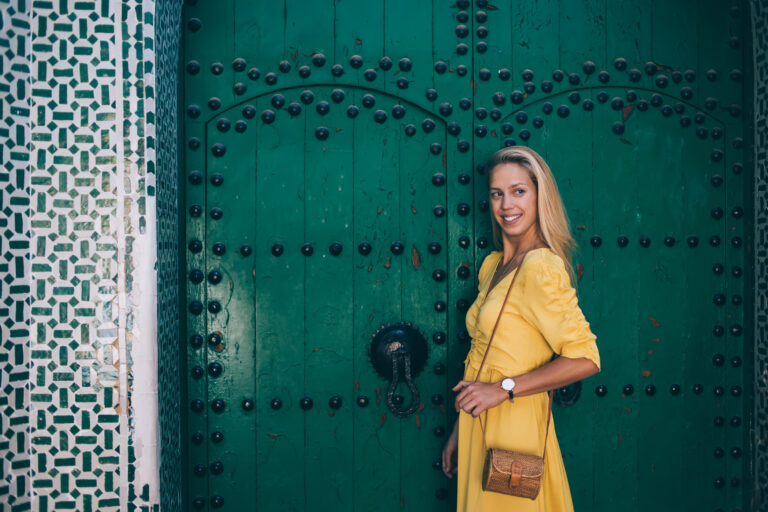
Morocco is open, welcoming and used to visitors, but it remains relatively conservative in many places. You do not need to dress formally, but modest and practical clothing is usually the easiest choice.
In major tourist areas, people are generally relaxed, but in traditional neighborhoods, rural areas and religious contexts, dressing with a bit more coverage tends to feel more respectful and more comfortable. For women, lightweight outfits that cover shoulders and knees can be a good option in many settings. For men, walking around shirtless outside beach zones is best avoided.
Politeness goes a long way in Morocco. Greeting people, being patient and showing basic respect for local customs usually leads to warmer interactions and a smoother trip.
Language
Arabic and Amazigh are the official languages of Morocco, while French is widely used in everyday life, especially in cities, shops, restaurants and transport. English is increasingly common in tourist areas, but it is not universal.
You do not need to speak Arabic or French to travel in Morocco, but learning a few simple words is always appreciated and can make daily interactions easier.
Useful words and phrases include:
Salam – Hello
Shukran – Thank you
La – No
Naam – Yes
Bslama – Goodbye
Even a small effort is usually well received.
Transport Basics
Getting around Morocco is easier than many first-time visitors expect. Trains are useful on major routes, buses connect much of the country, and private transfers or rental cars are often the best option for more remote areas.
Inside cities, walking is often the best way to explore medinas and historic centers, while taxis are commonly used for longer distances. Travel times can be longer than they look on a map, especially in mountain areas or on rural roads, so avoid building an itinerary that assumes teleportation.
If you are planning several stops, leave some breathing room between destinations. Morocco is much more enjoyable when you are not constantly rushing from one bus station to the next.
Booking Tips
If you are traveling during spring, autumn or major holiday periods, it is worth booking popular stays in advance, especially riads, boutique hotels and desert camps. The most attractive places often sell out earlier than standard hotels.
Always double-check the exact location of your accommodation before booking. Some properties are described as being in Marrakech, Fes or another city even when they are actually far outside the center. This may be fine for a resort stay, but much less fine if you planned to walk everywhere.
If your trip includes several destinations, it often makes sense to lock in your first nights, major transport legs and any desert or mountain excursions first, then keep the rest more flexible if needed.
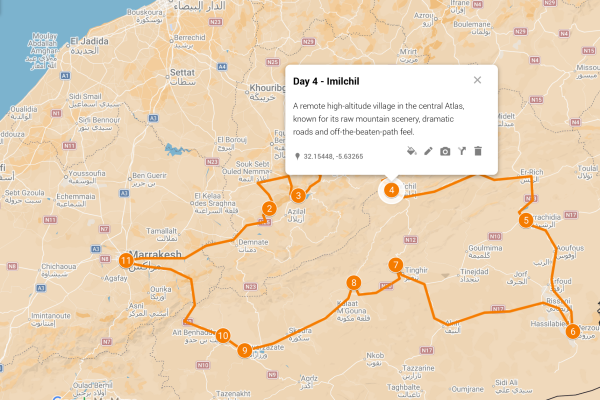
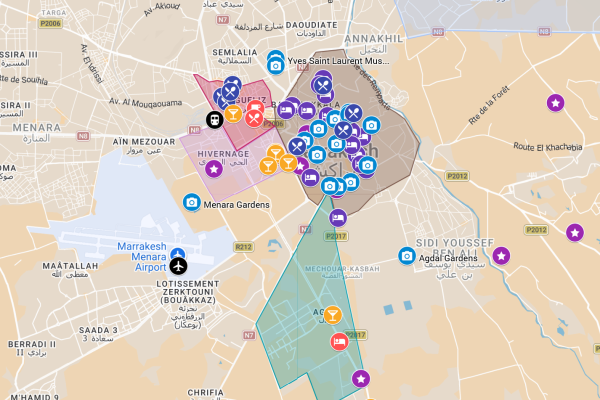
Plan your Morocco Trip with our Free Morocco Travel Maps
Ready-made itineraries for 3, 7, 10 and 14 days
Best spots by city, coast, desert & mountains
Handpicked hotels, riads & resorts
Restaurants, viewpoints & activities
Key neighborhoods & transport tips
Free access. Regular updates. No spam.
Links & Ressources
Official website with information on all kinds of visa for people from all countries of the world.
Official website
Moroccan airports official website
Emergency Numbers
If you need urgent help during your trip, these are the main numbers to know in Morocco:
- Police: 19 or 190 from mobile phones
- Medical emergency: 141
- Royal Gendarmerie: 177
For destination-specific assistance, your hotel or riad can also help you contact the nearest police station or local tourist police office.
Page last updated: June 2026
Anything we can improve? Let us know
Plan Your Morocco Trip
Compare hotels, flights and rental cars
Compare hotels, riads and guesthouses across Morocco on Booking.com:
Compare flights to Morocco on Aviasales:
Find the right rental car for your Morocco trip with EconomyBookings: