

Transportation
Getting around Morocco is easier than many first-time visitors expect. Trains work well between the main northern cities, buses cover most places the rail network does not reach, and taxis or private transfers fill the smaller gaps. If you want to explore the desert, mountain roads, kasbahs or remote valleys, renting a car can make a big difference.
The real question is not “how do I move around Morocco?” but “which option makes sense for my route?” A train is usually best between major cities. A bus is often the easiest choice for places like Essaouira or Chefchaouen. And for a multi-day southern loop through Ouarzazate, Dades, Todra or Merzouga, a rental car or private driver is often the smarter move.
On this page:
Quick Overview
For most travelers, Morocco is easiest to navigate with a mix of transport rather than one single option.
The train is the best choice for the main city corridor linking Casablanca, Rabat, Tangier, Fes and Marrakech. For destinations outside the rail network, long-distance buses are usually the simplest option. If your trip is focused on southern Morocco, public transport becomes less efficient and a rental car or private driver starts to make much more sense.
The short version:
- Use the train for Casablanca, Rabat, Tangier, Fes and Marrakech.
- Use buses for places trains do not reach.
- Use petit taxis or ride-hailing inside cities.
- Use a rental car or private driver for desert and mountain road trips.
- Check domestic flights only for longer jumps where saving time matters.
Trains
Morocco’s train system is one of the easiest ways to travel between the country’s main urban centers. If your trip is focused on major cities, the train is usually the cleanest and least stressful option.
For most visitors, trains are the best option for:
- Casablanca
- Rabat
- Tangier
- Fes
- Marrakech
They are usually the easiest way to move between major cities if you do not want to deal with driving, parking or intercity bus stations.
Best for: first-time visitors, city-focused itineraries, predictable travel
Not ideal for: Essaouira, Chefchaouen, Ouarzazate, Dades, Todra or Merzouga
High-Speed Train
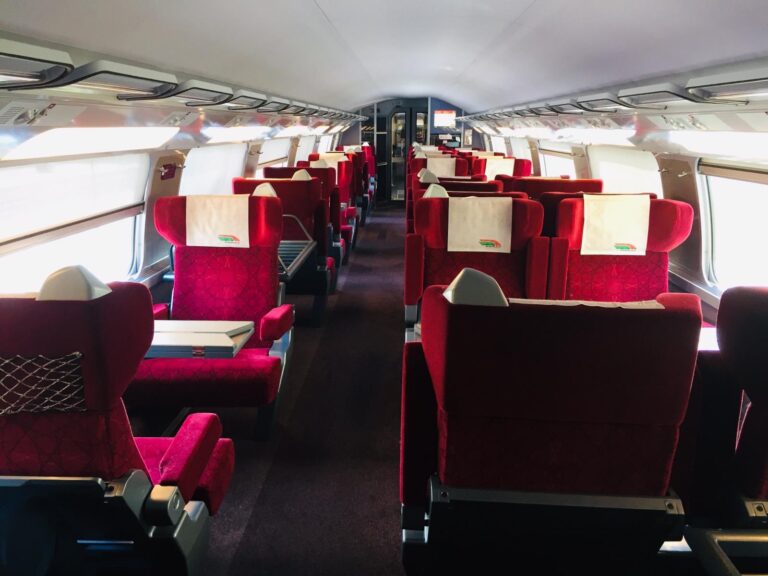
Al Boraq is Morocco’s high-speed train. It links Casablanca and Tangier via Rabat Agdal and Kenitra. It does not serve Marrakech.
So if your itinerary includes Casablanca and Tangier, or Rabat and Tangier, this is usually the obvious choice. If your trip includes Marrakech, you are back on the conventional rail network.
Long-Distance Buses
For places that the train does not reach, buses are often the most practical option. The two most useful national operators are CTM and Supratours.
Buses are usually a good option for:
- Marrakech to Essaouira
- Fes to Chefchaouen
- Tangier to Chefchaouen
- Marrakech to Agadir
- many routes outside the train map
For many first-time visitors, buses are easier than shared taxis because the process is more predictable. Fixed departure, assigned seat, clearer luggage handling, and better-known drop-off points usually make things simpler.
Domestic Flights
Domestic flights can make sense on longer routes or when your itinerary is tight. In Morocco, Royal Air Maroc is the main airline to consider for domestic travel, with flights linking several major cities and regional destinations across the country. For longer distances or more remote parts of Morocco, flying can save a significant amount of time compared with road travel.
That said, flights are not always the best first option. For classic city combinations such as Tangier, Rabat, Casablanca, Fes and Marrakech, trains are often easier once you factor in airport transfers and check-in time. Domestic flights become more relevant when you are connecting distant regions or trying to fit a longer route into a shorter stay.
If you want to compare schedules and fares across available options, you can check domestic flights here.
If your flight is delayed, canceled or disrupted, you can also check your passenger rights and compensation options here.
Taxis
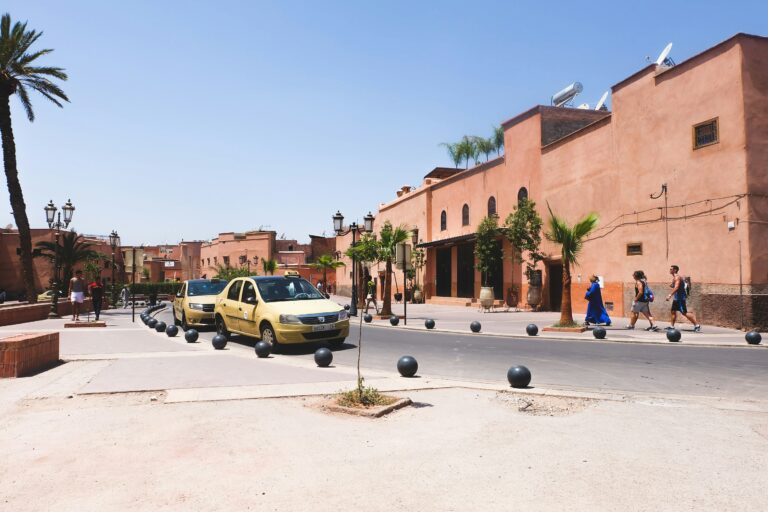
Taxis are a normal part of everyday travel in Morocco. For shorter urban trips, they are often the easiest way to move around when walking is not practical. For intercity or regional trips, larger shared taxis may also be used depending on the route. The Moroccan tourism board lists taxis as one of the country’s main transport options, especially for local mobility.
As a traveler, the key is simple: confirm the fare if needed, carry small cash, and keep expectations realistic during busy hours. Taxis are useful, but they are not always the most relaxed way to cross a city in heavy traffic. In medinas and compact historic centers, walking is often still the better choice for the final stretch.
Quick Tips for Getting Around
- Use trains for the main city corridor whenever possible.
- Use buses for destinations outside the rail network.
- Do not rent a car just to visit the major cities.
- A rental car makes far more sense in the south than in the north.
- Avoid long rural drives after dark.
- Check schedules and booking options directly with the operator.
- Keep airport transfers for moments where convenience really matters.
- For a first trip, simpler is usually better than ultra-cheap.
Ride-Hailing Apps
In some major Moroccan cities, ride-hailing apps can be a practical alternative to regular taxis. Apps such as inDrive, Careem and, in some cities, Uber can be useful if you want to avoid fare discussions, request a pickup through the app and get a clearer idea of the price before the ride.
Availability can vary by city and may change over time, so it is best to check locally before relying on a specific service. In general, these apps are more relevant in larger cities than in smaller towns or rural areas.
For many visitors, the best approach is simple: walk in medinas, use regular taxis for short trips, and use ride-hailing apps when available for longer or more convenient city rides.
Traveling by Motorcycle or Van
Morocco can be a rewarding destination for travelers exploring by motorcycle or van, especially if you want more freedom and plan to go beyond the main city circuit. Coastal roads, mountain routes, desert approaches and smaller towns can all be easier to enjoy with your own vehicle and a flexible schedule.
That said, this kind of trip works best for travelers who are comfortable with longer distances, variable road conditions and a more independent style of travel. In larger cities and dense medinas, parking and access can be more complicated, so motorcycles and vans are usually better suited to regional exploration than city-based travel. If your goal is to discover landscapes, scenic drives and less-visited parts of the country, they can be a strong option. If your trip is mainly focused on major cities, trains and taxis are usually the easier choice.
Renting a Car and Driving
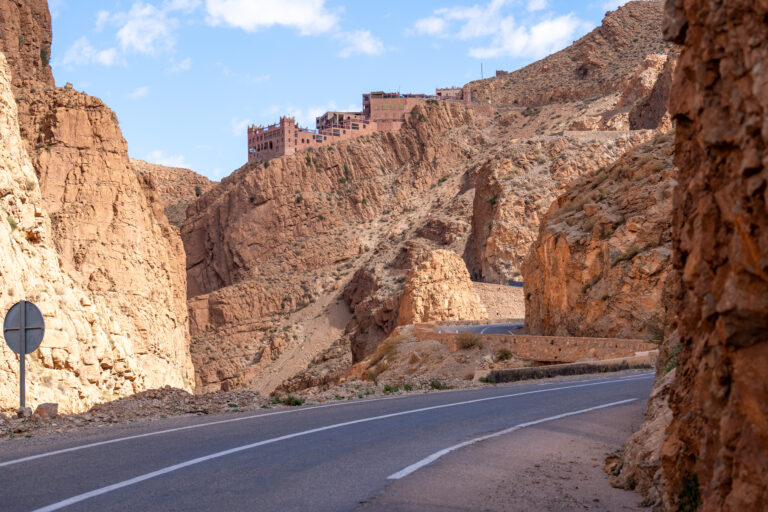
If your trip is mostly big cities, you probably do not need a car. But if you are planning a proper road trip through southern Morocco, renting one can transform the trip.
A car makes the most sense for routes involving:
- Ait Benhaddou
- Ouarzazate
- Dades Valley
- Todra Gorge
- Merzouga
- smaller valleys, kasbahs and mountain roads
Public transport becomes much less efficient on these routes, especially if you want flexibility and scenic stops.
-The honest trade-off
Driving in Morocco is not equally difficult everywhere.
Outside the big cities, many travelers find it fairly manageable and often enjoyable. The stress is usually concentrated in urban driving, especially when leaving or entering Marrakech or Casablanca. The city is the white-knuckle part, not the open road.
-Insurance and rental logic
This is where a lot of travelers make mistakes. The recurring concerns are always the same:
- full insurance or not
- deposit or excess
- contract language
- where pickup happens
- whether one-way drop-off is possible
The practical takeaway is simple: do not optimize only for the lowest daily rate. Optimize for clarity, coverage and a sane pickup process.
-Driving after dark
One of the most important driving rules in Morocco is to avoid long rural journeys after dark whenever possible. Road lighting can be limited, surfaces can vary, and you may encounter pedestrians, bikes, animals or unmarked obstacles much later than expected.
Short urban or well-lit peri-urban trips are a different matter, but for rural roads the safest rule is simple: arrive before dark whenever possible.
-Scenic driving in the south
Southern Morocco is one of the best parts of the country for a road trip. Routes through the Dades area, Todra Gorge and the wider mountain-desert region can be spectacular, especially if you want the freedom to stop for viewpoints, villages or lunch whenever you want.
Private and Airport Transfers
Private transfers can be a convenient option for travelers who want a more direct, comfortable and predictable journey. They are especially useful for airport pickups, day trips or routes that are not well served by rail.
This option usually costs more than buses, shared taxis or regular local transport, but it can save time and reduce stress, especially for first-time visitors, families, small groups or travelers with a lot of luggage. It is also one of the easiest ways to reach a riad, hotel or resort after arrival, particularly if you land late or do not want to deal with transport immediately after your flight.
For some routes, private transfers are not just a comfort upgrade – they are simply the most practical solution. This is often the case for airport arrivals, desert departures, mountain areas or destinations where public transport is limited or less convenient. If you want to compare private and airport transfer options in Morocco, you can check available routes here.
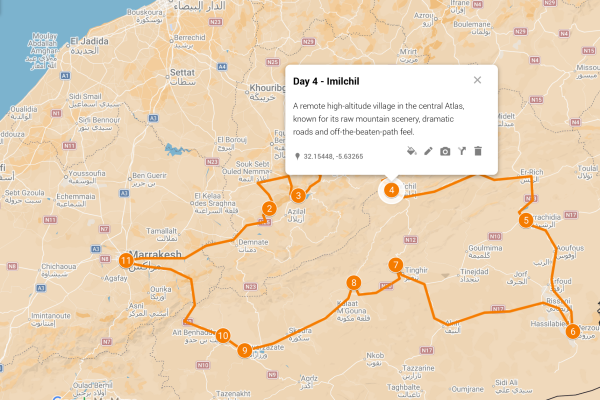
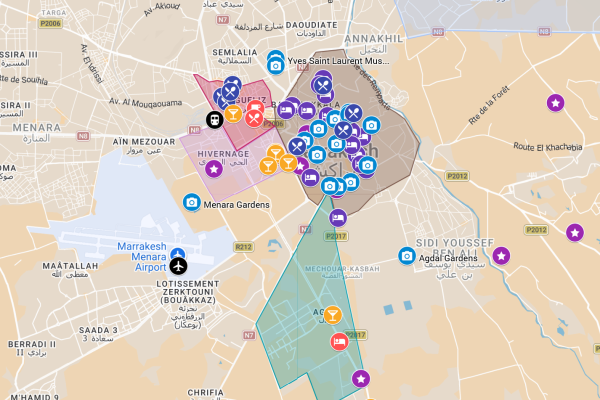
Plan your Morocco Trip with our Free Morocco Travel Maps
Ready-made itineraries for 3, 7, 10 and 14 days
Best spots by city, coast, desert & mountains
Handpicked hotels, riads & resorts
Restaurants, viewpoints & activities
Key neighborhoods & transport tips
Free access. Regular updates. No spam.
Emergency Numbers
If you need urgent help during your trip, these are the main numbers to know in Morocco:
- Police: 19 or 190 from mobile phones
- Medical emergency: 141
- Royal Gendarmerie: 177
For destination-specific assistance, your hotel or riad can also help you contact the nearest police station or local tourist police office.
FAQ
What is the best way to get around Morocco?
It depends on the route. For the main city corridor, trains are usually best. For places outside the rail network, buses are often the easiest option. For southern road trips, a rental car or private driver is usually more practical.
Do I need a car in Morocco?
Not for a city-focused itinerary. Yes, potentially, for southern Morocco and routes where you want flexibility.
Is it safe to drive in Morocco?
In general, yes, but driving is much easier outside big cities than inside them. The main recurring warning is not daytime driving itself, but long rural drives after dark.
Is the high-speed train available in Marrakech?
Not yet, it’s planned by 2030 . Al Boraq currently serves Casablanca, Rabat Agdal, Kenitra and Tangier. Marrakech is on the conventional rail network.
Are buses in Morocco good for first-time visitors?
Usually yes. For many non-rail routes, buses are the simplest and most predictable choice, especially compared with shared taxis
What is the easiest way to get from Marrakech to Essaouira?
For most travelers, the bus is the simplest answer. It is straightforward, comfortable enough, and easy to understand.
How do I get to the desert in Morocco?
There is no train to Merzouga. If you want the most freedom, rent a car or use a private driver. If you are trying to do it with public transport, expect a slower and less flexible experience.
Are domestic flights worth it inside Morocco?
Sometimes, especially for long jumps or tight itineraries. For many classic routes, train or bus is still simpler overall once airport time is factored in.
Page last updated: June 2026
Anything we can improve? Let us know
Plan Your Morocco Trip
Compare hotels, flights and rental cars
Compare hotels, riads and guesthouses across Morocco on Booking.com:
Compare flights to Morocco on Aviasales:
Find the right rental car for your Morocco trip with EconomyBookings: