

Stories >
A Beginner’s Guide to Moroccan Architecture
How to read Morocco’s hidden courtyards, carved details, and quiet architectural logic.
May 1, 2026
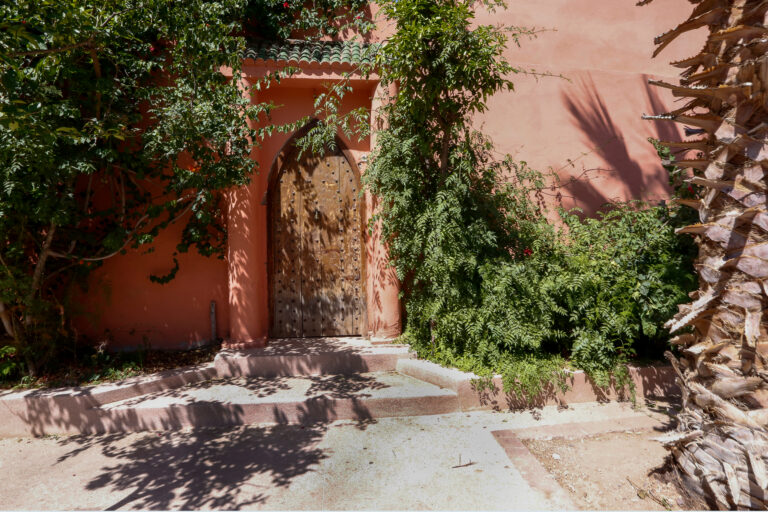
The door is almost always the giveaway.
Somewhere in the medina – Fez, Marrakech, Meknes, it doesn’t really matter – you will pass a wall that offers almost nothing to the eye. Plain plaster, worn to the colour of old bone. A narrow lane. A few shadows. Then, set into it: a door. Carved cedar, studded with iron, framed by a horseshoe arch or a line of tilework.
It is often the only clue that something remarkable waits on the other side.
That tension – austere exterior, extraordinary interior – is one of the defining pleasures of Moroccan architecture. Once you understand it, you stop looking only for monuments. You start paying attention to thresholds.
This guide is for anyone approaching Moroccan architecture for the first time: curious travellers, design lovers, first-time visitors who want to see more than the obvious. No academic detour. Just what to look for, where to find it, and why it matters.
The Logic of Looking Inward
Unlike many European city buildings, where the facade often does much of the talking, traditional Moroccan architecture tends to save its drama for the inside. Old Moroccan homes – and by extension, palaces, madrasas, fondouks, and even some commercial buildings – often turn their backs on the public world. Exterior walls are deliberately discreet, sometimes almost blank at street level. Inside, those same buildings open onto courtyards filled with light, water, greenery, carved plaster, tilework, and wood.
This is not just an aesthetic choice. It is practical, social, and climatic. The courtyard house helps manage privacy, shade, ventilation, and temperature, especially in dense urban settings and hot climates. Recent architectural research on Moroccan courtyard houses describes them as shaped by environmental, social, and cultural factors rather than by decoration alone. The outside world stays outside. In return, the building creates a private universe.
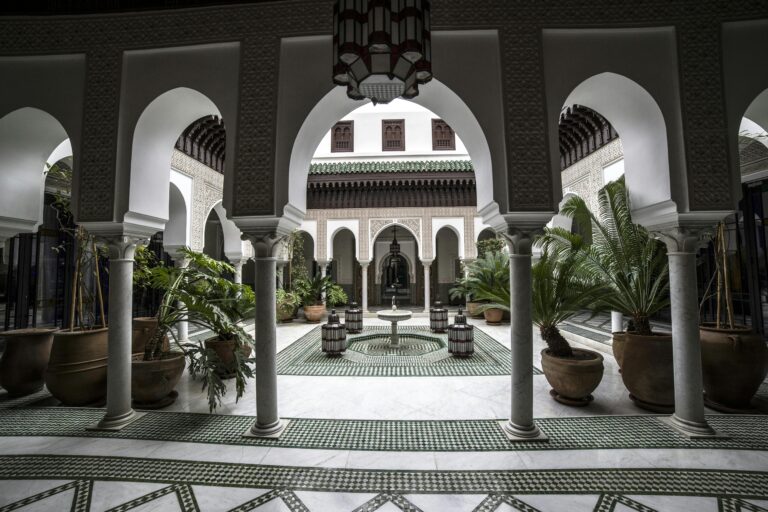
A riad is the clearest example. The word comes from the Arabic root associated with gardens, and traditionally refers to a house organized around an interior garden or courtyard. In its classic form, the garden is often arranged around a central axis or fountain, with rooms opening inward rather than outward.
A dar is a simpler cousin: also a traditional courtyard house, but usually smaller, less garden-like, and less ornate. In today’s guesthouse market, the words are often blurred. Plenty of places marketed as riads are technically closer to dars.
For travellers, the distinction matters less than the experience. Step through the door, let your eyes adjust, and look up.
The Vocabulary of the Street
Understanding a few key terms completely changes the way you move through Moroccan cities.
Medina
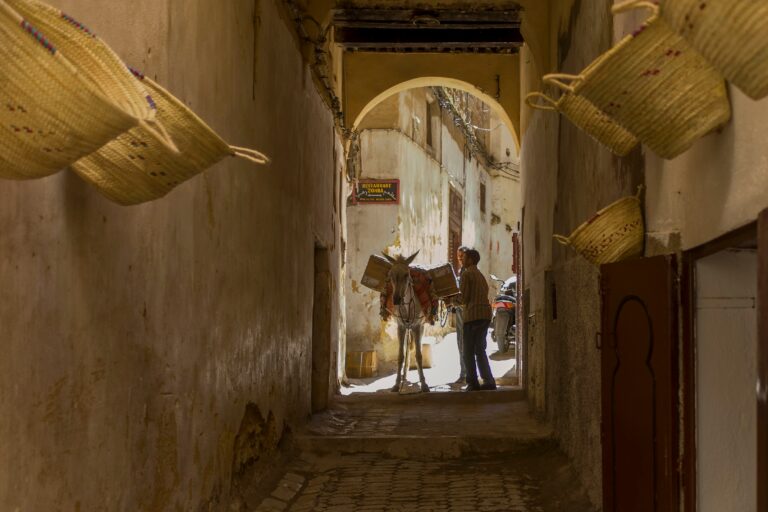
A medina is the old city, usually enclosed by walls and built around a dense network of homes, markets, mosques, workshops, hammams, fountains, and narrow lanes. The medina is not “chaos”. It is an urban system designed before cars, built for shade, privacy, walking, donkeys, craft production, and neighbourhood life. In Fez, UNESCO describes the medina as a historic urban fabric where madrasas, fondouks, palaces, residences, mosques, and fountains preserve the city’s medieval character, particularly from its Marinid peak in the 13th and 14th centuries. A good medina reveals itself gradually. The main souks are loud and public. The residential lanes become quieter. The best doors rarely announce themselves.
Riad
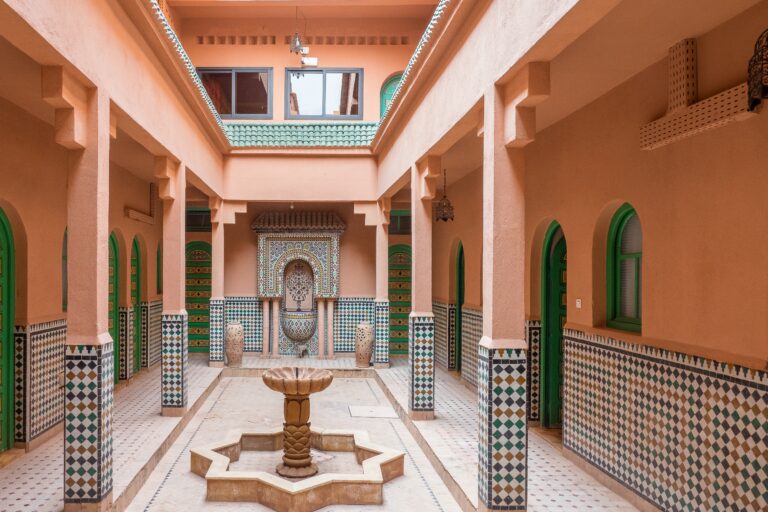
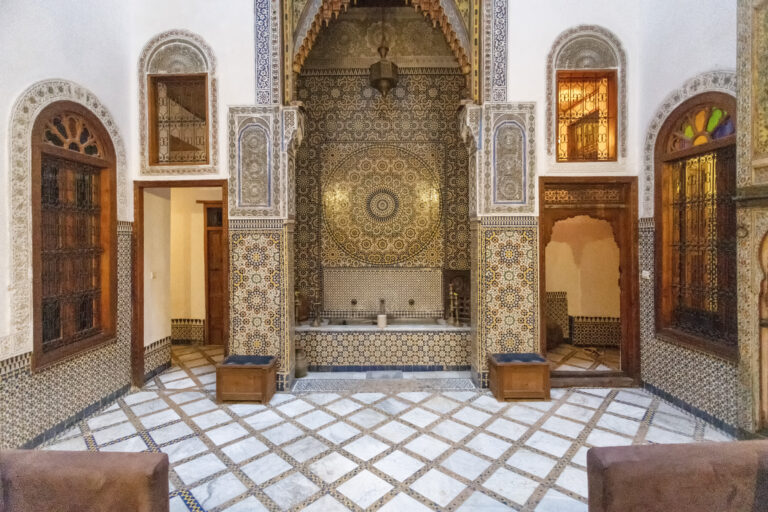
A riad is a traditional Moroccan courtyard house built around an interior garden or patio, often with a fountain or small pool at its centre. More than a hotel with beautiful tiles, it is an architectural concept where light, air, water, privacy, and daily life are all organized around the inner courtyard. The rooms usually face inward rather than onto the street, creating that calm, protected feeling that defines the best riads. Look for zellij tilework on the lower walls, carved plaster above, cedar wood ceilings, carved doors and screens, plus a rooftop terrace overlooking the medina. A good riad feels peaceful even when the streets outside are anything but. That is the whole point.
Dar
A dar is also a traditional Moroccan house, usually built around a courtyard, but generally smaller and simpler than a riad.
In practice, do not obsess over the terminology. The hospitality industry uses the word “riad” very freely. What matters is whether the building still respects the original inward-facing logic, rather than simply dressing a modern hotel in Moroccan decoration.
Kasbah
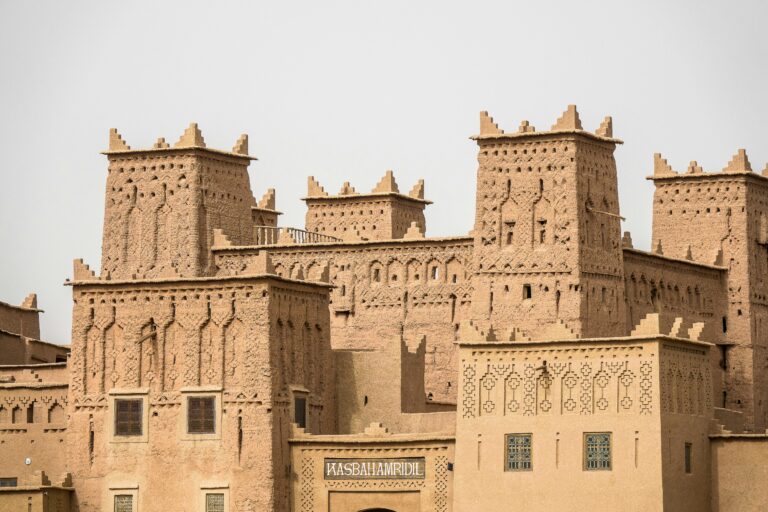
A kasbah is a fortified structure, citadel, or defensive residence. It can sit inside a city, like the Kasbah of the Udayas in Rabat, or stand independently in the south.
Kasbahs are heavier, more defensive, and more monumental than riads. Think high walls, towers, controlled entrances, and a sense of authority. A riad whispers. A kasbah stands its ground.
Ksar
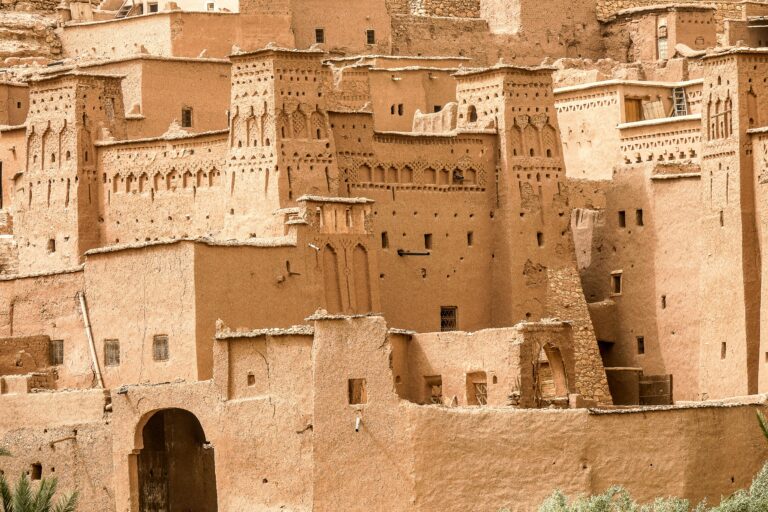
A ksar, plural ksour, is a fortified village rather than a single fortified residence.
Ait Ben Haddou is the classic example. UNESCO describes it as a group of earthen buildings surrounded by high defensive walls, reinforced by corner towers, and as a striking example of southern Moroccan architecture.
This is where Moroccan architecture becomes almost sculptural. The buildings look less placed on the land than grown from it.
Madrasa
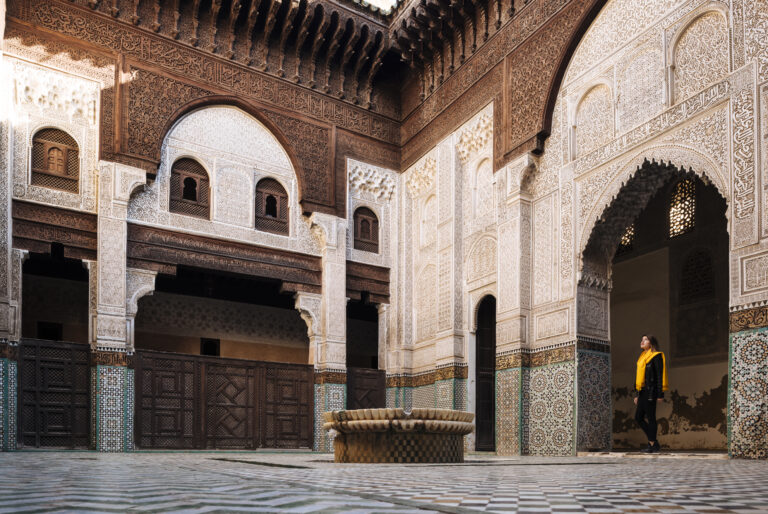
A madrasa is a historic Islamic school. In Morocco, madrasas are among the best places to see architectural craftsmanship up close. They usually combine a central courtyard, student rooms, carved plaster, zellij, cedar wood, calligraphy, and a carefully staged sense of arrival. Fez is especially rich in this tradition, while Marrakech’s Ben Youssef Madrasa remains one of the most accessible examples for first-time visitors. Its official site highlights carved wood, zellige, sculpted plaster, and calligraphy as key elements of the building’s architecture. Madrasas are perfect for beginners because they show the Moroccan decorative language in layers: tile below, plaster in the middle, wood above.
The Decorative Language
If the form of Moroccan architecture is about privacy and inwardness, the surface is where it becomes art. Moroccan interiors are often built in layers from floor to ceiling. Each material has its place.
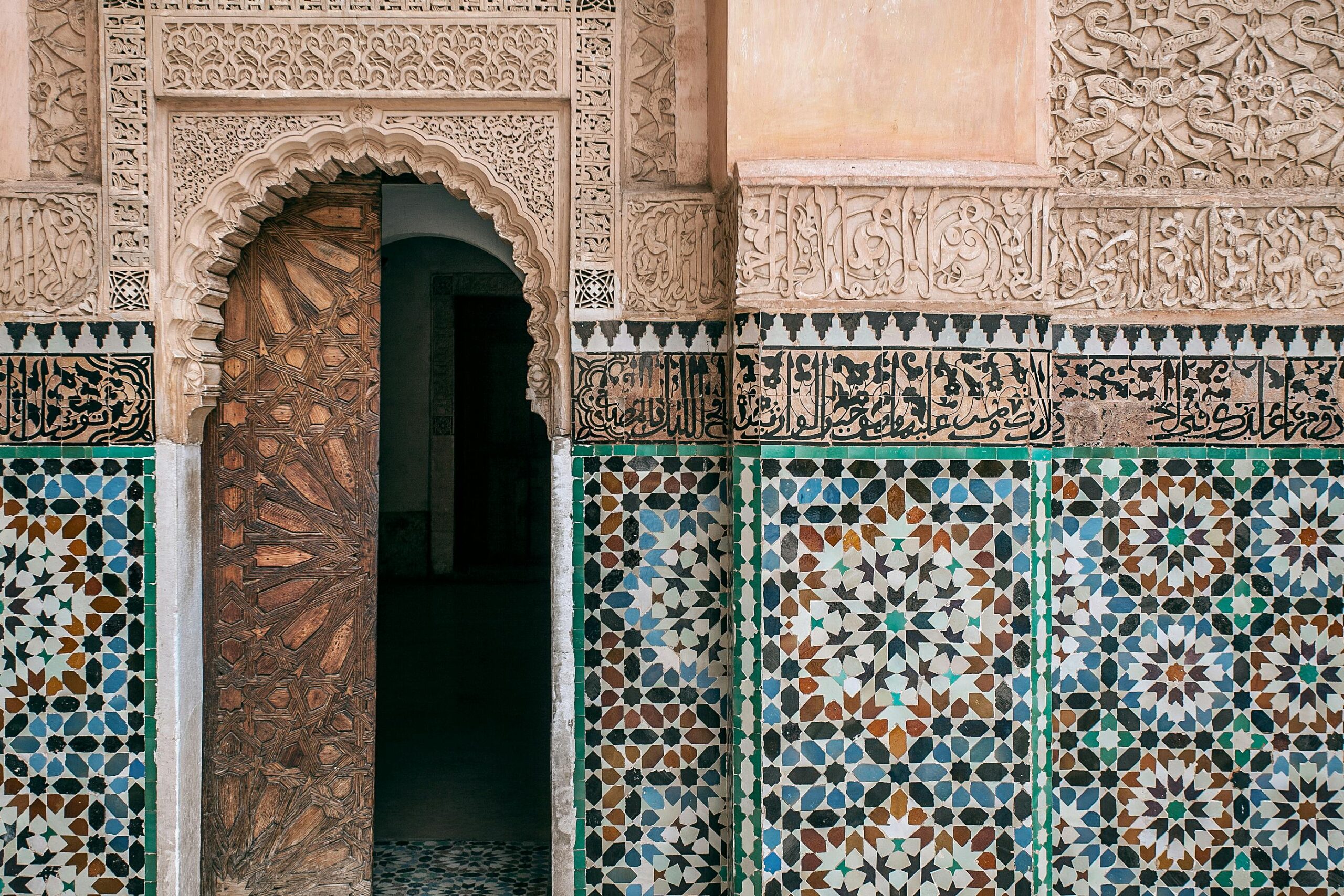
Zellij
Zellij, also spelled zellige or zellij, is Moroccan mosaic tilework made from hand-cut glazed tiles arranged into geometric patterns.
You will see it on fountains, lower walls, courtyards, floors, columns, and palace surfaces. Good zellij is not wallpaper. It is geometry, patience, and craft turned into architecture. The beauty is not only in the pattern. It is also in the irregularity: tiny variations in colour, surface, shine, and cut. Handmade Moroccan tilework rarely feels sterile. That is why it still looks alive.
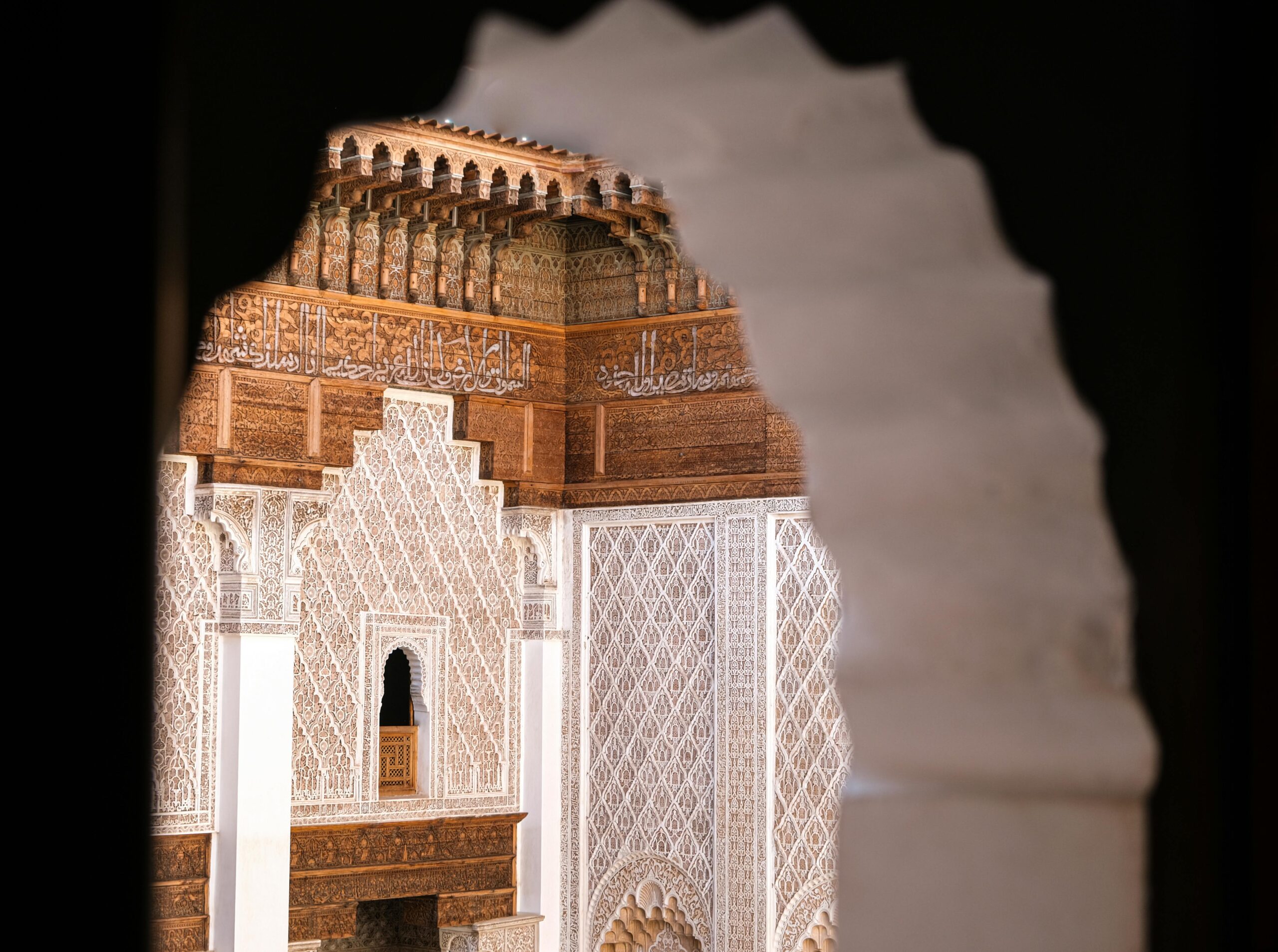
Gebs
Gebs is carved plasterwork, usually used for floral motifs, geometric patterns, inscriptions, and delicate wall decoration.
Look closely and you will notice how much of Moroccan decoration depends on shadow. The carving is not only there to be seen frontally. It changes with the light. In the afternoon, a flat wall can suddenly become deep.
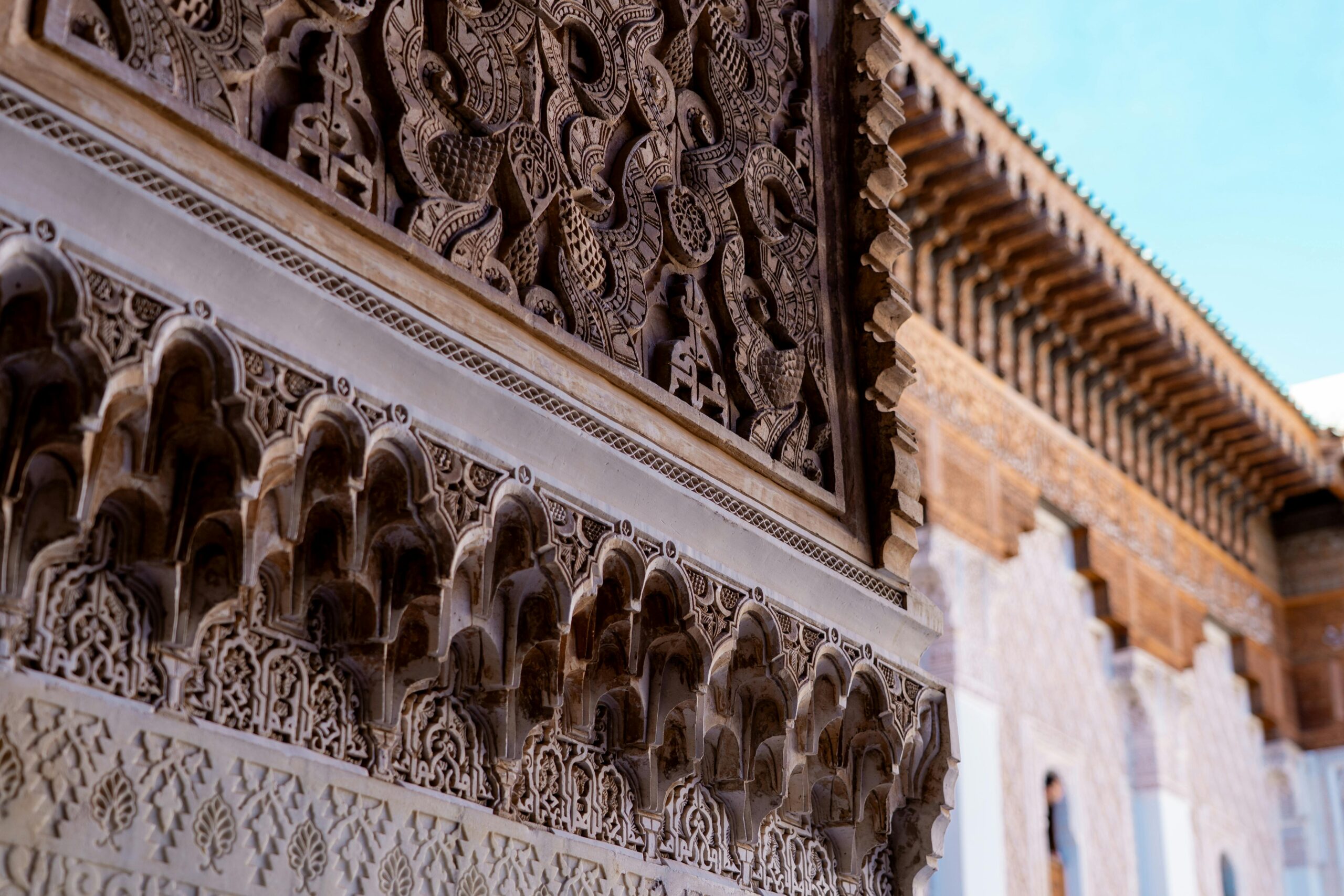
Cedar Wood
Cedar appears in doors, ceilings, screens, lintels, and painted panels. In mosques, madrasas, palaces, and refined riads, it brings warmth to spaces that might otherwise feel dominated by stone, plaster, and tile.
The Moroccan interior often works because of this balance: cool tile below, pale plaster above, warm wood overhead.
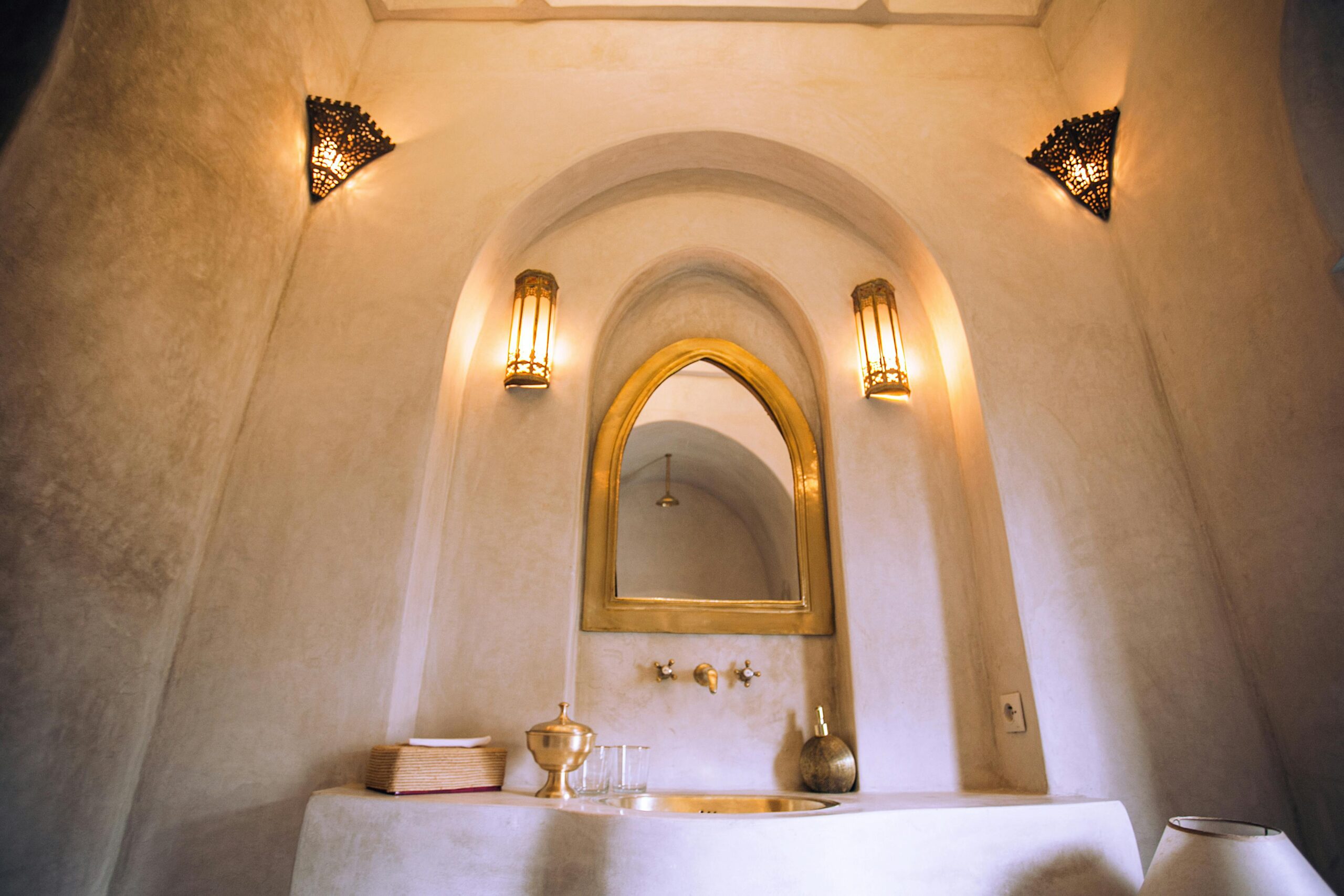
Tadelakt
Tadelakt is a traditional Moroccan lime plaster associated with smooth, waterproof surfaces. It is especially linked with hammams and bathrooms, though it is now used widely in contemporary interiors around the world. A technical study on tadelakt describes it as a traditional plaster made from lime, water, black soap, and often mineral pigments, developed in the Marrakech region.
In person, tadelakt does not look like ordinary paint or tile. It has a soft, slightly luminous surface. It feels hand-made, which is exactly why designers keep trying to imitate it, usually badly.
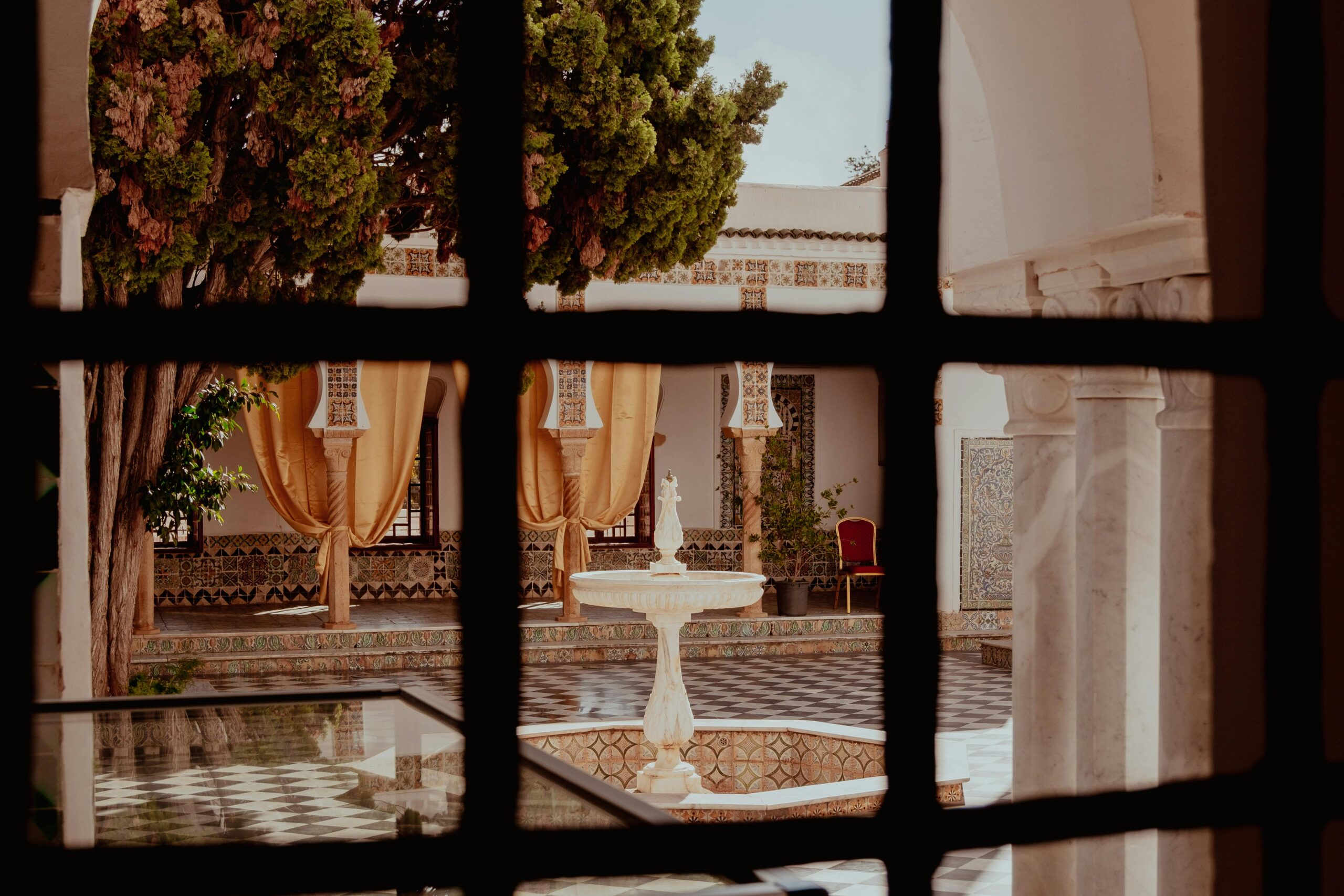
Water
Fountains are not decorative extras. They are central to the experience.
In a riad courtyard or madrasa, water cools the air, softens sound, reflects light, and gives the space a centre. Even a small fountain changes the atmosphere of a room. It turns architecture into a pause.
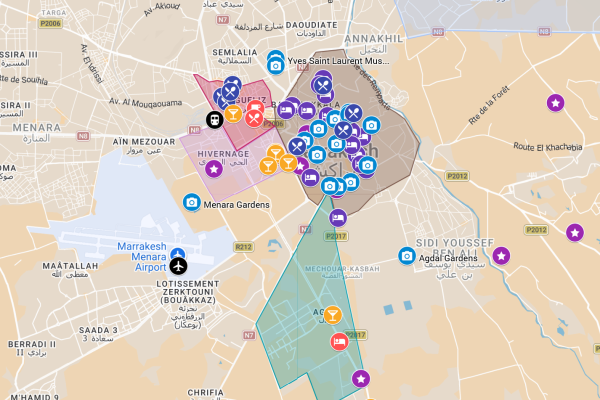
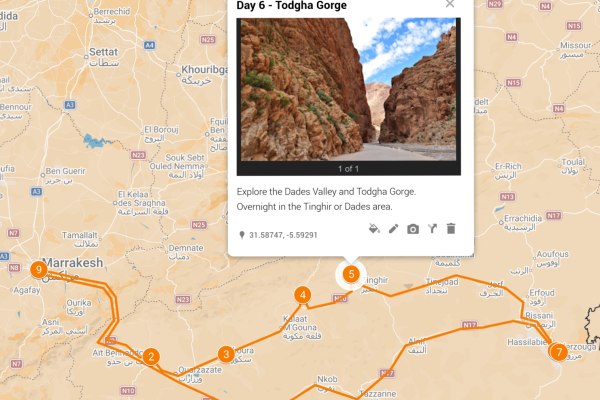
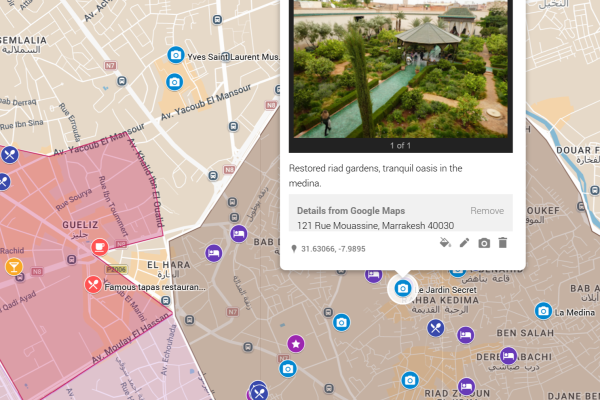
Plan your Morocco Trip with our Free Morocco Travel Maps
Ready-made itineraries for 3, 7, 10 and 14 days
Best spots by city, coast, desert & mountains
Handpicked hotels, riads & resorts
Restaurants, viewpoints & activities
Key neighborhoods & transport tips
Free access. Regular updates. No spam.
Four Architectural Worlds in Morocco
Morocco is large and layered enough to contain several architectural traditions. They overlap constantly, but each has its own character.
1. The Imperial Cities: Grandeur at Scale
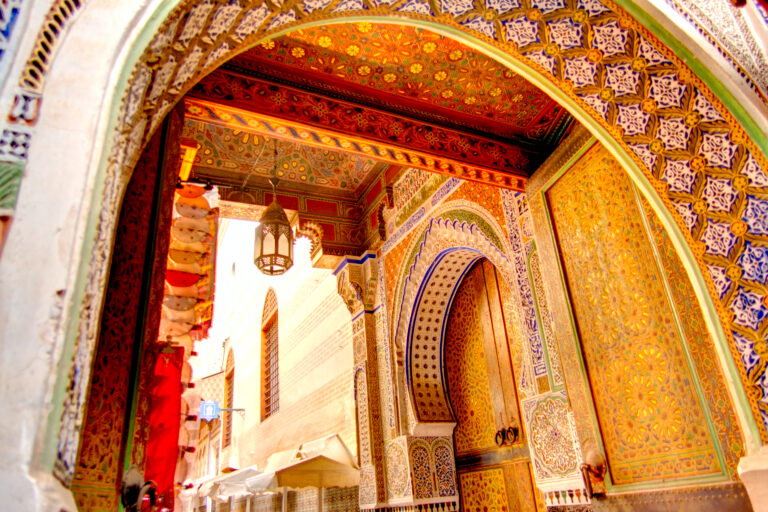
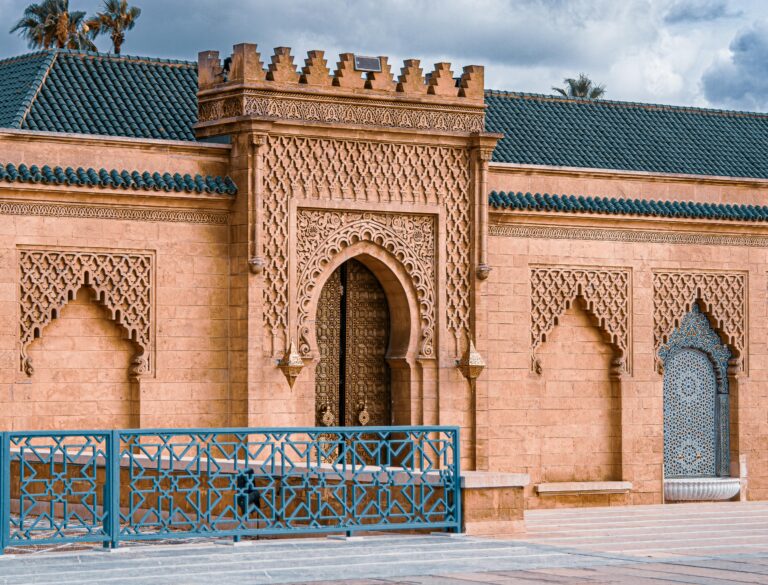
Marrakech, Fez, Meknes, and Rabat were Morocco’s four imperial capitals. Each carries the architectural ambitions of the dynasties that shaped it.
–Fez is the richest city in Morocco for serious architectural wandering. Fez el-Bali, founded in the 9th century and later transformed under the Marinids, remains one of the great historic urban landscapes of the Islamic world. UNESCO notes that the city reached its height in the 13th and 14th centuries, when many of its principal monuments took shape. Come here for madrasas, fountains, fondouks, carved doors, ancient lanes, and an urban density that rewards patience. Do not rush Fez. It punishes itinerary tourism and rewards slow walking.
–Marrakech is more open, more theatrical, and easier to read for first-time visitors. Founded by the Almoravids in 1070-72, the city became a major political, economic, and cultural centre, with influence across the western Muslim world from North Africa to Andalusia. UNESCO highlights monuments such as the Koutoubia Mosque, battlements, gates, gardens, and kasbah as part of that legacy. For architecture, Marrakech is ideal because the major references are accessible: Ben Youssef Madrasa, Bahia Palace, Saadian Tombs, Koutoubia Mosque exterior, El Badi Palace, and restored riads across the medina. It is not always the most subtle city. But subtlety is not always the point.
–Meknes is the imperial city people too often skip. Its architectural power comes from scale: ramparts, gates, royal remains, vast storage structures, and the monumental ambitions of Sultan Moulay Ismail. UNESCO identifies Meknes as preserving the remains of the imperial city created by Moulay Ismail between 1672 and 1727. Bab Mansour is the obvious stop. But the real pleasure of Meknes is the feeling of a grand imperial project that still has not been fully polished for tourism. That is part of its charm.
–Rabat is calmer and more legible than Fez or Marrakech. Its architecture is less about sensory overload and more about layers: the Kasbah of the Udayas, Hassan Tower, the Mausoleum of Mohammed V, the medina, Chellah, and the modern planned city. UNESCO describes Rabat as a modern capital conceived during the Protectorate while integrating historic and heritage components into a distinctive architectural and decorative style. For a first-time visitor, Rabat is the easiest Moroccan city in which to understand the dialogue between old and modern.
2. The Andalusian-Moroccan Style
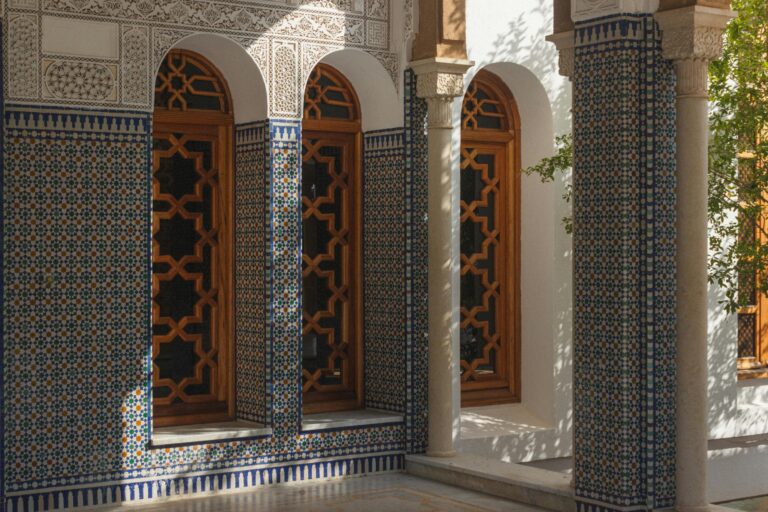
Moroccan architecture cannot be understood without Al-Andalus. For centuries, ideas, artisans, dynasties, motifs, and building traditions moved between North Africa and the Iberian Peninsula. The result is visible in courtyard planning, horseshoe arches, geometric tilework, carved plaster, gardens, and a taste for ornament that is controlled rather than random. This is why some Moroccan interiors may remind you of Granada or Cordoba. But Morocco is not copying Andalusia. It is part of the same wider western Islamic world, with its own materials, climate, dynastic history, and urban traditions.
Look for this influence in:
- horseshoe arches
- symmetrical courtyard gardens
- zellij panels
- carved plasterwork
- cedar ceilings
- intimate garden architecture
- whitewashed northern medinas such as Tetouan
Tetouan is especially interesting because its medina carries a strong Andalusian imprint, softer and lighter than the red drama of Marrakech or the dense complexity of Fez.
3. Earthen Architecture of the South
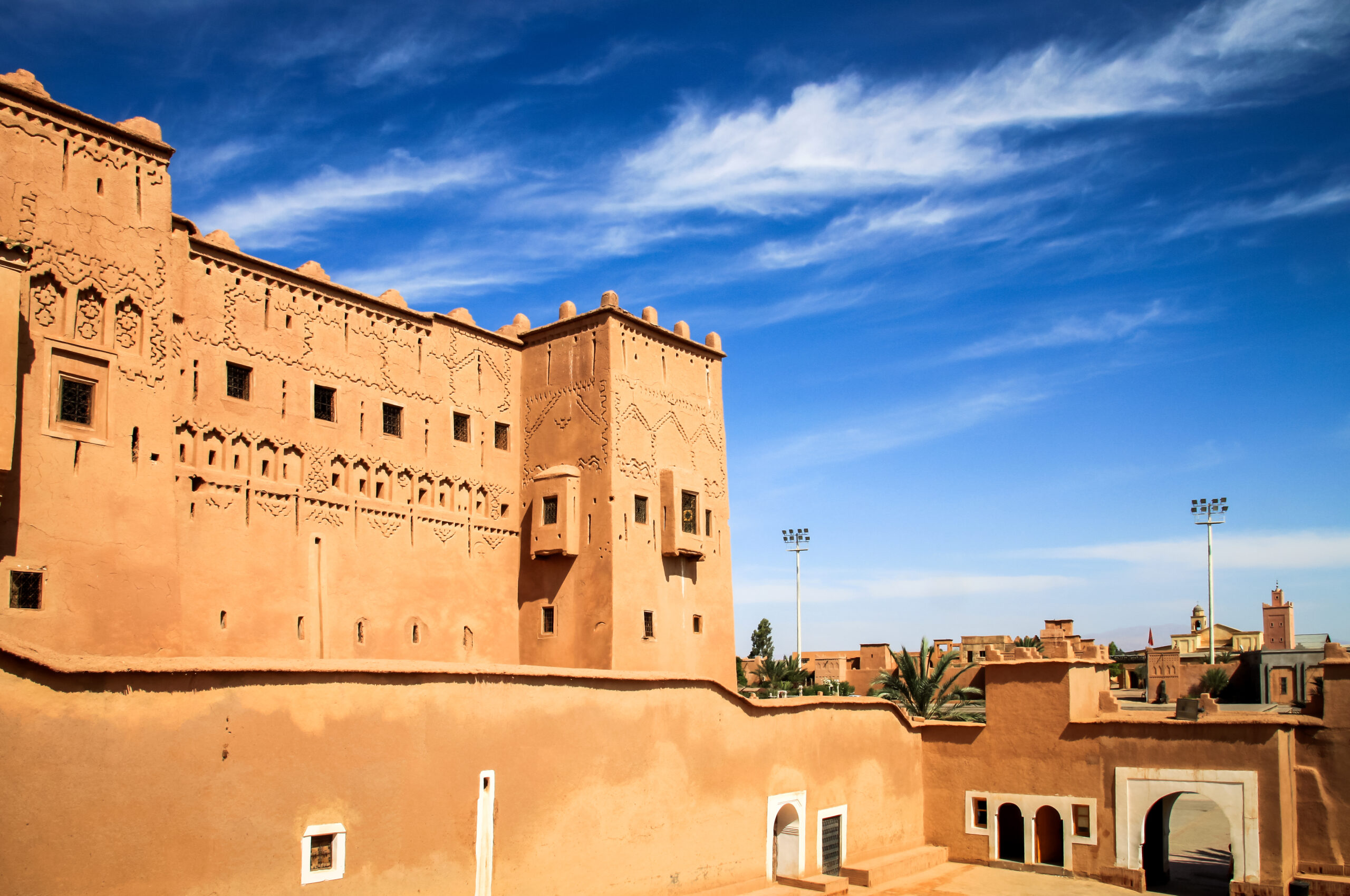
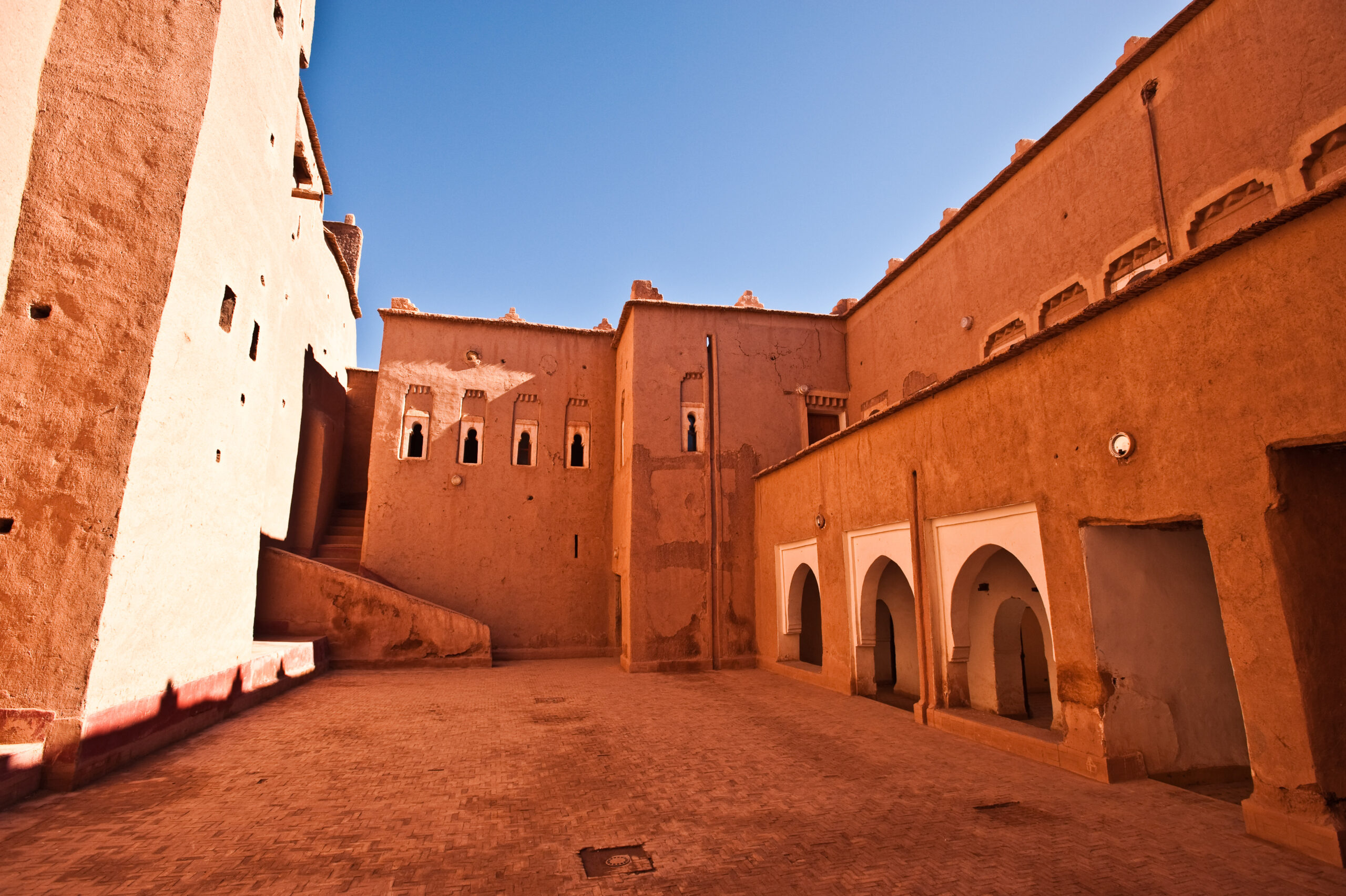
South of the High Atlas, the material changes. The building becomes earth. In the pre-Saharan regions around Ouarzazate, Skoura, the Draa Valley, the Dades Valley, and the road toward the Sahara, architecture is built from rammed earth, adobe, clay, straw, and wood. This is not primitive architecture. It is climate intelligence. Thick walls help manage heat. Small openings reduce exposure. High walls protect and define. Towers create rhythm, status, and defence. The colour of the building is the colour of the land because it is made from the same material.
Ait Ben Haddou is the most famous example, and still the easiest to understand. But the region is richer than one postcard stop. Skoura’s palm groves hide kasbahs in different states of survival: inhabited, restored, abandoned, half-melted back into the soil. Earthen architecture is fragile. It needs maintenance. Neglect, rain, and time can undo what stone might resist for centuries. That fragility is part of its beauty. These buildings are not trying to defeat the landscape. They are negotiating with it.
4. Casablanca’s Layered Modernity
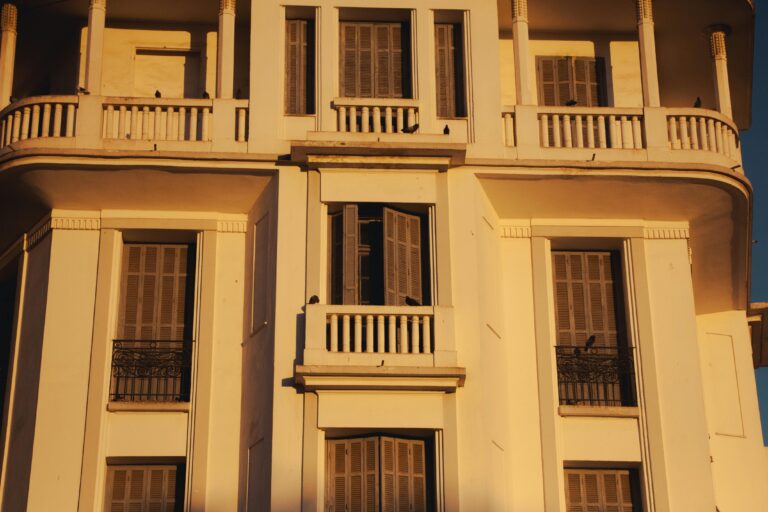
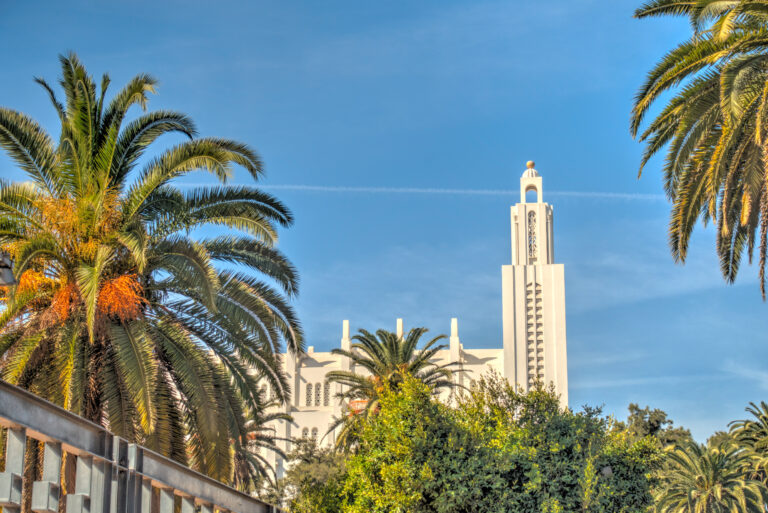
Casablanca does not fit neatly into the romantic idea of Moroccan architecture. That is exactly why it matters. Under the French Protectorate, Casablanca became a laboratory for modern urban planning, Art Deco, Art Nouveau, Neo-Moorish, and hybrid Moroccan-European architecture. The Habous district is one of the clearest examples: a planned Neo-Moroccan neighbourhood developed in the early Protectorate period, often dated between 1917 and 1926 in architectural research. Downtown Casablanca is different from Fez or Marrakech. Here, you are not looking for medieval medina intimacy. You are looking at facades, balconies, civic buildings, cinemas, apartment blocks, covered arcades, and the way Moroccan motifs were adapted to reinforced concrete and modern city life.
The results range from awkward to genuinely beautiful. At their best, Casablanca’s buildings do something rare: they acknowledge Moroccan visual language without simply reproducing the old city. Look for:
- Boulevard Mohammed V
- Place Mohammed V
- Cinema Rialto
- Habous district
- Mahkama du Pacha
- Sacré-Coeur exterior
- Hassan II Mosque
Sacré-Coeur is often called a cathedral, although it was never technically a bishop’s seat. It was designed by Paul Tournon and completed in 1930, combining Art Deco and Gothic-inspired forms. Casablanca is not the prettiest architectural city in Morocco. It may be the most revealing.
Mistakes Beginners Make
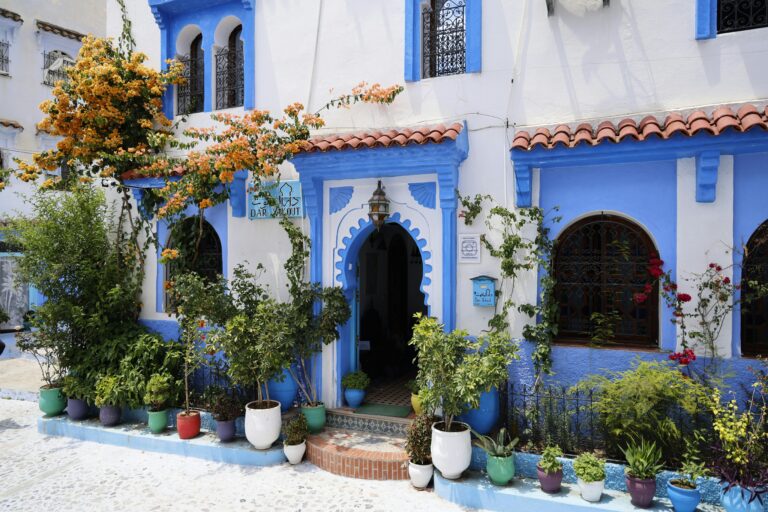
-Looking only at the outside: Moroccan architecture rewards entry. If you are standing in the street photographing a wall, you may be missing the point. Find the door. Go through it when you can.
-Rushing the medina:Fez and Marrakech are not theme parks. They are living urban systems. Give them time. Get lost. Return to the same place twice. The second walk is usually better than the first.
-Confusing renovation with authenticity: Many riads in the tourist market have been heavily redesigned into a generic “Moroccan style”. Some are beautiful. Some are stage sets. If you want to see real historic craft, visit madrasas, palace complexes, fondouks, restored monuments, and older houses where the original structure is still legible.
–Skipping the south: The earthen architecture of the pre-Saharan valleys is as sophisticated as anything in the imperial cities. It is just less polished and less convenient. If your trip allows it, the Draa Valley and Skoura deserve more than a quick photo stop.
-Missing Casablanca entirely: Most itineraries skip Casablanca in favour of medinas. Understandable, but wrong if architecture matters to you. Casablanca is where you see Morocco negotiating with the 20th century: modernity, colonial planning, Art Deco, Neo-Moroccan style, concrete, cinema facades, grand avenues, and a much less curated version of urban Moroccan life.
How to Read a Moroccan Building in Five Minutes
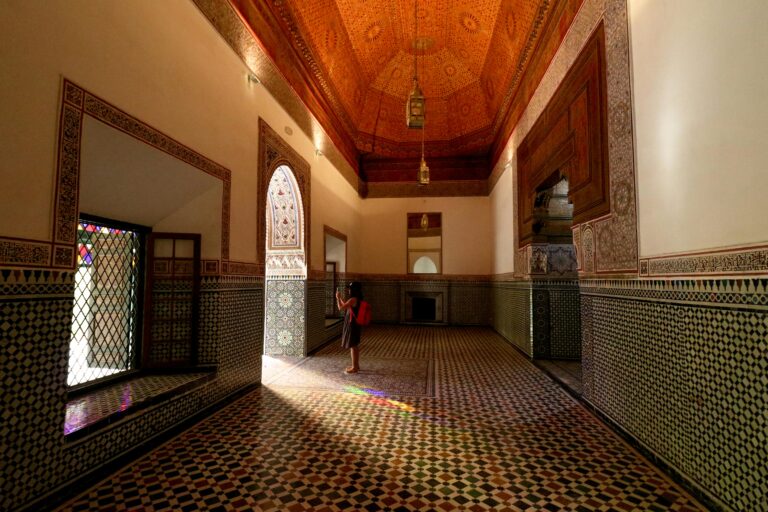
1. Start with the entrance: Is the outside discreet? Is the door unusually elaborate? Is there a bend or small passage before the main space? That transition is often deliberate. It controls privacy, view, and revelation.
2. Then look at the courtyard: Is the building organized around a centre? Is there water? Are the rooms facing inward? Does the sound change once you enter? If yes, you are seeing the logic of the house.
3. Look from bottom to top: Tile at the base. Plaster above. Wood at the top. This vertical order is one of the easiest ways to understand Moroccan interiors.
4. Watch the light: The best Moroccan buildings do not just decorate surfaces. They choreograph shadow. A carved plaster wall in morning light is not the same wall in late afternoon.
5. Finally, notice what is hidden: A plain exterior may protect a spectacular interior. Once you understand this, walking through a Moroccan medina becomes a different experience. The city stops being a maze. It becomes a series of thresholds.
Conclusion
Moroccan architecture asks you to slow down.
It was built for a culture that valued privacy, craft, shade, water, family life, and the beauty of the interior world. Its greatest buildings are not always the grandest. Sometimes they are the ones where the light falls across carved plaster at four in the afternoon. Where a fountain echoes in a courtyard you almost did not step into. Where a door you nearly walked past becomes the one you remember years later.
That is the architecture.
The rest is just walls.
Page last updated: June 2026
Anything we can improve? Let us know
Plan Your Morocco Trip
Compare hotels, flights and rental cars
Compare hotels, riads and guesthouses across Morocco on Booking.com:
Compare flights to Morocco on Aviasales:
Find the right rental car for your Morocco trip with EconomyBookings: