

Marrakech (مراكش) is Morocco’s best-known city, and also one of its most misunderstood. It can be beautiful, intense, elegant, chaotic, and exhausting – sometimes all in the same day. For many travelers, it is the highlight of a Morocco trip. For others, it works best when approached with the right expectations.
This is a city of souks, courtyards, rooftop terraces, gardens, palaces, and constant contrast. It rewards curiosity, but it is not a friction-free destination.
Marrakech at a glance
- Best for: First-time Morocco, riads, historic sights, souks, food, day trips
- Ideal stay: 3 to 4 days
- Best season: spring or autumn
- Skip if: you want a quiet, low-pressure city break
- Best area to stay: Medina for atmosphere, Guéliz or Hivernage for comfort
Why visit Marrakech?
Marrakech is a strong fit for travelers who want atmosphere, visual character, and a city that feels genuinely different from Europe or North America. It works especially well if you want to combine culture, food, shopping, and short excursions within one destination.
Marrakech is a great choice if you want:
- historic architecture and traditional riads
- lively streets, markets, and strong local atmosphere
- rooftop dining, gardens, and memorable interiors
- a base for day trips to the Atlas Mountains, valleys, or coast
It may be less ideal if you want:
- a calm, easy city break in the center
- very smooth logistics
- a resort-style trip without street friction
Marrakech can absolutely be part of a relaxing holiday, but that depends heavily on where you stay and how you plan the trip.
How many days in Marrakech?
If Marrakech is only one stop in a longer Morocco itinerary, plan 2 nights minimum. If it is your main base, 3 to 4 nights is more comfortable and gives you time for the medina, gardens, good meals and one slower evening.
- 1 day: possible, but rushed. Focus on the medina, Jemaa el-Fna, Bahia Palace and one major historic site.
- 2 days: the best minimum for a first visit. You can cover the medina, main monuments, souks and Jardin Majorelle.
- 3 days: ideal if you want a better pace, a hammam, a food tour, Gueliz or a slower evening.
- 4 to 5 nights: best if you want to add one day trip, such as Agafay Desert, Ourika Valley or Essaouira.
- 6 nights or more: works well if you want a slower stay, resort time, several excursions or Marrakech as your main base in Morocco.
Our recommendation: stay 3 nights if it is your first time in Marrakech. Stay longer only if you want to use the city as a base for day trips or enjoy a slower pace.
Best Marrakech itineraries
1 day in Marrakech: the essential medina route
If you only have one full day in Marrakech, stay focused on the old city. Start early, before the heat and crowds build up.
Morning
- Visit the Koutoubia Mosque area from the outside
- Walk toward Jemaa el-Fna
- Explore the souks and the central medina
- Visit Ben Youssef Madrasa if you want one of the most beautiful historic interiors in the city
Afternoon
- Visit Bahia Palace
- Walk through the Kasbah area
- Stop at the Saadian Tombs if you enjoy historic sites
- Take a break in a rooftop cafe near the medina
Evening
- Return to Jemaa el-Fna before sunset
- Have dinner in the medina or on a rooftop terrace
- Keep the evening flexible: Marrakech is better when you leave some room to wander
Best for: first-time visitors, short stays, classic Marrakech sights
Avoid: trying to add Jardin Majorelle, Agafay Desert or the Atlas Mountains on the same day.
2 days in Marrakech: medina, gardens and a slower pace
Two days is the best minimum for a first visit. It gives you enough time to see the main sights without rushing through the medina.
Day 1: historic Marrakech
- Koutoubia Mosque area
- Jemaa el-Fna
- Souks
- Ben Youssef Madrasa
- Bahia Palace
- Saadian Tombs or El Badi Palace
- Rooftop dinner in the medina
Day 2: gardens, Gueliz and local experiences
- Visit Jardin Majorelle early in the morning
- Explore Gueliz for cafes, shops and a more modern side of Marrakech
- Add a hammam, cooking class or guided food tour
- End the day with sunset drinks or dinner in Hivernage, Gueliz or the medina
Best for: most first-time visitors
Good to know: book Jardin Majorelle ahead if possible, especially in high season.
3 days in Marrakech: city plus one experience
Three days gives you the best balance: two days for the city and one day for a slower experience, a neighborhood you missed or a short escape outside Marrakech.
Day 1: classic medina
- Koutoubia Mosque area
- Jemaa el-Fna
- Souks
- Ben Youssef Madrasa
- Bahia Palace
- Rooftop dinner near the medina
Day 2: gardens, neighborhoods and experiences
- Jardin Majorelle
- Gueliz
- Saadian Tombs or El Badi Palace
- Hammam, cooking class or food tour
- Sunset dinner in the medina, Gueliz or Hivernage
Day 3: choose your pace
- Stay in Marrakech for a slower day, shopping, museums, a hammam or a food tour
- Choose Agafay Desert if you want desert scenery close to the city
- Choose Ourika Valley if you want mountains and a cooler escape
- Choose Essaouira if you want the coast, seafood and a relaxed medina
- Choose Ouzoud Waterfalls if you want nature, but expect a longer day on the road
- Choose Ait Ben Haddou and Ouarzazate only if you are comfortable with a very long day trip
Best for: travelers who want both Marrakech and a taste of Morocco beyond the city
Avoid: one-day “Sahara Desert” tours from Marrakech. The real Sahara dunes are too far for a comfortable day trip. For a short desert-style experience, choose Agafay instead.
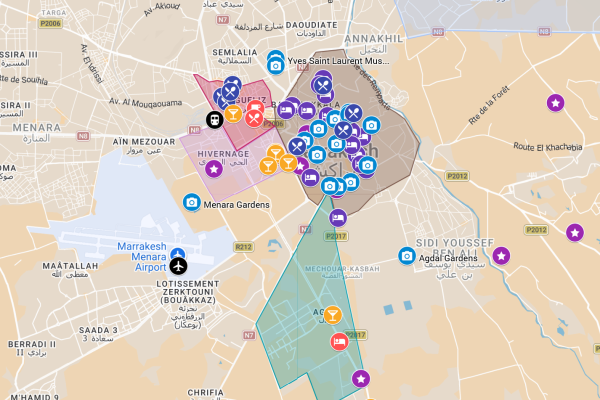
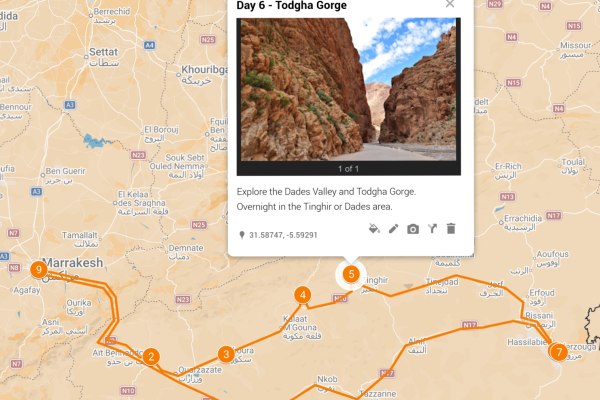
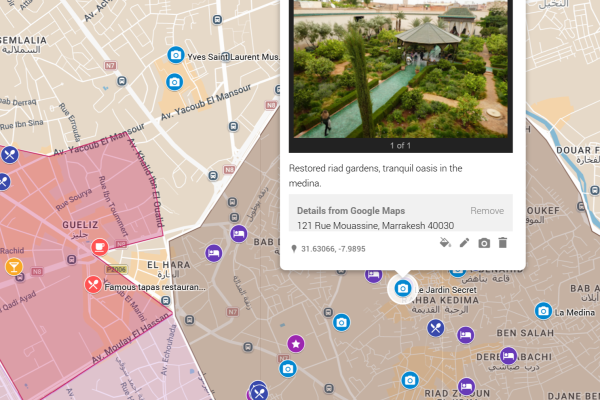
Plan your Morocco Trip with our Free Morocco Travel Maps
Ready-made itineraries for 3, 7, 10 and 14 days
Best spots by city, coast, desert & mountains
Handpicked hotels, riads & resorts
Restaurants, viewpoints & activities
Key neighborhoods & transport tips
Free access. Regular updates. No spam.
Best time to visit Marrakech
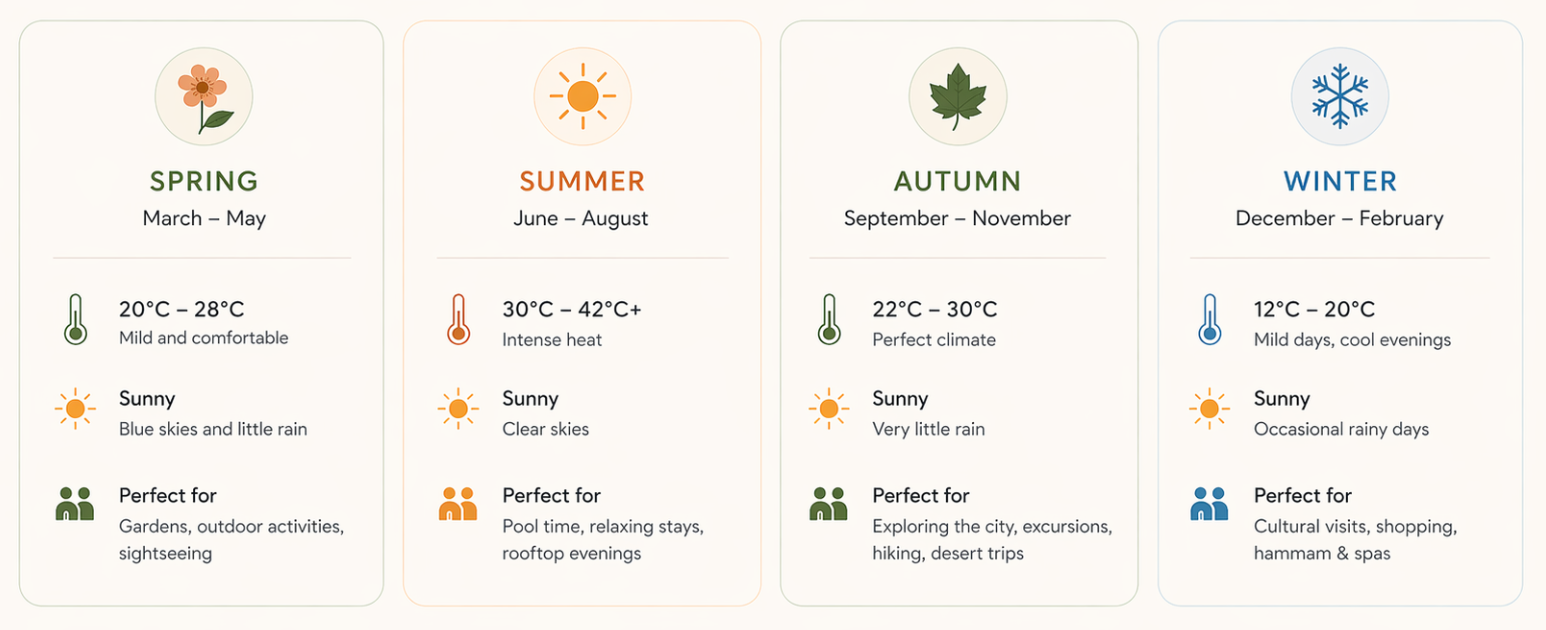
Spring and autumn are the best seasons to visit Marrakech. The weather is warm, sunny, and much more comfortable for exploring the city and nearby day trips. Winter is also a good option for mild sunny days and cooler evenings.
Summer is extremely hot and can feel brutal, especially in the middle of the day, so it is usually the least comfortable season to visit.
First time in Marrakech
The Medina is the heart of the experience : The old walled city is where much of Marrakech’s identity lives – the souks, historic monuments, traditional riads, rooftop cafés, and the atmosphere most people come for.
Getting lost is normal : The Medina is not built for neat navigation. You will probably lose your bearings at some point. Offline maps help, but so does accepting that wandering is part of the experience.
Marrakech has real friction : Petits taxis, price negotiation, shop pressure, and the occasional fake guide are part of the reality here. For most visitors, this is more tiring than dangerous.
Not every part of Marrakech feels the same : A stay in the Medina, Gueliz, Hivernage, the Palmeraie, or outside the city creates very different trips. That is why choosing the right base matters so much.
Top attractions in Marrakech
Where to stay - quick overview
Where you stay matters more in Marrakech than in many cities, because each area creates a different experience.
- Gueliz: Best for easier logistics, wider streets, restaurants, shopping, and a more familiar urban feel. Less atmospheric, but often simpler.
- Hivernage: Best for larger hotels, polished surroundings, restaurants, nightlife, and easy access to both the Medina and modern Marrakech.
- Medina: Best for travelers who want charm, riads, character, and the classic Marrakech atmosphere. Expect more walking and more friction.
- Agdal: Best for larger resort-style hotels, pools, families, and travelers who want more space without being as far out as the Palmeraie.
- Palmeraie: Best for resorts, pools, privacy, and a more detached stay. Good if you want comfort and do not mind being away from the center.
Which area fits which traveler?
- Want classic Marrakech atmosphere? Medina
- Want easier access and less hassle? Gueliz
- Want a large hotel in a polished district? Hivernage
- Want resort-style comfort without going too far out? Agdal
- Want pools, space, and privacy away from the center? Palmeraie
For a proper breakdown of neighborhoods, hotel types, and who each area suits best, see the Marrakech Hotel Guide.
Hotels & riads in Marrakech
Day-trips from Marrakech
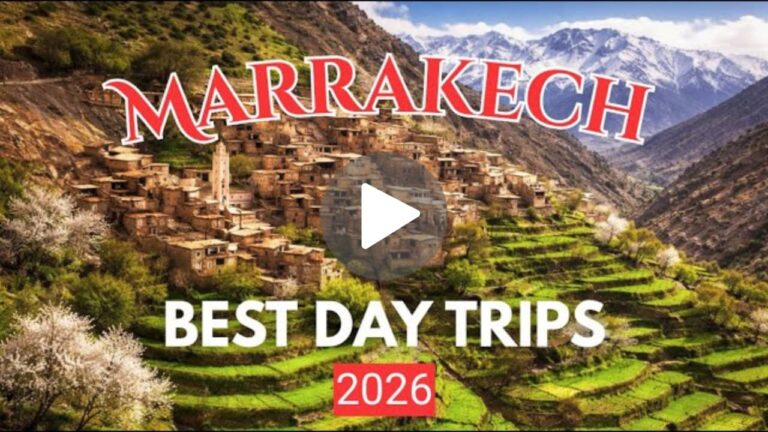
Marrakech is not only a destination in itself. It is also one of the best bases in Morocco for easy day trips. Within a few hours, you can reach the Atlas Mountains, Berber villages, desert-like landscapes, waterfalls, coastal towns, and quiet valleys that feel completely different from the city. If you have more than two or three days in Marrakech, adding at least one day trip is worth it. It gives you a better sense of Morocco beyond the Medina, without needing to change hotels or reorganize your whole itinerary.
Getting there and around
Getting to Marrakech
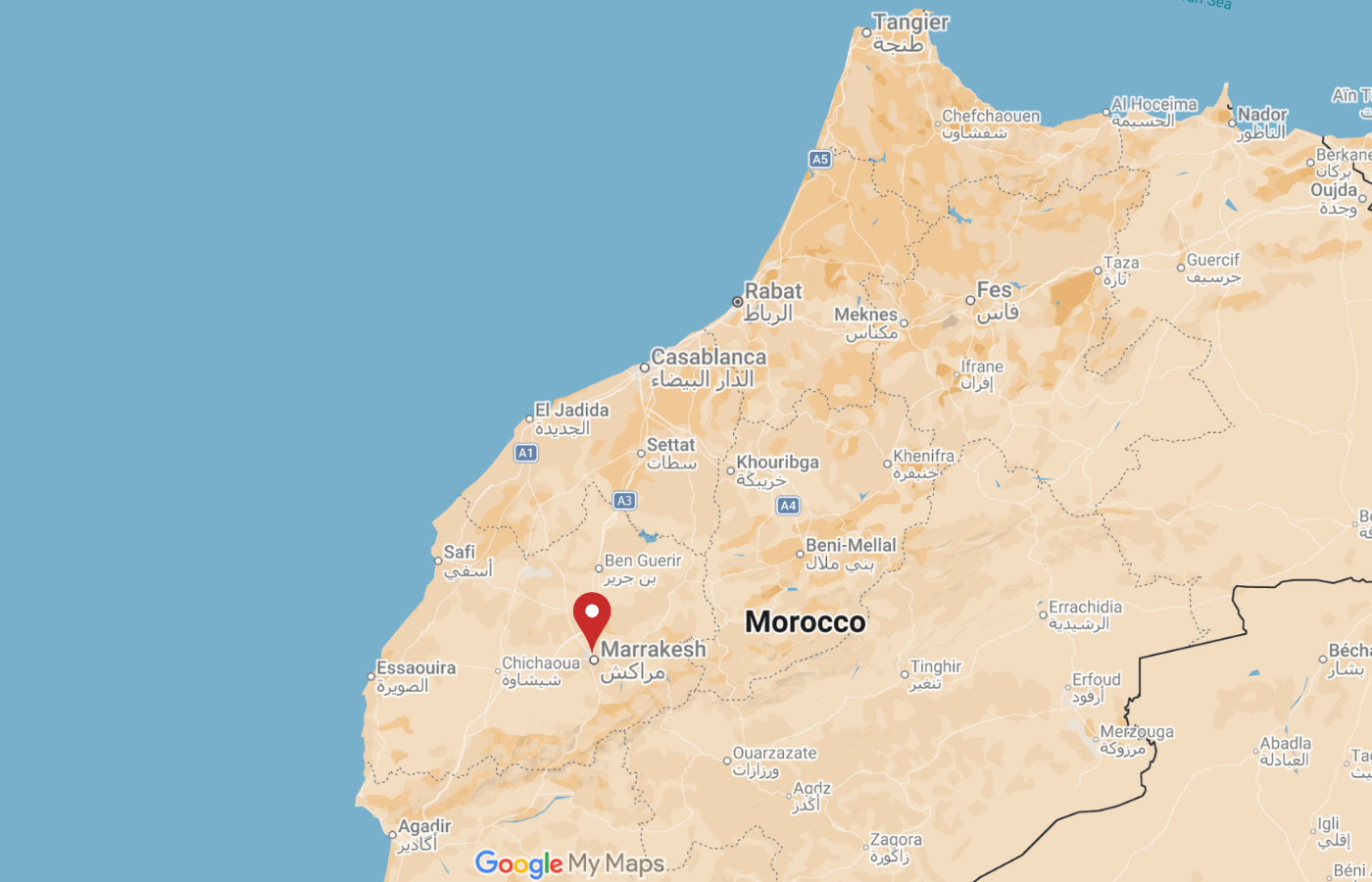
By plane
Airport: Marrakech Menara (RAK), about 15-25 min from the city center (traffic-dependent).
From the airport to town:
Taxi: fastest, agree on price before you get in (or ask for the meter if available).
Airport bus: budget option (runs to central areas, slower but simple).
Private transfer: easiest with luggage, fixed price if booked in advance. Compare prices here.
By train
Operator: ONCF.
Main station: Marrakech (Gare de Marrakech), close to Gueliz.
Typical routes:
Casablanca: direct trains available on many schedules.
Rabat / Tangier: usually via Casablanca (Tangier is served by high-speed from Casablanca onward, not from Marrakech directly).
Fes: commonly via Casablanca.
Tip: book early on peak days (weekends, holidays) for better seat choices.
By car
- Best for: flexibility, day trips, and rural stops. Compare prices here.
- Main routes:
A7 motorway connects Marrakech with Casablanca (fastest northbound option).
Mountain routes to the south and east can be slow and winding.
Reality check: driving in Marrakech is hectic (scooters, pedestrians, informal lane rules). If you hate city driving, rent only for day trips.
Getting around
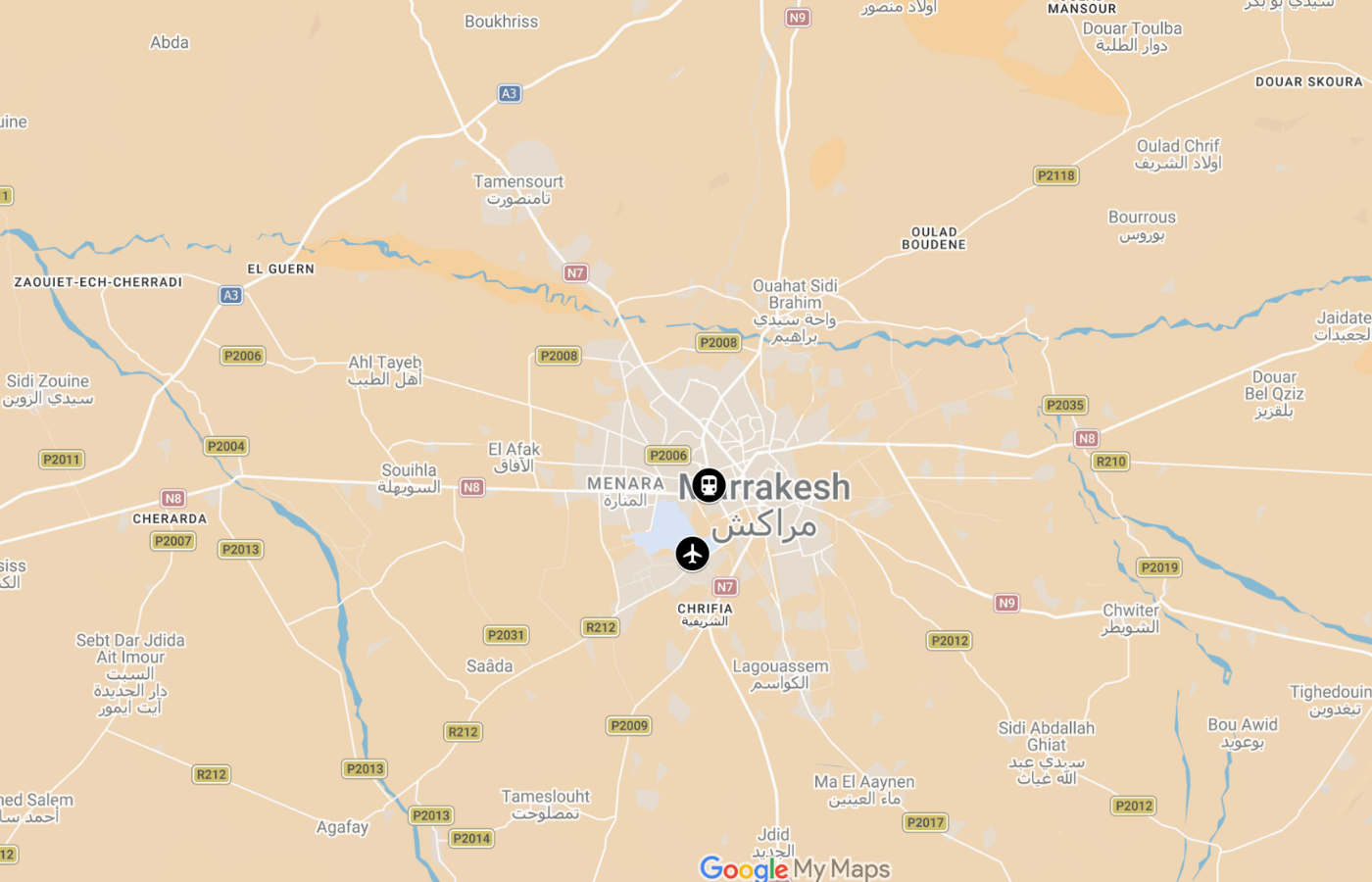
From the airport
Marrakech Menara Airport is close to the city, but arrival can still feel chaotic. Taxis are the standard option, and a pre-arranged transfer can be worth it, especially if you are staying in the Medina
In the city
Petits taxis are the main way visitors move between neighborhoods. Negotiation is still common, so this is one of the small frictions to expect.
On foot
Walking is essential inside the Medina, where many major sights are relatively close together. Outside the old city, distances can be less pleasant, especially in the heat.
Typical travel times to popular areas within Marrakech
- Medina – Gueliz: 10-25 min by taxi (traffic-dependent)
- Medina – Majorelle Garden: 15-30 min by taxi
- Medina – Menara Mall / Hivernage: 10-25 min by taxi
- RAK airport – Medina/Gueliz: 15-25 min by taxi
Typical travel times from Marrakech
- Easy day trips
Agafay Desert: 45-60 min
Lalla Takerkoust (lake): 45-70 min
Ourika Valley (Setti Fatma): 1-1.5 h
Asni: 1-1.5 h
Imlil (High Atlas): 1.5-2 h
- Bigger day trips
Essaouira: 2.5-3 h
Ouzoud Waterfalls: 2.5-3.5 h
Agadir: 3-3.5 h
- Longer rides
Casablanca: 2.5-3.5 h (motorway)
Rabat: 3.5-4.5 h (via Casablanca)
Ouarzazate: 3.5-4.5 h (mountain road)
Ait Ben Haddou: 3.5-4.5 h (often combined with Ouarzazate)
Costs and money in Marrakech
Marrakech can be very affordable, but it is also one of the easiest places in Morocco to overspend. Accommodation will usually be the biggest part of your budget, especially if you stay in a boutique riad, a luxury hotel or a resort-style property outside the city center. For a detailed breakdown of where to stay and what each area is best for, see our Marrakech Hotel Guide.
The rest of your daily costs will mostly depend on food, taxis, entrance fees, shopping and how comfortable you are with saying no when prices feel unclear.
Daily budget
A realistic daily budget in Marrakech depends less on the city itself and more on how you move, eat and handle tourist pricing. The estimates below exclude accommodation.
Budget traveller: 250-450 MAD per person per day
This usually means simple local meals, limited paid attractions, walking when possible, careful taxi use and little shopping. Marrakech can still be very affordable at this level, but you need to avoid tourist traps and unclear prices.
Comfortable traveller: 500-900 MAD per person per day
This is a more realistic range for most first-time visitors. It allows for good meals, a few paid sights, occasional taxis, cafés, small purchases and a more relaxed pace without watching every dirham.
Higher-end traveller: 1,000+ MAD per person per day
Marrakech can become expensive quickly if you choose rooftop restaurants, private guides, hammams, curated shopping, premium transfers or luxury experiences. The city has a wide price range, so spending more does not always mean getting better value.
The easiest way to control your daily budget is to agree on taxi prices when the meter is not used, check entrance fees in advance, compare prices before buying in the souks, and keep small cash notes for everyday expenses.
Food and drinks
Simple local meals are still good value in Marrakech. A casual breakfast, street food snack or local café meal can be inexpensive, especially away from the most tourist-heavy streets. Sit-down restaurants in the Medina, Gueliz and rooftop spots cost noticeably more.
A practical rule: if the place has a beautiful view, heavy Instagram energy or a menu aimed entirely at tourists, you are paying partly for the setting. That is not necessarily bad, but it is not “local price” anymore.
Typical ranges:
- Simple breakfast or café snack: 20-60 MAD
- Local lunch or dinner: 60-120 MAD
- Rooftop / tourist restaurant meal: 150-300 MAD
- Higher-end dinner: 400+ MAD
Attractions and monuments
Marrakech’s main sights are not expensive compared with many international destinations, but entrance fees add up if you visit several in one or two days.
Useful current reference prices:
- Bahia Palace: 100 MAD for foreign adults.
- Badi Palace: 100 MAD for foreign adults.
- Ben Youssef Madrasa: 50 MAD for foreign adults.
- Jardin Majorelle: 170 MAD general admission, online tickets only.
- Le Jardin Secret: 100 MAD full price, plus 40 MAD if you add the tower.
Taxis and local transport
Taxis are one of the biggest budget traps in Marrakech. Short rides inside the city should not feel expensive, but prices can jump quickly when the meter is not used or when the fare is negotiated badly.
For petit taxis, ask for the meter before getting in. If the driver refuses and quotes a high price, it is usually better to walk away and try another taxi. For airport transfers, use the official taxi booth or arrange a transfer through your accommodation if you want less friction.
Simple rule for visitors:
- Inside central Marrakech: use the meter when possible.
- Airport to Medina/Gueliz: agree clearly before leaving, or use an official booth.
- Late night: expect higher prices.
- Palmeraie: pretty, but far. You may pay for that distance again and again.
Shopping and souks
Shopping in the souks is part of the Marrakech experience, but prices are flexible in many places. If prices are not displayed, negotiation is expected.
Do not start bargaining unless you are genuinely interested. Compare prices, take your time, and do not feel guilty for walking away. A polite “no thank you” is often the most useful money-saving tool in Marrakech.
Cash, cards and ATMs
Carry cash in small notes. Many hotels, riads, restaurants and larger shops accept cards, but cash is still useful for taxis, tips, small cafés, street food, souks and local services.
Keep 10, 20 and 50 MAD notes handy. Paying small amounts with large notes can become annoying very quickly.
Tipping
Tipping is appreciated but should not feel like a second bill. In restaurants, rounding up or leaving around 5-10% is usually enough when service is good. For porters, drivers or guides, tip based on the service, not pressure.
If someone offers “help” you did not ask for, agree on the price first or say no clearly.
Common ways visitors overspend
Watch out for:
- taxis without meters or unclear fares
- “free” directions or unofficial guiding
- rooftop restaurants chosen only for the view
- shopping before comparing prices
- staying far from the center without considering taxi costs
- taking every photo opportunity in Djemaa el-Fna without asking first
- booking tours without checking what is actually included
Safety and practical reality
Marrakech is generally safe for travelers, including first-time visitors. Violent crime is not what most people worry about here. The real challenge is usually the intensity of the Medina: persistent sellers, unofficial guides, taxi negotiations, crowded streets and small tourist traps.
For some visitors, this is part of the experience. For others, it can feel tiring during the first day. The good news is that Marrakech becomes much easier once you understand the rhythm of the city and learn to say no clearly.
What to expect in tourist areas
In the Medina, around Jemaa el-Fna and near major attractions, you may run into:
- unofficial guides offering to “help” you find your way
- people telling you a street, souk or attraction is closed
- taxi drivers refusing the meter or quoting inflated prices
- pressure to enter shops, especially in the souks
- requests for money after photos in Jemaa el-Fna
- persistent street interaction in crowded tourist areas
Most of this is annoying rather than dangerous. Stay polite, firm and keep walking. A simple “no, thank you” is usually enough. If someone continues, do not explain, negotiate or get into a long conversation.
Simple safety tips
- Agree on taxi prices before getting in if the meter is not used.
- Avoid following unofficial guides in the Medina.
- Do not accept “free” directions if someone is clearly trying to lead you somewhere.
- Ask before taking photos of performers, animals or people in Jemaa el-Fna.
- Keep valuables close in crowded places.
- Use your hotel, riad or a trusted app to arrange transfers when arriving late.
- If you feel uncomfortable, step into a shop, cafe, hotel or restaurant and ask for help.
At night
The main tourist areas stay lively after dark, especially Jemaa el-Fna, the central Medina streets, Gueliz and Hivernage. Many travelers go out for dinner and return to their riad without problems.
The Medina can feel more confusing late at night because some alleys are narrow, quiet and poorly lit. If your riad is deep inside the old city, save its exact location offline and ask the staff for the easiest route back. For late arrivals or late dinners, a taxi or arranged transfer can be worth it.
Solo female travelers
Many solo female travelers visit Marrakech without serious problems, but the experience can feel intense. The most common issue is verbal attention: comments, staring, greetings, sales pressure or attempts to start conversations.
Modest clothing in the Medina, confident body language and a clear refusal usually help. You do not need to be rude, but you also do not owe anyone a conversation. Staying in a well-reviewed riad or hotel in an easy-to-reach area can make the trip feel much more comfortable.
Frequently Asked Questions about Marrakech
Is Marrakech worth visiting?
Yes. It is one of the most distinctive city destinations in North Africa. But it is better when treated as a city with trade-offs, not as a frictionless short break.
Is Marrakech relaxing?
Not usually in its historic core. But the wider Marrakech area can absolutely be relaxing if you choose the right property and location.
Is the Medina the best place for first-timers?
Often yes for travelers who want immersion and character. Not always for those who prioritize easy access, quiet, or resort-style comfort.
Is Marrakech good for families?
Yes, but the right base matters. Families often do better with easier vehicle access, more space, or a pool.
When is the best time to visit?
Spring and autumn are usually the best balance of weather and atmosphere. Summer can be extremely hot.
Links & ressources
Learn more about the History of Marrakech
National train company website
National shuttle company website
Official Marrakech Airport Website
Page last updated: June 2026
Anything we can improve? Let us know
Plan Your Morocco Trip
Compare hotels, flights and rental cars
Compare hotels, riads and guesthouses across Morocco on Booking.com:
Compare flights to Morocco on Aviasales:
Find the right rental car for your Morocco trip with EconomyBookings: