

Crafts & Regional Specialities
Morocco has been a crossroads of civilisations for centuries, and nowhere is that layered history more tangible than in the things people make by hand. A copper lantern from a Fes workshop, a rug knotted by Berber women in the Atlas, a jar of argan oil pressed in the Souss Valley – these are not souvenirs. They are evidence of a living, geographically rooted culture that travellers can engage with directly and intelligently.
Exploring Moroccan crafts and regional products is one of the most rewarding ways to understand the country. It connects you to specific places, specific communities, and techniques that have survived modernity because they still make sense – economically, aesthetically, and socially.
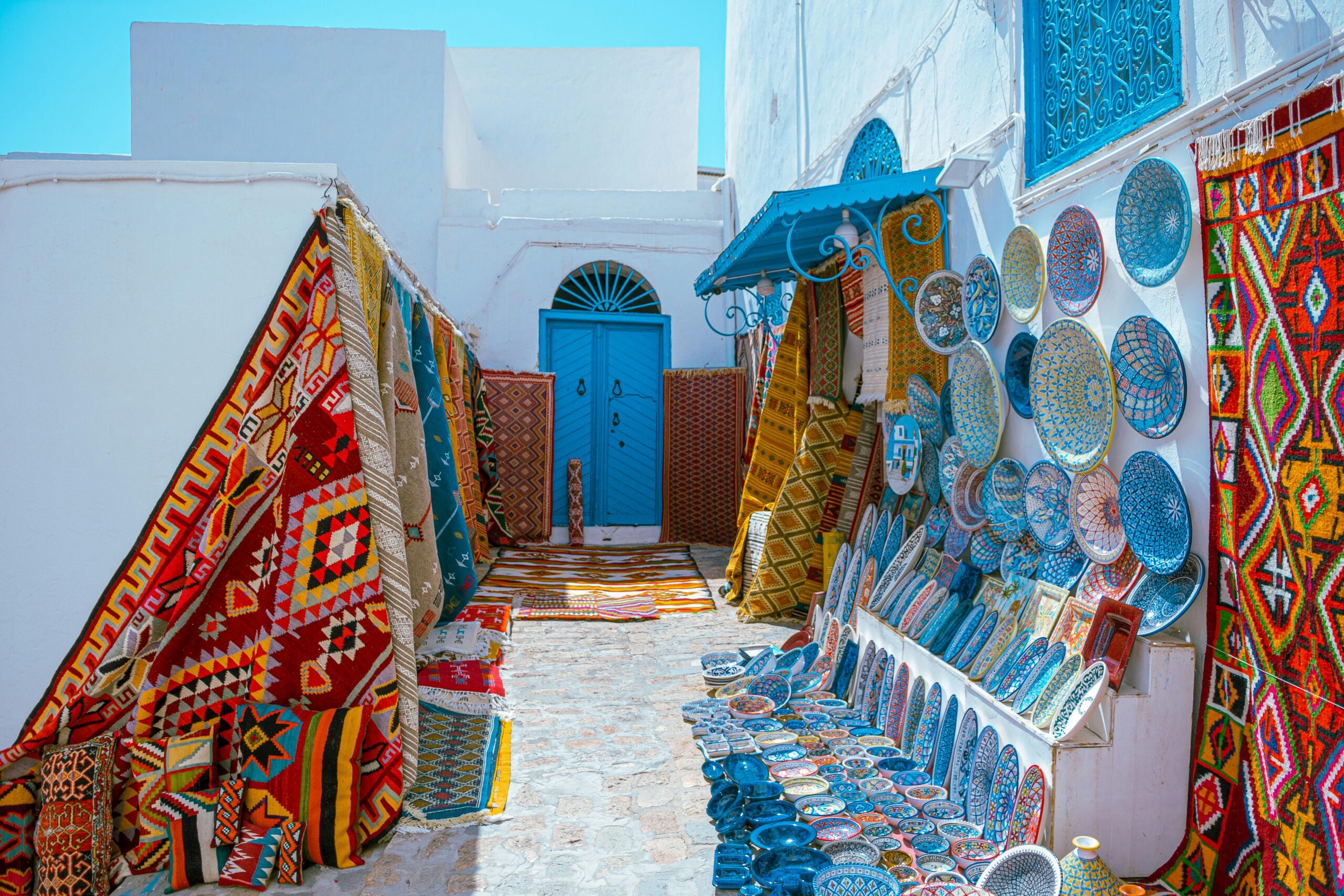
The main families of crafts and products
Textiles and weaving
Textile production is among the most geographically diverse of Morocco’s craft traditions. Berber women in the High Atlas and Middle Atlas have woven wool blankets and rugs for generations, using patterns that encode tribal identity, marital status, and local cosmology. The designs are geometric and direct, with a rawness that distinguishes them from the more polished urban pile rugs of the plains.
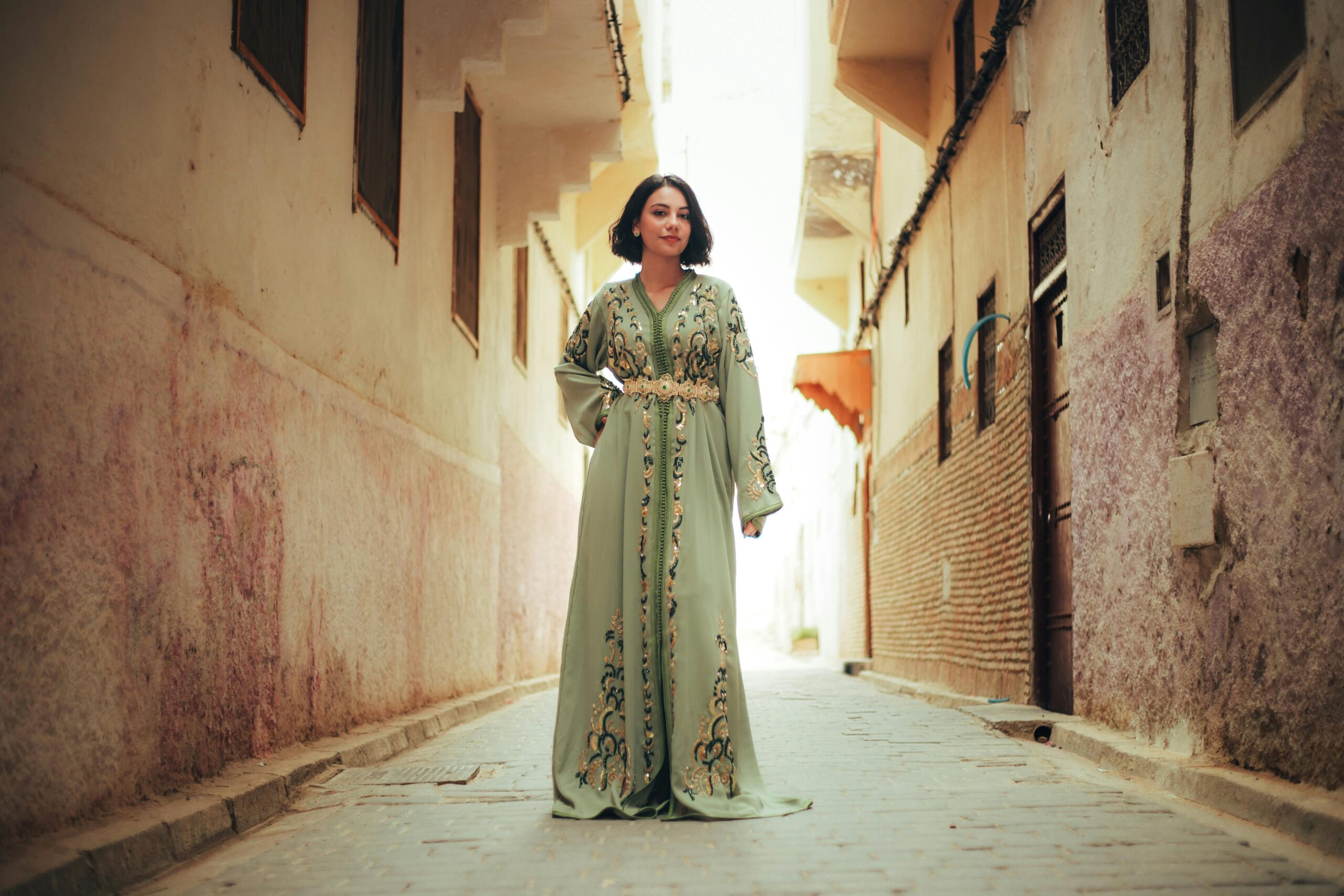
In the Souss and around Taroudant, woven textiles in cotton and wool reflect the Tachelhit-speaking culture of the region. Further north, in the Rif foothills near Chefchaouen, striped blankets in vivid colours remain in everyday use and have quietly become sought after.
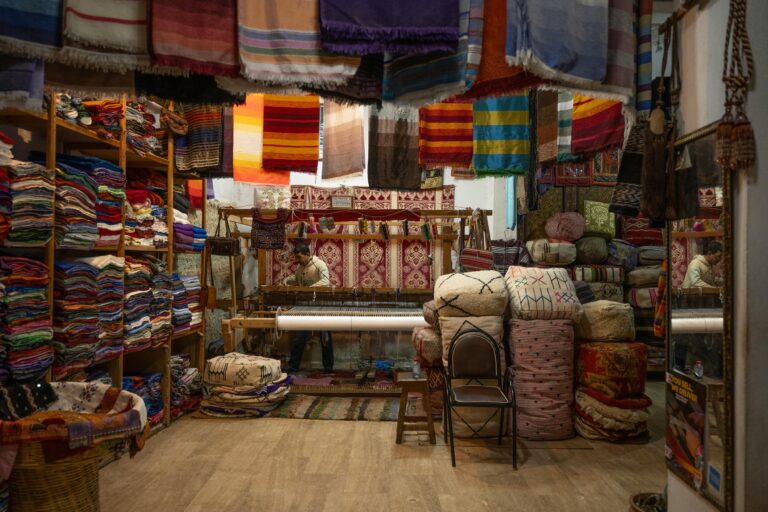
Urban workshops in Fes and Marrakech produce more refined and ornate work – brocaded fabrics, silk-and-wool pieces, kaftans for formal wear – often working on traditional vertical looms in conditions unchanged for centuries.
Ceramics and pottery
Morocco’s ceramic traditions divide into two broad registers: the polychrome tin-glazed pottery of Fes, with its intricate blue and white or multicolour patterns, and the raw, earthy unglazed or simply glazed pottery produced in smaller centres.
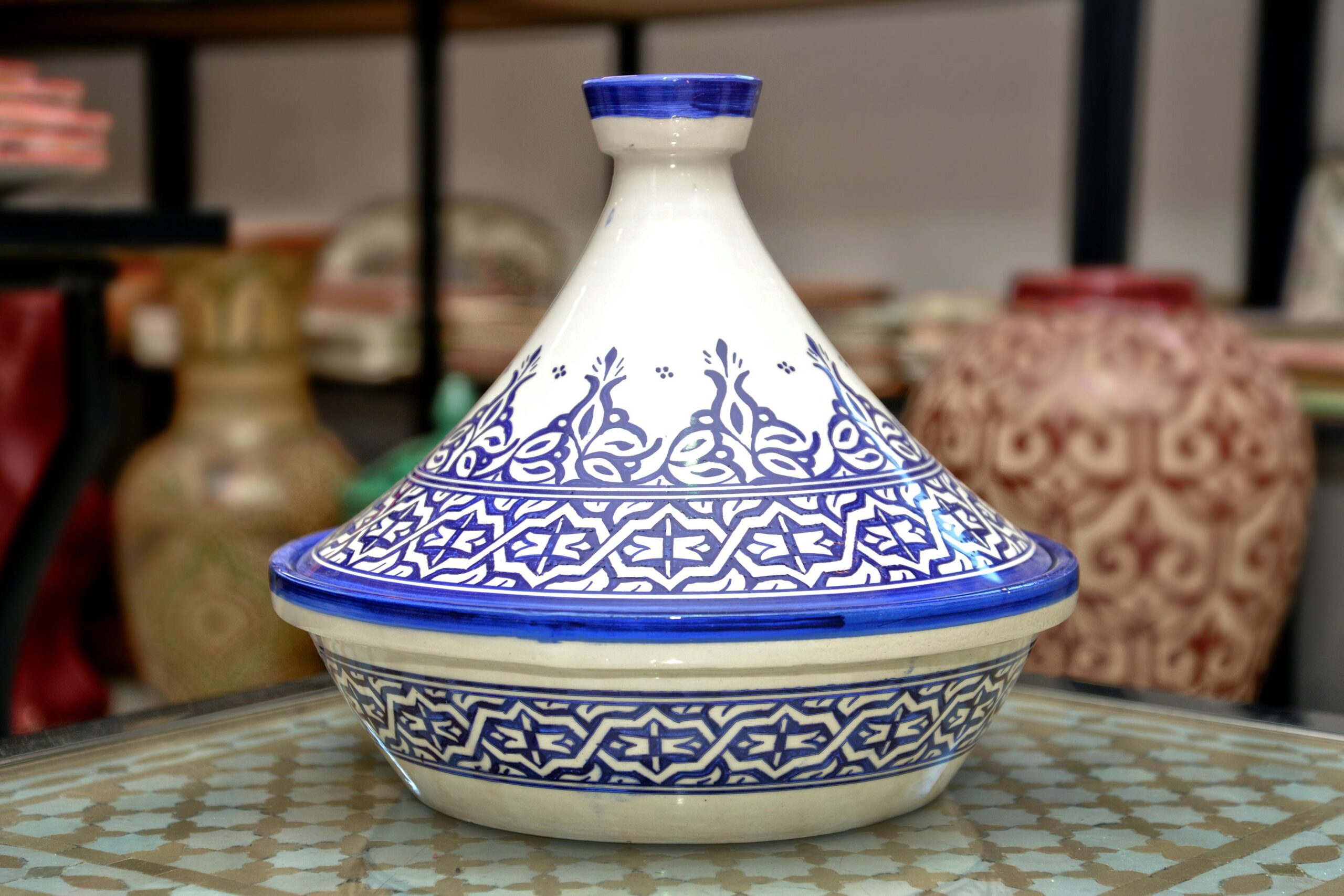
Fes is the dominant name here, and its pottery workshops on the eastern edge of the medina are among the most impressive craft sites in the country. Safi, on the Atlantic coast, is Morocco’s other major ceramic city – its output is bolder, more experimental in colour, and often overlooked by travellers who skip this mid-sized coastal town.
Tamegroute, a small oasis village on the edge of the Draa Valley, produces a distinctive green-glazed pottery using local manganese oxide. The colour is earthy and muted, quite unlike the busy polychrome of Fes, and the pieces are made in a single small cooperative that has operated for generations.
Leatherwork
Fes is to leatherwork what Safi is to pottery – the historic and practical centre of the tradition. The tanneries of Fes, where hides are still processed using medieval methods in stone vats filled with natural pigments and organic compounds, are among the most photographed sights in Morocco. But the leather goods themselves – babouches (pointed slippers), bags, belts, pouches, and notebooks – are what most travellers bring home.
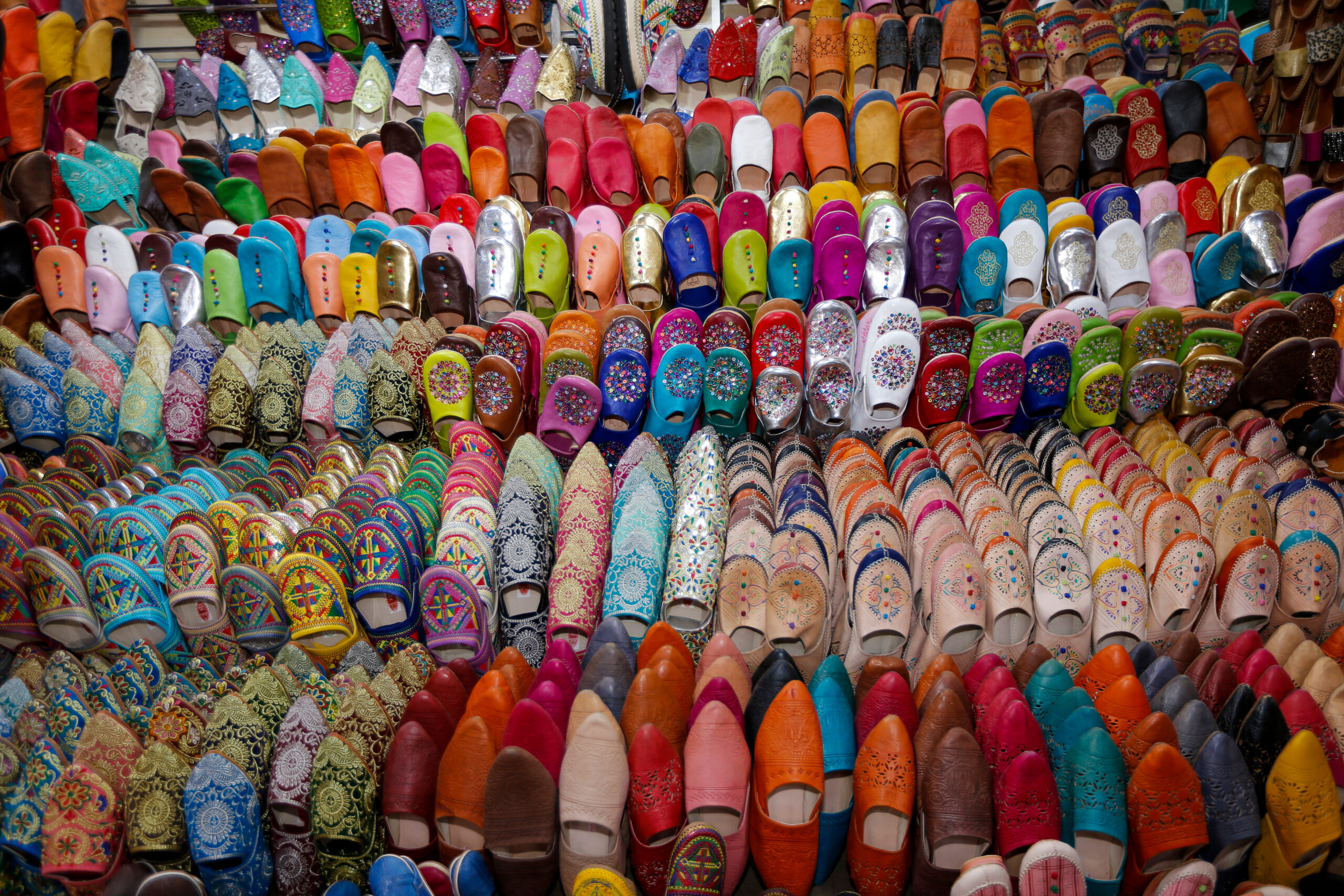
Quality varies enormously. Genuine handmade Fassi leather goods have a suppleness and finish that machine-made imitations lack. The tourist-facing shops ringing the tanneries deal in both, and the difference is not always obvious at a glance. Softness, stitching regularity, and the smell of the leather (natural-tanned goods have a distinctive earthy quality) are useful guides.
Marrakech also has a strong leather trade, particularly in the Mellah area and the souks around Rahba Kedima, though its character leans more commercial.
Metalwork, woodwork, and zellige
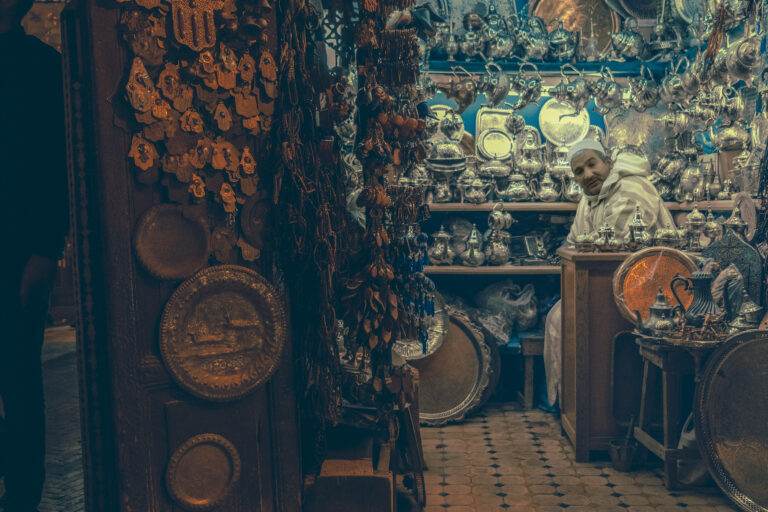
Moroccan metalwork spans a wide range: hand-hammered copper and brass trays from Marrakech, silver Berber jewellery from the south, iron lanterns and candle holders, and the engraved silver teapots used in the tea ceremony. The brass and copper souks of Marrakech (around the Smarine and Semmarine areas) and Fes are the best places to engage with this tradition.
Woodwork is particularly associated with Essaouira, whose thuya trees – a fragrant, burl-rich conifer found along the Atlantic coast – produce a wood unlike any other in Morocco. Local craftsmen work it into marquetry boxes, frames, chess sets, and sculptures that carry the landscape of the Atlantic southwest into an object you can carry home.
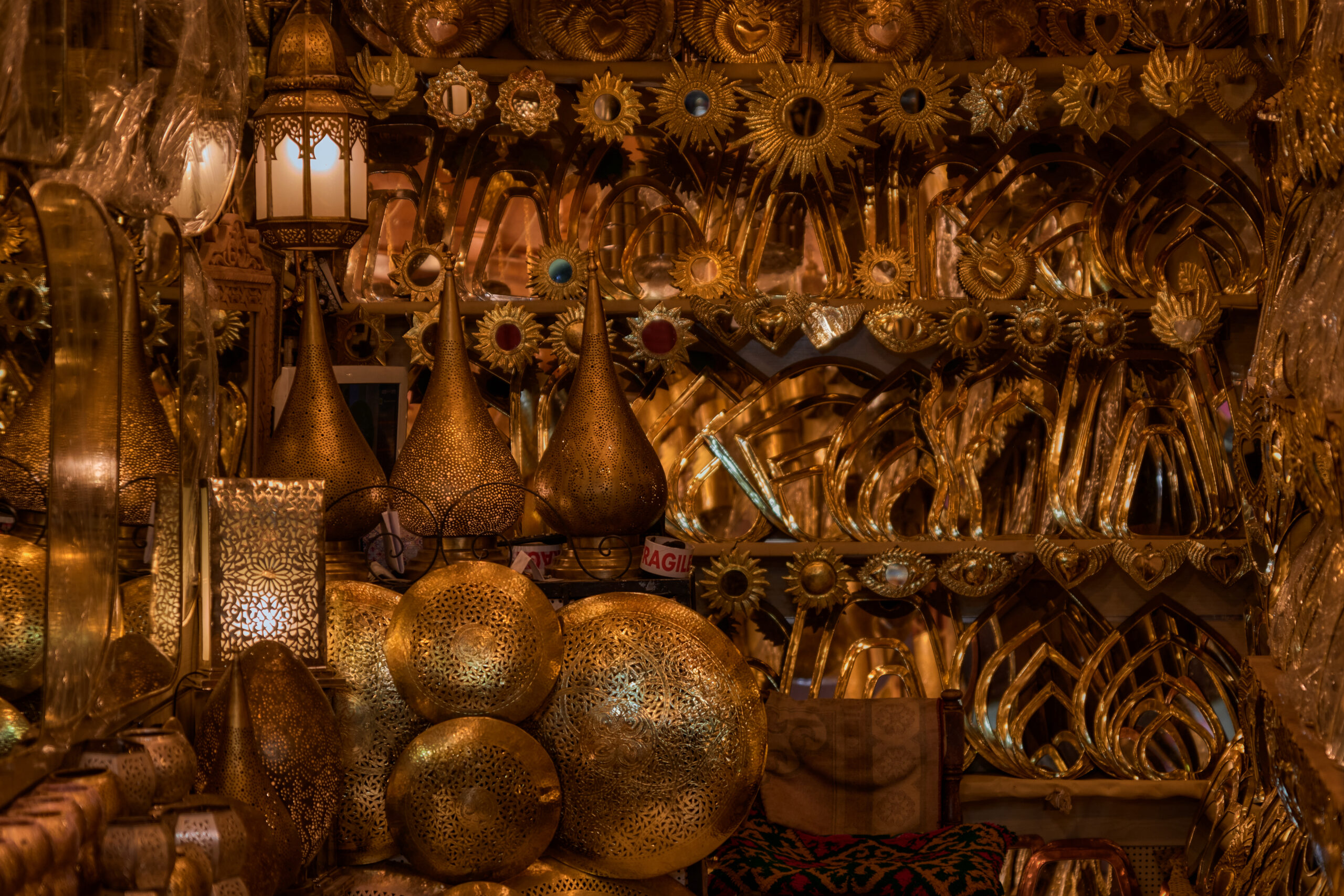
Zellige – the cut tilework used in fountains, riads, and sacred spaces – is produced primarily in Fes. The tilework you see covering courtyard floors and the lower walls of mosques and madrasas is cut by hand from baked clay tiles and assembled into geometric patterns with no margin for error. Smaller decorative pieces and zellige-topped furniture are available for purchase, though the finest craftwork remains in the buildings it was made for.
Carpets and rugs
Moroccan rugs broadly divide into two worlds: refined urban carpets, especially associated with Rabat, with formal patterns and Persian- or Ottoman-influenced symmetry; and Berber rugs, woven in the mountains and southern regions, where geometry is freer, more personal, and often more expressive.
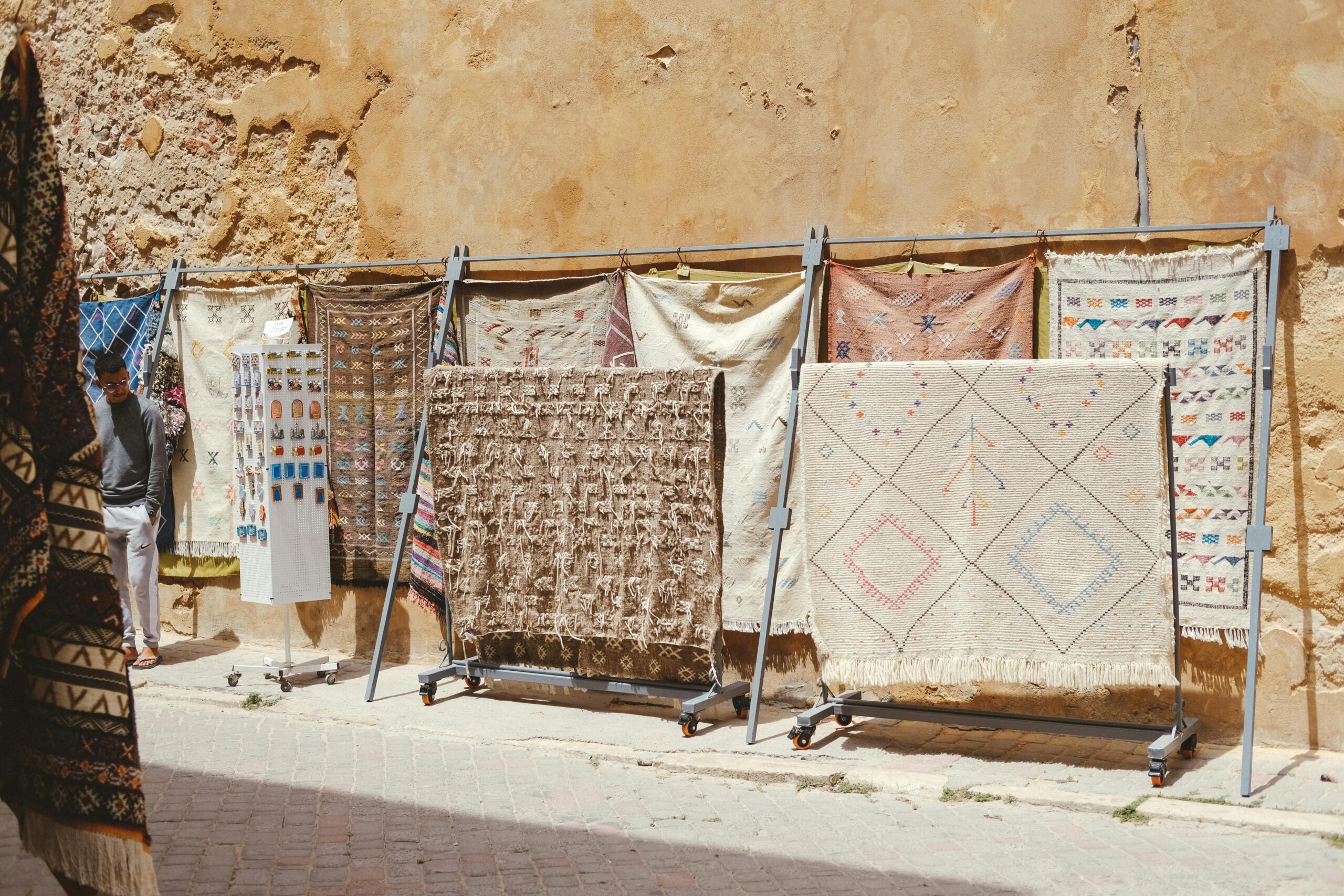
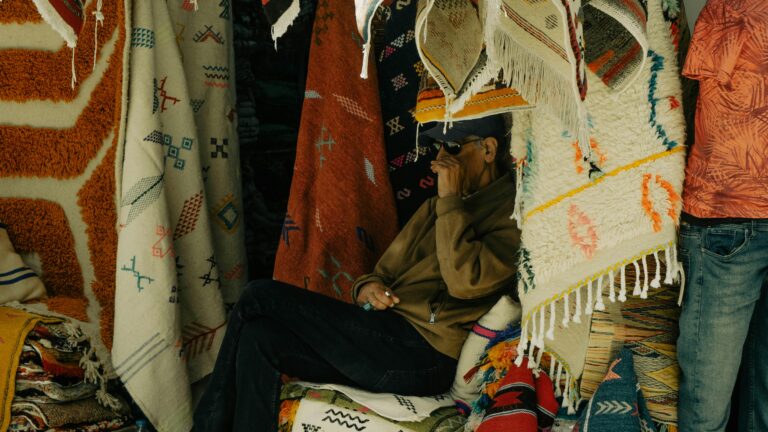
The most valued Berber rugs come from the Middle Atlas (particularly the Beni Ourain style – high-pile, cream wool with geometric dark lines) and from the High Atlas. Boucherouite rugs, made from recycled textile scraps, have gained international attention for their colourful, almost abstract appearance and their resourcefulness.
Buying a rug in Morocco requires time, tea, and a willingness to engage. The experience itself – unrolling, comparing, negotiating over an hour in a lantern-lit room – is part of what makes it memorable. Avoid buying rugs at the first shop you enter and in the most tourist-heavy medina streets, where the turnover is too high for quality to be consistently maintained.
Argan oil and terroir products
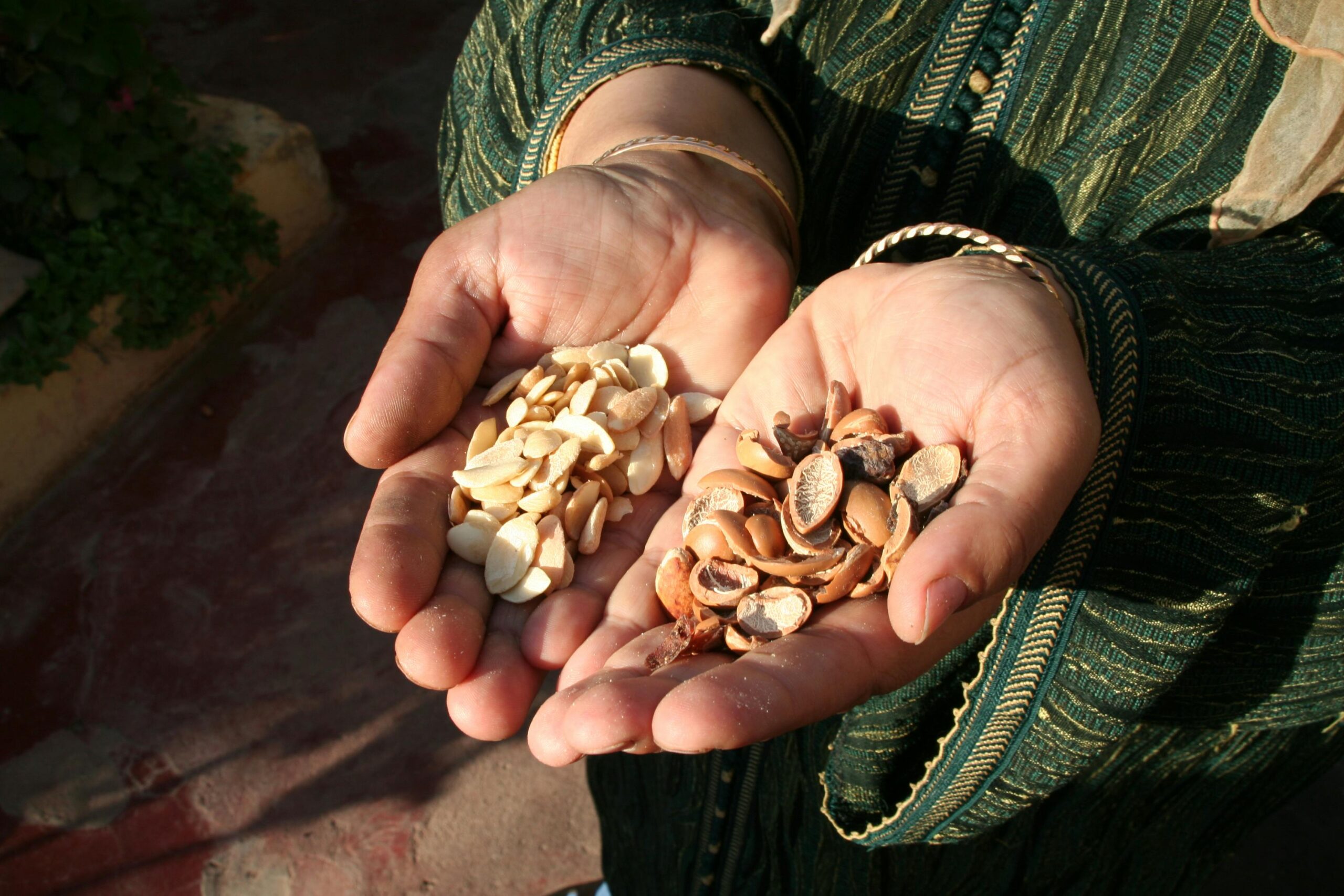
Argan oil is Morocco’s most internationally recognised terroir product, produced almost exclusively in the Souss region between Agadir, Essaouira, and Taroudant – a UNESCO-recognised biosphere reserve. The argan tree is endemic to this zone, and the oil pressed from its kernels (either raw for cosmetic use or roasted for culinary use) is genuinely exceptional.
The best argan oil is produced by women’s cooperatives, which press the oil by hand, using traditional stone presses. Visiting one of these cooperatives near Essaouira or along the road south to Agadir is worthwhile – you see the full process, from cracking the hard nuts to the golden oil emerging from the press, and you buy directly from the people who made it.
Beyond argan, Morocco has a rich landscape of terroir products worth paying attention to:
- Saffron from Taliouine, a small town in the Anti-Atlas, produces some of the world’s finest saffron in small quantities. It is significantly cheaper than in Europe and genuinely excellent.
- Amlou, a paste made from roasted argan oil, almonds, and honey, is a Souss breakfast staple with an intensity of flavour that preserves or oils from supermarkets cannot replicate.
- Rose water and rose products from El Kelaâ M’Gouna in the Dades Valley, where the annual rose harvest (typically in late April or early May) fills the valley with fragrance.
- Honey from the Atlas mountains – particularly thyme honey and rare carob honey – is sold at roadside stalls and in medina markets, and is worth tasting before buying.
- Preserved lemons and argan-based spice blends from any good souk spice merchant are among the easiest and most useful things to bring home from a Moroccan kitchen.
Regional food specialities to discover locally
Moroccan food has genuine regional variation that most visitors never encounter because restaurants in tourist centres default to a generic national menu. Paying attention to where you are changes the experience.
In the south, slow-cooked lamb and camel meat, dates stuffed with almond paste, and harira thickened with dried broad beans are staples. Along the Atlantic coast, grilled sardines, chermoula-marinated fish, and sea urchin (in season) dominate. In the mountains, a hearty wheat porridge called smen-enriched amlou or dried meat preserved in fat (khlii) reflect the necessity of long winters. Fes remains the most sophisticated culinary city – bastilla (the pigeon and almond pie wrapped in warqa pastry), pastilla au lait, and the complexity of Fassi tanjia cooking are worth seeking out in restaurants that specialise in local cuisine.
The regional dimension
Moroccan craft identity is inseparable from geography. Understanding which places are associated with which traditions adds purpose to an itinerary.
City / Region
Notable crafts and specialities
Fes
Leatherwork, polychrome ceramics, zellige, brasswork, fine textiles, sophisticated cuisine
Marrakech
Metalwork, lanterns, babouches, rug trade, spices, tourism-oriented craft market
Essaouira
Thuya woodwork, silver jewellery, argan oil proximity, Atlantic seafood
Safi
Ceramic production, pottery workshops, Atlantic fish culture
Tamegroute
Green-glazed pottery, Draa Valley dates, silence and desert edge
Chefchaouen
Striped wool blankets, woven goods, mountain herbs and honey
Atlas region
Beni Ourain and Berber flatwoven rugs, wool textiles, mountain honey
Souss / Agadir area
Argan oil cooperatives, saffron from Taliouine, amlou
Dades / El Kelaâ
Rosewater, rose products, rose harvest (April-May)
Sahara and southern oases
Indigo-dyed textiles, silver Berber jewellery, desert-edge food culture
A trip that moves between Fes, the Atlas, and the south will cross several distinct craft geographies. One that stays only in Marrakech will give access to the trade but rarely to the source.
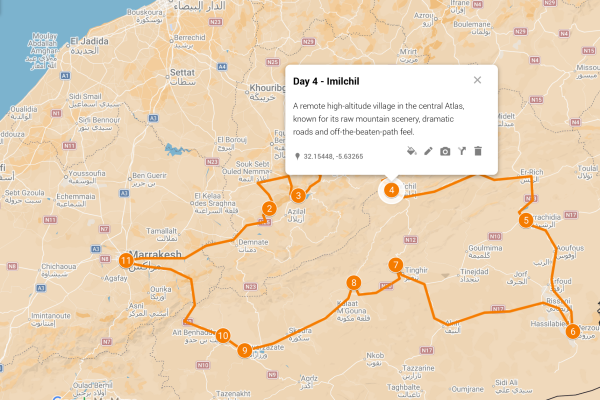
Plan your Morocco Trip with our Free Morocco Travel Maps
Ready-made itineraries for 3, 7, 10 and 14 days
Best spots by city, coast, desert & mountains
Handpicked hotels, riads & resorts
Restaurants, viewpoints & activities
Key neighborhoods & transport tips
Free access. Regular updates. No spam.
What travellers should know
Handmade versus mass-produced
Not everything sold in a Moroccan souk is handmade, and not everything handmade is high quality. In the busiest tourist markets – central Marrakech, the Fes el-Bali souk approaches along the main tourist route, the main bazaar street in Chefchaouen – a proportion of goods are factory-produced, often in China or in Moroccan industrial zones, and finished to look hand-crafted. The tell-tale signs: uniform perfection, very low prices relative to the complexity of the object, and shopkeepers who seem uninterested in explaining the object’s origin.
Genuine handmade goods usually show subtle irregularities – slightly uneven edges on a ceramic, minor variation in a rug’s pile, the fine lines of hammer work on metal. These are signs of a human hand, not flaws.
Quality differences
Within the handmade category, quality varies by workshop, by craftsperson, and by material. A good ceramic from Fes will have a smooth, even glaze and a ring when tapped. A poor one will show pitting, uneven colour, or a chalky sound. A well-made babouche will have clean stitching, supple leather, and a firm but not stiff sole. Ask to see what you are buying in good light, and compare pieces from different corners of the same shop.
Bargaining
Bargaining is standard in medina shops and markets, and expected. Fixed-price shops exist (particularly in government-sponsored craft centres and some cooperative stores) and are marked as such. In standard medina commerce, the opening price can be two to four times what the seller will accept, though this varies by item and by how tourist-heavy the location is.
The most effective approach is to know roughly what something is worth before you commit to negotiating, move away from the first shop that interests you before returning, and avoid showing strong attachment to a specific object early in the conversation. Walking away genuinely – not theatrically – remains the most powerful tool.
Do not bargain if you have no intention of buying. It wastes time on both sides.
Shipping large items
Carpets, large ceramics, and pieces of furniture can be shipped from Morocco. Most reputable shops deal with this regularly and can arrange freight forwarding. Agree on the total shipped cost, insurance, and delivery timeline in writing before purchasing. Allow several weeks for sea freight. Some items – antiques especially – require export documentation, and anything claimed to be an authentic antique should come with provenance paperwork.
The best buying experiences
The most satisfying purchases in Morocco tend to happen away from the main tourist drag: in a small cooperative workshop you found by walking further into the medina than most visitors go, in a village market on a Tuesday morning, at an argan cooperative visited directly rather than through a tour. These settings involve less theatre and more transparency, and often better prices.
Government-run craft centres (Maison de l’Artisan or equivalent) in most cities offer fixed, fair prices and a reasonable selection. They are not the most exciting buying experience, but they are a useful calibration tool – seeing fixed prices for quality goods helps you judge what you encounter elsewhere.
Best places to explore crafts and regional specialities in Morocco
Fes remains the benchmark for urban Moroccan craftsmanship. The medina, a UNESCO World Heritage Site, contains working tanneries, ceramic cooperatives, brass-hammering workshops, and weaving houses that have operated continuously for centuries. A guided tour of the craft districts – ideally with someone who can take you beyond the tannery view terraces into the actual workshops – is one of the most instructive experiences in Morocco.
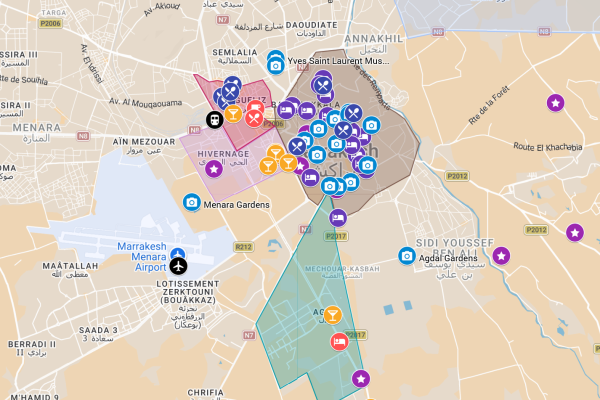
Marrakech is the most accessible starting point for many travellers, and its souks are vast and well-organised by trade. The sheer volume of goods available makes it possible to compare quality across many vendors. That said, the most tourist-facing parts of the medina require more filtering. The neighbourhood around the Mellah and the covered fabric souks north of Mouassine repay attention.
Essaouira is a gentler, more manageable city for craft exploration. The thuya wood workshops lining the rampart road are open to visitors, the argan cooperatives are a short drive south, and the medina’s souk streets are calmer and less pressured than Marrakech. The city has an artistic tradition of its own – Gnawa music, a specific school of self-taught painting – that enriches the craft context.
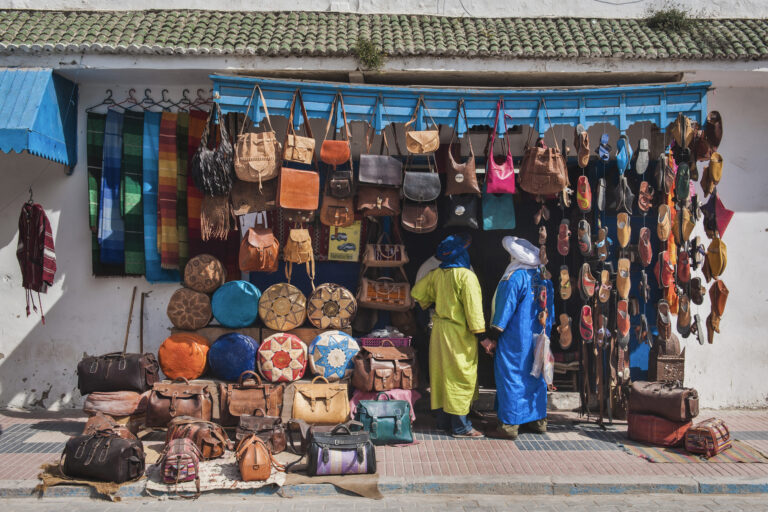
Safi is one of Morocco’s most undervisited cities relative to what it offers. Its potters’ quarter, the Quartier des Potiers, sits just outside the medina walls and contains dozens of working kilns and studios. The scale of production and the directness of the selling experience – you are often buying from the person who made the piece – is refreshing.
Tamegroute requires an effort to reach, positioned at the end of the Draa Valley road south of Zagora. The reward is a small pottery cooperative producing green-glazed earthenware in a setting of palmeraies and ksour, with almost no surrounding commercial noise. It is one of the most authentic craft encounters available to a traveller in the south.
The Atlas region – specifically the mountain villages accessible from Marrakech via the Tizi n’Tichka pass or from Azilal – is the place to engage with Berber textile traditions. Weekly village markets (souks) in towns like Ait Benhaddou, Aït Ourir, or along the Ourika Valley road bring local weavers, honey sellers, and spice traders to a central point. The atmosphere is unhurried and the goods genuinely local.
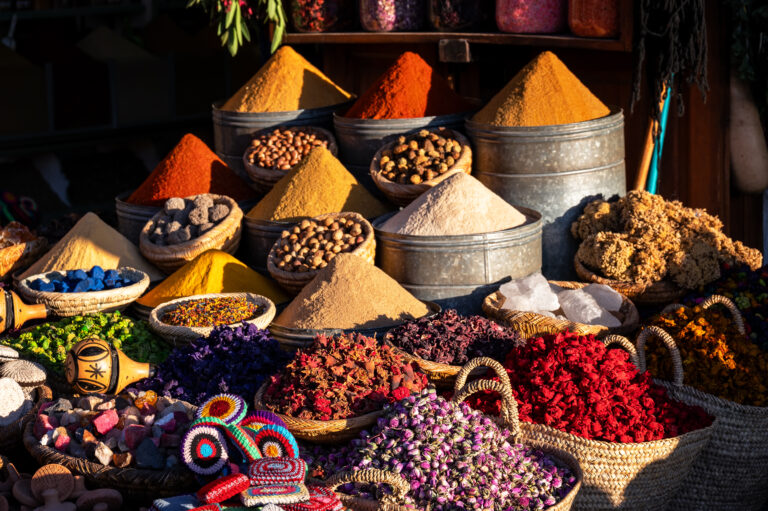
The Souss argan country between Essaouira and Agadir offers the best access to argan cooperatives. The road south along the coast and the inland route via Biougra pass through areas where women’s cooperatives welcome visitors, explain the production process, and sell oil, soap, and amlou directly. Stopping at a cooperative rather than buying argan oil from a medina souk makes the origin of the product tangible.
Page last updated: June 2026
Anything we can improve? Let us know
Plan Your Morocco Trip
Compare hotels, flights and rental cars
Compare hotels, riads and guesthouses across Morocco on Booking.com:
Compare flights to Morocco on Aviasales:
Find the right rental car for your Morocco trip with EconomyBookings: