

Breakfast
The Moroccan breakfast table is one of the more quietly spectacular things the country has to offer. It does not announce itself the way a tagine does. It arrives in stages – small dishes, warm bread, a pot of tea – and rewards the kind of attention that hurried travelers rarely give it. At a well-run riad, or at a traditional family table, it is the meal that most consistently converts visitors into genuinely engaged students of Moroccan food culture.
It is also a meal that is easy to miss entirely, replaced by a hotel buffet of continental pastries that has nothing to do with the country you came to experience. This guide covers what a real Moroccan breakfast looks like, what belongs on the table, and where to find versions worth slowing down for.
The Logic of the Moroccan Morning Table
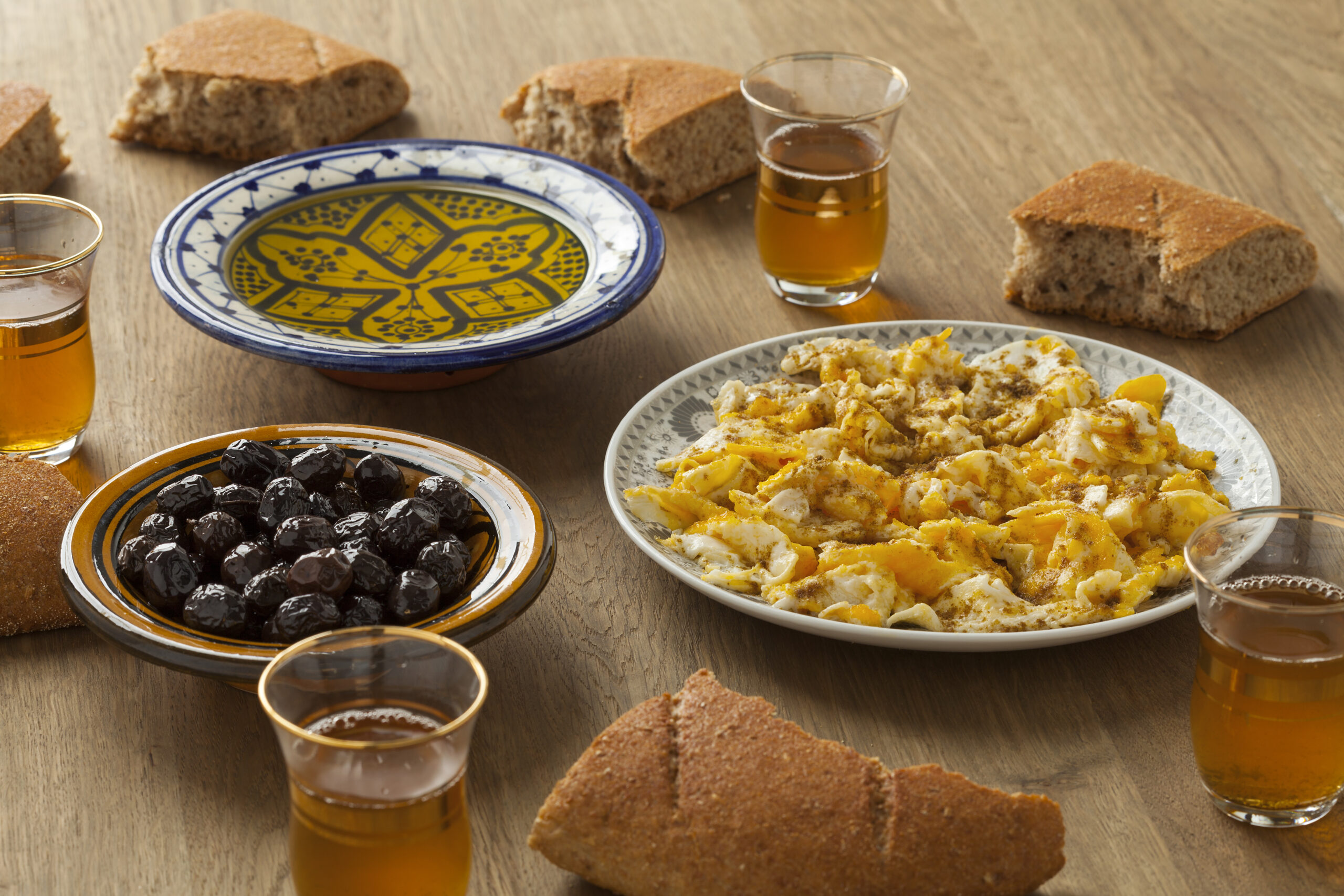
A Moroccan breakfast is not built around a single centerpiece dish. It is an accumulation of small things – breads, spreads, dairy, honey, olives, eggs – arranged together and eaten in no particular order, with mint tea or spiced coffee as the constant thread running through it. The table is communal and unhurried, and the quality of the experience depends almost entirely on the quality of the individual components.
Understanding what each element is and where it comes from makes the whole more legible – and more enjoyable.
The Breads
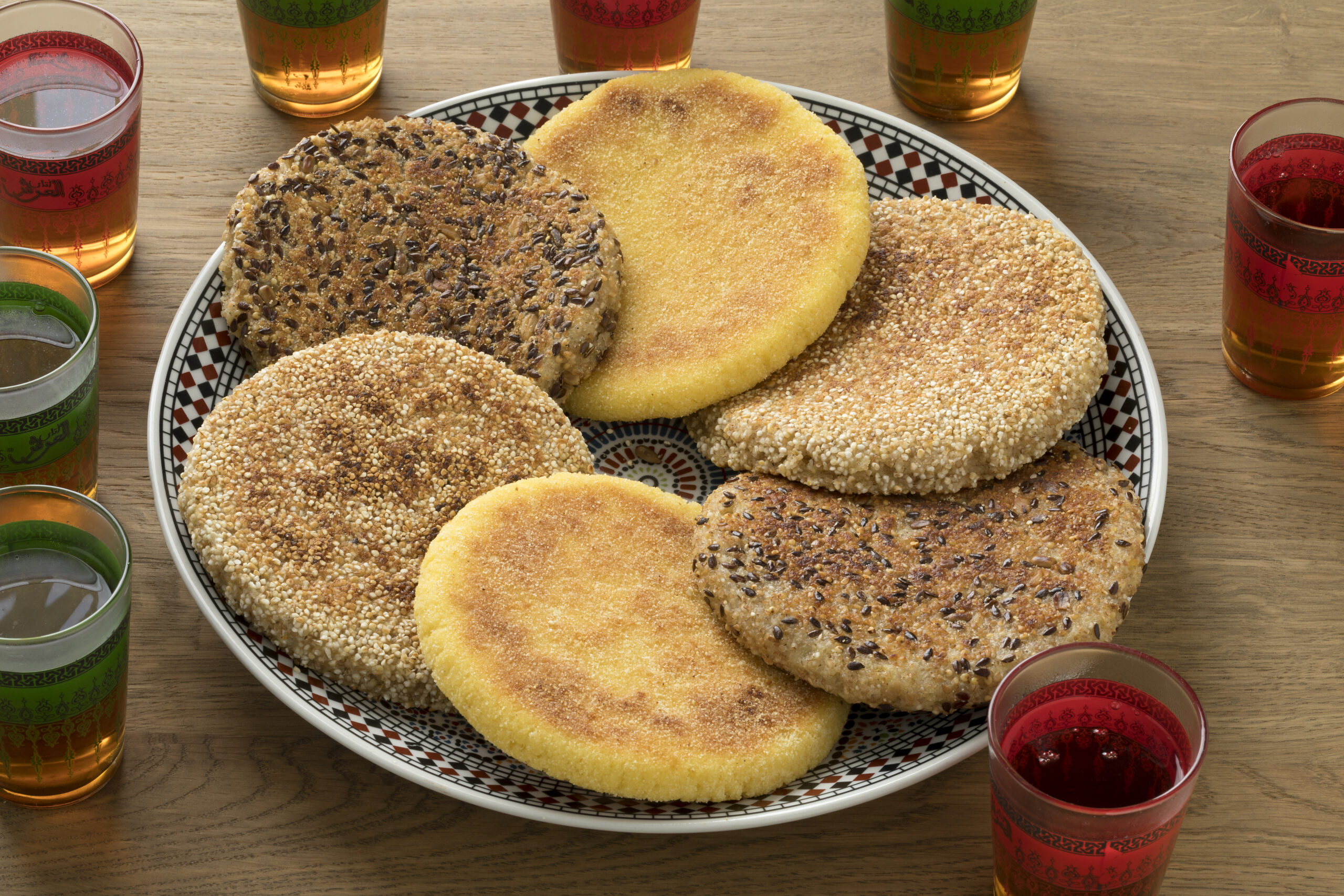
Bread is the foundation of the Moroccan breakfast, and it arrives in several forms. Khobz – the round, slightly dense semolina flatbread – is the universal constant, torn rather than sliced and used to scoop spreads and mop up oil and honey. In medina neighborhoods, families still send their morning dough to a communal wood-fired oven called a ferran, and a loaf bought warm from one, marked with the family stamp, is worth seeking out.
Msemen is the layered, square flatbread made from a butter-folded dough cooked on a griddle – golden and lightly crisp on the outside, soft and flaky within. Meloui follows the same logic but is coiled into a spiral before cooking, producing a chewier texture that holds up well with wetter toppings. Both are made to order at their best and lose their appeal quickly once cold.
Baghrir is the most delicate of the three – a semolina pancake cooked on one side only, its entire surface covered in a honeycomb of tiny holes that absorb warm melted butter and honey immediately. Softer and more fragile than msemen, it belongs to a sit-down context rather than the street, and a well-made baghrir at a good riad breakfast is one of the most quietly excellent things on the Moroccan morning table.
The Spreads
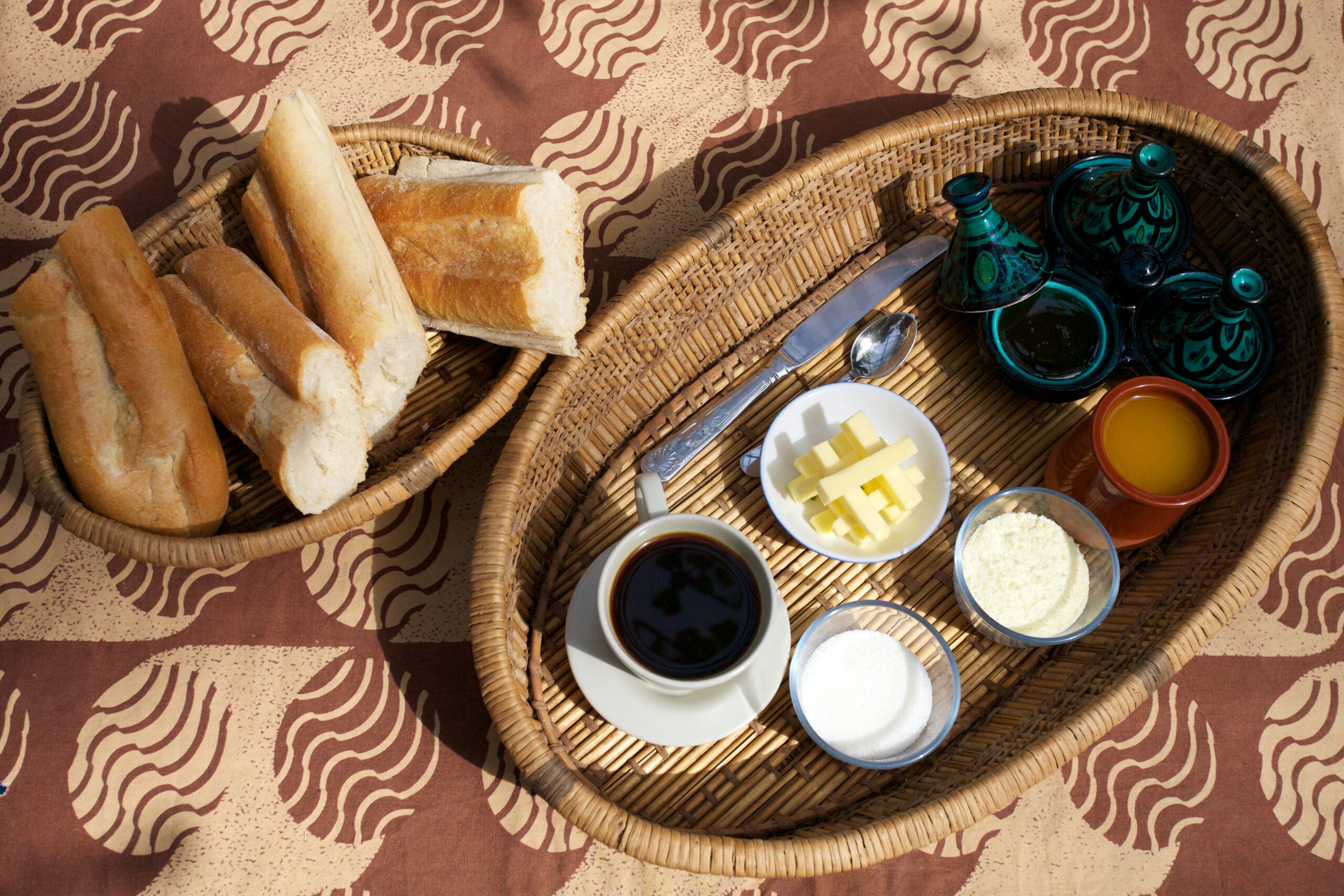
The spread component is where the Moroccan breakfast distinguishes itself most clearly from anything else in the region. Honey sits at the center – and Moroccan honey is worth paying attention to, with genuinely distinct varieties produced across the country: thyme honey from the High Atlas, orange blossom honey from the coastal plains, dark and complex euphorbia honey from the south. The difference between a good single-origin Moroccan honey and a generic tourist-shop jar is considerable.
Amlou is the spread that surprises most visitors – a rough paste of ground toasted almonds, cold-pressed argan oil, and honey, specific to the Souss region of southern Morocco. It is rich, slightly bitter from the argan, and deeply nutty in a way that refined nut butters do not approach. Spread on warm msemen, it is one of the most unreplicable tastes in the Moroccan food repertoire and one of the most rewarding edible souvenirs the country offers.
Olive oil and fresh butter complete the spread side of the table. Morocco produces exceptional cold-pressed olive oil, and a small dish of it alongside warm khobz – sometimes accompanied by cured black olives – brings a savory counterpoint to the sweeter elements. Smen, the fermented aged butter found at traditional tables, is a more challenging proposition – pungent, sharp, and deeply divisive – but worth trying at least once.
The Eggs
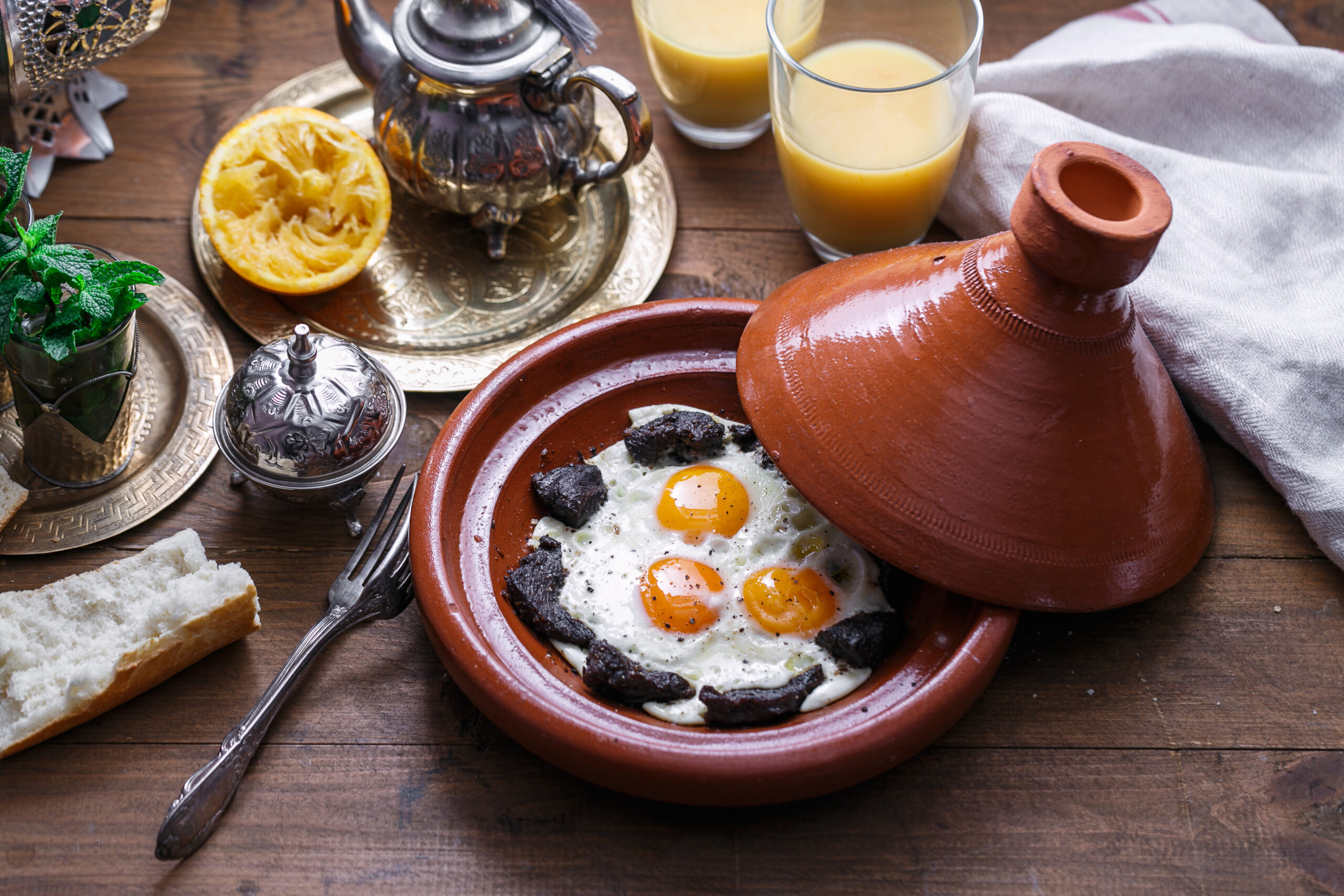
Eggs are a common part of breakfast in Morocco and appear in several simple but satisfying forms. They may be fried with olive oil and a pinch of cumin, scrambled with tomatoes and onion, or served boiled alongside bread, olives, and tea. In local cafés, eggs are one of the most familiar and affordable breakfast options, and they fit naturally into the Moroccan habit of mixing savoury and sweet items on the table.
Among the favourite traditional options, eggs with khlii hold a special place. Khlii – a preserved and heavily seasoned meat, usually beef – is cooked gently before the eggs are added, creating a rich, salty, deeply savoury dish that many Moroccans consider one of the best breakfast foods in the country. It is more rustic and more filling than a simple plate of fried eggs, and for many locals it is also one of the most flavourful ways to start the day.
For travellers, eggs with khlii are worth trying at least once, especially if you want to experience a breakfast dish that feels genuinely Moroccan rather than just familiar. Served with warm bread, it is one of those breakfasts that is simple on paper but memorable when done well.
Plan your Morocco Trip with our Free Morocco Travel Maps
Ready-made itineraries for 3, 7, 10 and 14 days
Best spots by city, coast, desert & mountains
Handpicked hotels, riads & resorts
Restaurants, viewpoints & activities
Key neighborhoods & transport tips
Free access. Regular updates. No spam.
The Drinks
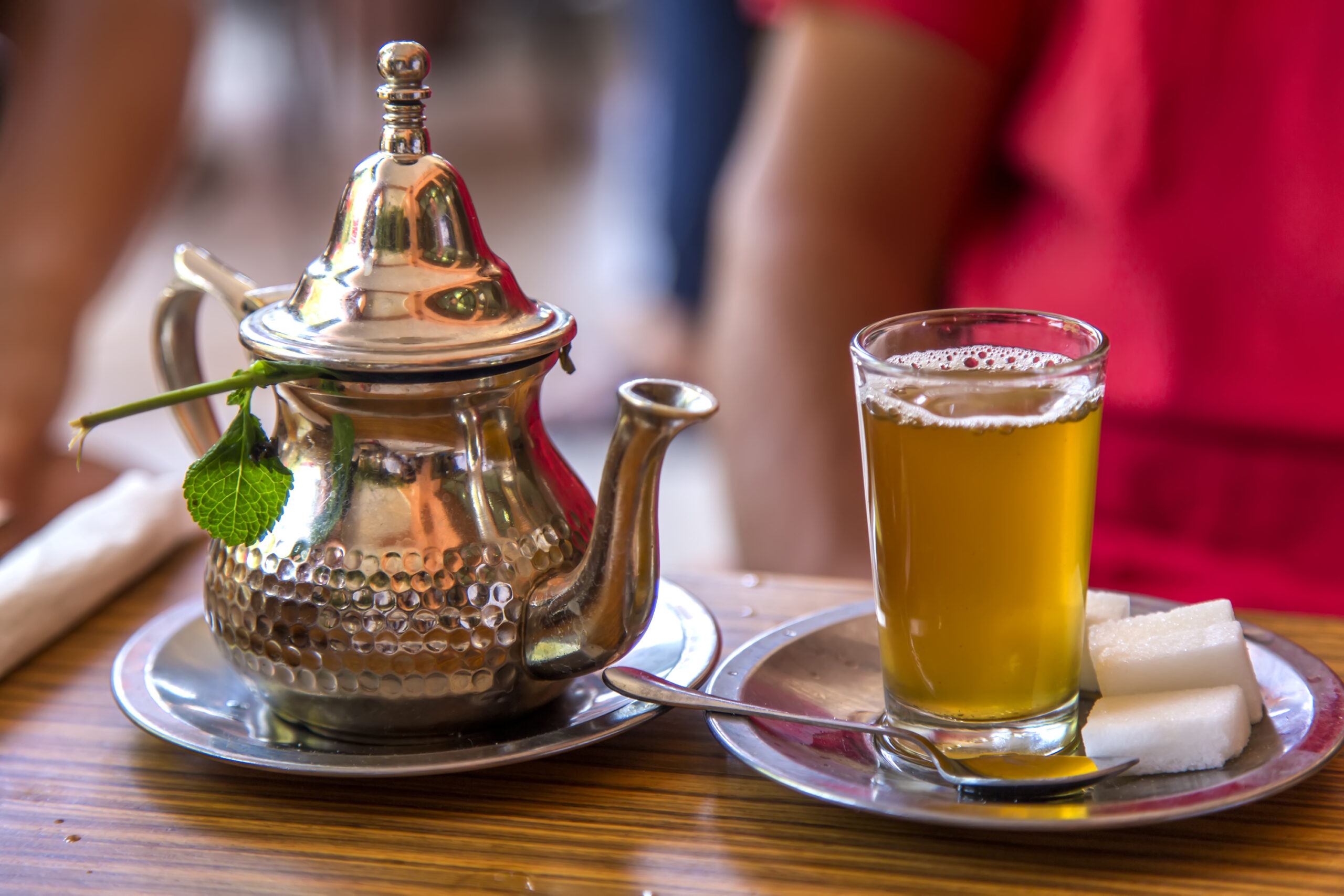
Mint tea is the default morning drink – sweet, fragrant, and poured with the same care at seven in the morning as in the afternoon. Spiced coffee – qahwa bel bharat, made with cardamom, cinnamon, and ginger – appears at breakfast tables in the south and at establishments that take their food seriously, and is worth requesting specifically if not offered. Fresh-squeezed orange juice rounds out the morning drink options at most riad breakfasts – Moroccan oranges are exceptional, and a glass pressed while you watch is one of the more reliable pleasures of the morning.
Traditional Moroccan Breakfast Soups
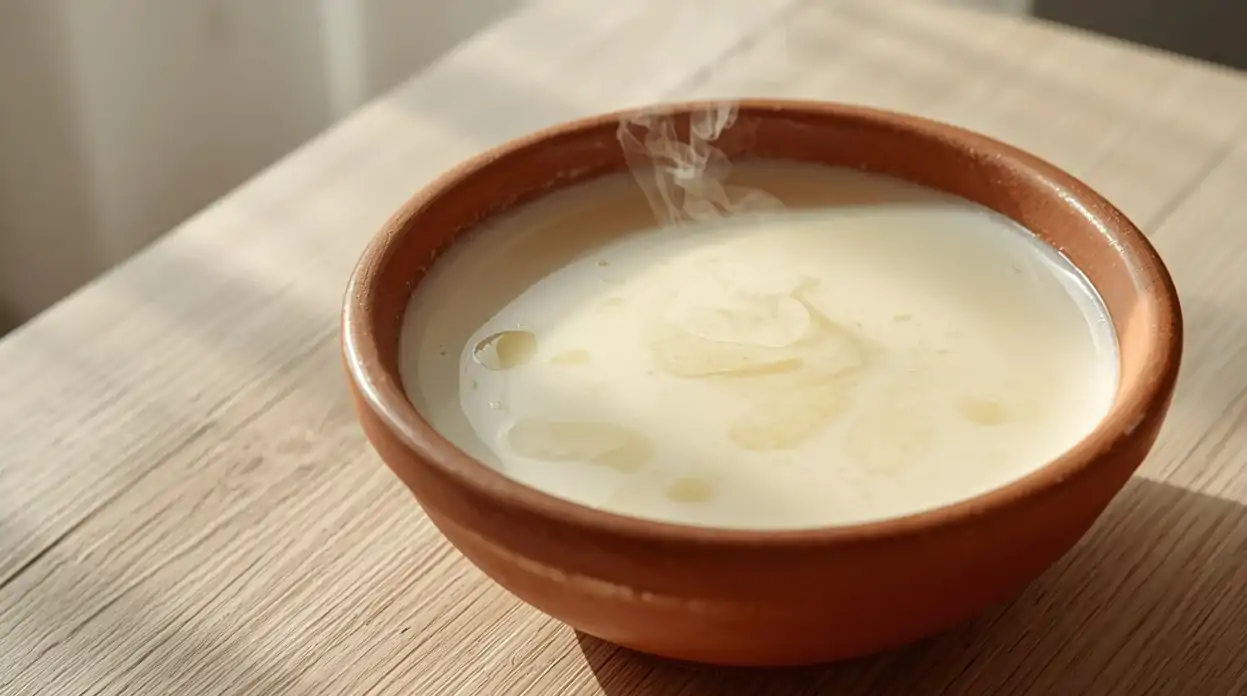
Moroccan breakfast is not only about bread, pancakes, and eggs. In many parts of the country, especially in colder weather or more traditional settings, the morning meal can also include warm, comforting soups that are far more substantial than what many visitors expect. Among the best known are bissara, hssoua, and, in some cases, harira.
Bissara is the most widely recognised of the three as a breakfast favourite. Made from dried split fava beans and blended into a thick, velvety soup, it is usually served hot with olive oil, cumin, and sometimes paprika or chili. Cheap, filling, and deeply rooted in everyday food culture, it remains one of Morocco’s most popular savoury breakfasts, especially in modest local eateries and during the colder months.
Hssoua is softer, lighter, and more home-style in character. Often prepared as a warm, porridge-like soup, it is valued for the comfort it brings in the morning and for its nourishing, easy-to-digest quality. Recipes vary depending on the region and the household, but hssoua belongs to that older, more traditional side of Moroccan breakfast that is less visible in tourist settings yet still familiar in many homes.
Harira, although more strongly associated with dinner or with breaking the fast during Ramadan, can also appear at breakfast in some Moroccan households or casual eateries. Richer and more complex than bissara or hssoua, it is made with tomatoes, legumes, herbs, and spices, and sometimes includes meat. When eaten in the morning, it turns breakfast into something especially hearty and substantial.
For travellers, these soups reveal another side of breakfast in Morocco – less sweet, less polished, and much more rooted in everyday tradition. They may not be as famous as msemen or baghrir, but they show how varied and surprisingly robust Moroccan breakfast can be.
Where to Experience a Real Moroccan Breakfast
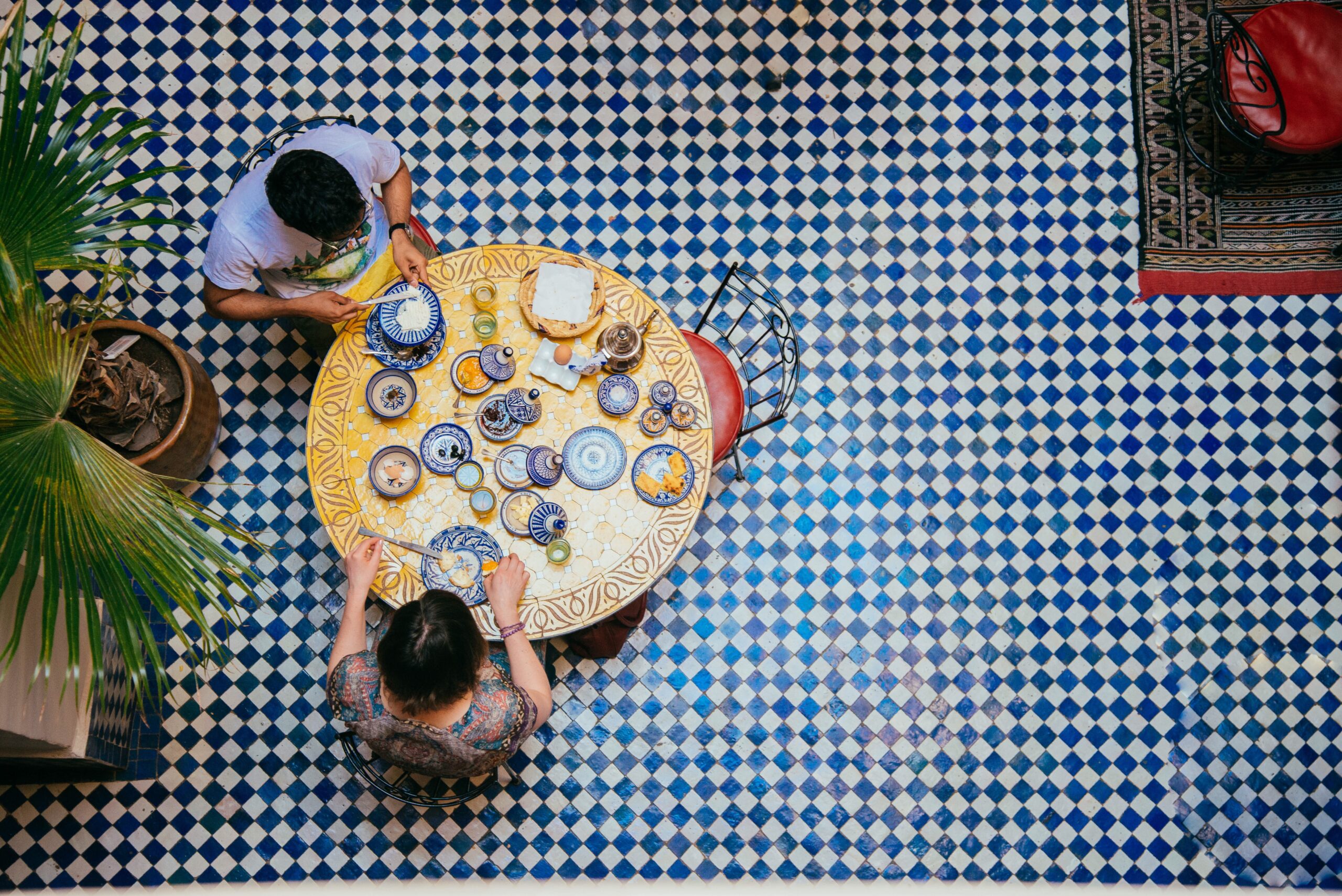
Riads are the most accessible setting for a genuinely good Moroccan breakfast. The better ones – particularly in Fez, Marrakech, and Essaouira – serve spreads prepared by home-trained cooks using local ingredients, and the result is usually far superior to anything available at a large hotel.
Traditional medina cafes offer a more stripped-back but equally valid version – msemen or khobz with honey and butter, a glass of mint tea, and nothing more. This is the everyday breakfast of working Moroccans, and eating it at a zinc counter in a busy neighborhood is a different experience from the riad setting but no less worth having.
Rural guesthouses in the Souss Valley, the Atlas mountains, and the deep south often produce the most remarkable spreads of all – amlou made fresh that morning, honey from nearby hives, eggs from the courtyard, bread from the wood-fired oven. These are not experiences that can be planned with precision, but travelers who find themselves in rural Morocco overnight should not leave without sitting down to the morning table.
Note: Specific riad and cafe recommendations should be verified before travel, as quality and ownership change regularly.
A Note on Timing
The Moroccan breakfast has a clock. Bread is best warm from the oven. Msemen and meloui are made in the morning and lose their appeal quickly. Sfenj – the ring doughnuts sold at street stalls – disappear by mid-morning when the pot is finished. The Moroccan morning table rewards early risers, and the traveler who adjusts their schedule accordingly eats considerably better than one who does not.
Page last updated: June 2026
Anything we can improve? Let us know
Plan Your Morocco Trip
Compare hotels, flights and rental cars
Compare hotels, riads and guesthouses across Morocco on Booking.com:
Compare flights to Morocco on Aviasales:
Find the right rental car for your Morocco trip with EconomyBookings: