

Drinks
Morocco is not a country you drink your way through passively. Its drink culture is specific, ritualized in places, and full of small pleasures that reward attention. Mint tea arrives whether you ordered it or not. Fresh orange juice is pressed in front of you for almost nothing. Fermented milk drinks appear at breakfast tables with no explanation offered and no apology needed.
Understanding what Morocco drinks – and when, and why – adds a layer to any visit that most travelers miss when they focus exclusively on food. This guide covers the full range: the teas and juices that define daily life, the dairy drinks that surprise most visitors, the fresh smoothies that have become a Moroccan staple in their own right, and the more nuanced question of alcohol in a Muslim country.
Moroccan Mint Tea: The Drink That Is Never Just a Drink
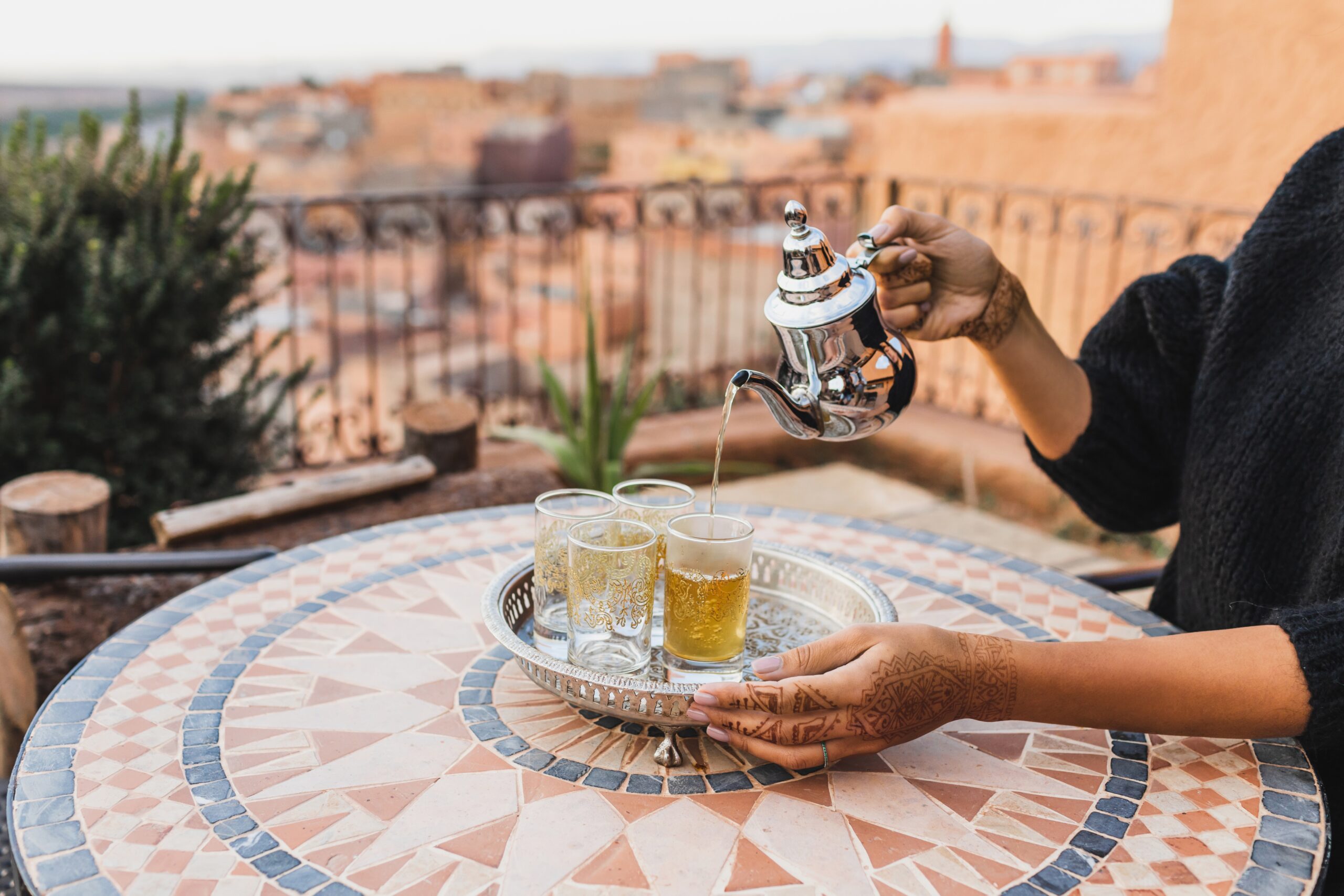
Atay – Moroccan mint tea – is the most important beverage in the country by a margin that no other drink comes close to challenging. It is not simply something people drink when they are thirsty. It is a social act, a gesture of hospitality, a marker of welcome and of respect. Being offered tea in Morocco means something. Refusing it, except with considerable grace, means something too.
The preparation is specific. Chinese gunpowder green tea forms the base – a strong, slightly astringent brew that is then heavily sweetened with sugar and combined with large quantities of fresh spearmint. The whole is poured back and forth between pot and glass several times to blend and aerate, then served from a height – the theatrical pour that creates a thin foam on the surface of each glass being both a mark of skill and a point of pride.
The tea is sweet in a way that takes some visitors by surprise. There is no low-sugar version in traditional settings – the sweetness is considered part of the balance, cutting through the tannin of the green tea and complementing the fresh mint. In some regions, particularly in the south and in Saharan areas, wormwood (chiba) is added alongside or instead of mint, producing a more bitter, herbal flavor that is an acquired taste worth acquiring.
Three glasses is the traditional expectation. The ritual of sitting with tea – at a cafe, in a riad courtyard, on a carpet in a shop, at a family table – is one of the most consistently pleasant experiences Morocco offers, and one that costs almost nothing.
Spiced Coffee: The Aromatic Alternative
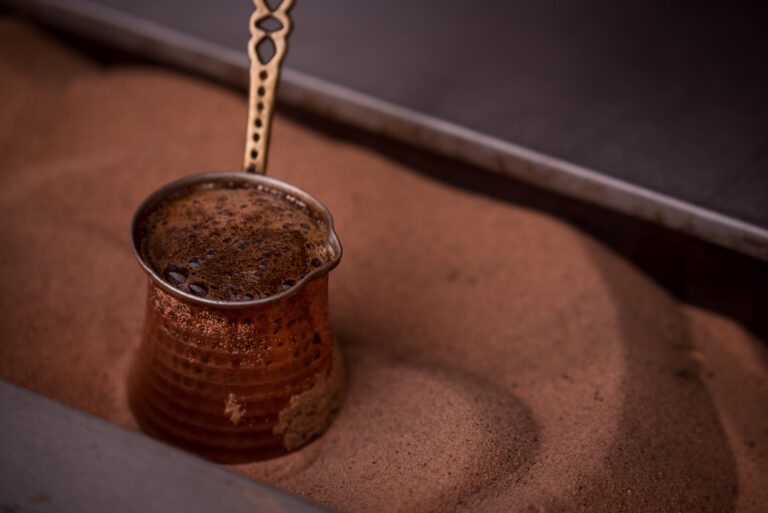
Alongside the standard espresso culture inherited from French and Spanish influence, Morocco has its own tradition of coffee prepared with spices – known broadly as qahwa bel bharat, or simply café des épices. The spice blend varies by region and by the hand making it, but cardamom is almost always present, alongside cinnamon, ginger, and sometimes cloves or a pinch of black pepper. In some southern and Saharan areas, the blend edges closer to ras el hanout, producing a cup that is deeply aromatic and warming in a way that straight espresso is not.
It is not found everywhere – this is a traditional preparation rather than a cafe-menu standard, and tracking it down requires going beyond tourist-facing establishments. Small traditional cafes, household settings, and some riad breakfast tables are the most reliable places to encounter it. In Marrakech‘s Mellah neighborhood and in the older quarters of Fez, spice traders also sell pre-mixed coffee spice blends that make excellent souvenirs.
The flavor takes a moment to read if you are expecting ordinary coffee – the cardamom in particular dominates the first sip. But drunk slowly, in the right setting, spiced coffee is one of those quiet discoveries that tends to stay with a traveler long after the more obvious highlights have blurred together.
Fresh Orange Juice: The Simplest and Most Reliable Pleasure
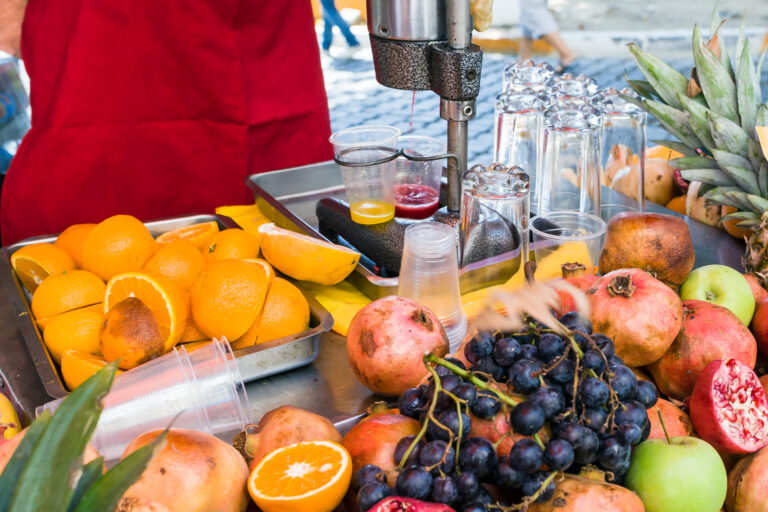
Morocco grows some of the finest oranges in the world – the fertile plains around Marrakech, the Souss Valley near Agadir, and the irrigated groves of the interior produce fruit that is intensely sweet, thin-skinned, and in season for much of the year. The result is a fresh orange juice culture that is so embedded and so affordable that it functions almost as a public utility.
In Djemaa el-Fna square in Marrakech, the rows of orange juice stalls – piled high with fruit, each attended by a vendor with a hand press – are one of the most photographed food scenes in the country. A glass costs almost nothing and is pressed while you watch. The same scene, with less theater and equal quality, plays out at juice counters throughout every Moroccan city.
There is not much to say about Moroccan fresh orange juice beyond the fact that it is exceptional and should be drunk at every opportunity. It also serves as a useful calibration tool: a juice counter that produces a good orange juice is almost certainly using fresh, good-quality fruit across the board.
Fresh Fruit Juices and Mixed Blends: The Juice Bar Culture
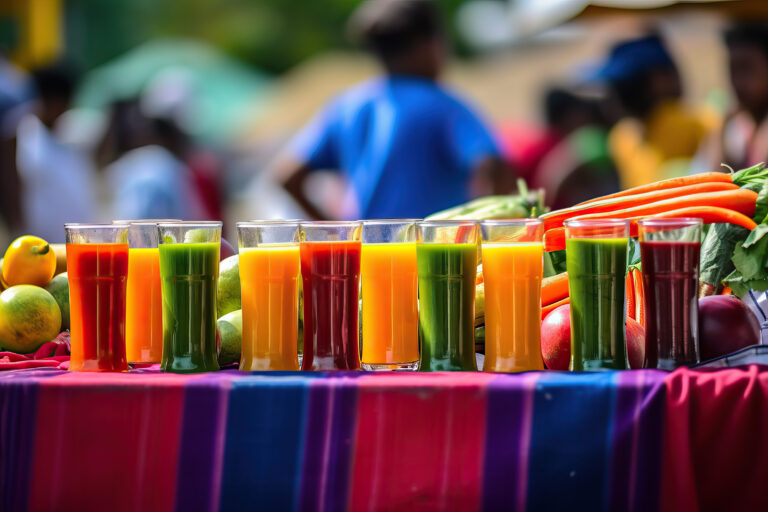
Beyond orange juice and avocado, Morocco has a thriving juice bar culture that extends across a wide range of local and seasonal fruits. Pomegranate juice – pressed from the deep-red varieties grown in the Middle Atlas and Souss regions – is exceptional in autumn and winter, intensely flavored and a striking dark crimson color. Strawberry juice, made from the small, sweet strawberries grown around Moulay Idriss and in the Gharb plain, appears in spring and is worth drinking in quantity while the season lasts.
Watermelon juice is a summer staple, thin and refreshing in a way the thicker smoothies are not. Prickly pear juice – made from the fruit of the cactus that lines roads throughout the country – has a subtle, sweet, slightly floral flavor that is specific to Morocco and to the season from late summer into autumn.
Many juice bars also offer mixed blends – combinations of banana, apple, orange, and whatever fruit is in season – that vary by establishment and by the preferences of the person behind the blender. These are less specific and less interesting than the single-fruit options, but in the hands of a good juice bar, a well-balanced blend can be excellent.
The general rule: order what is in season and what the bar seems to sell most of. A juice bar that is pressing pomegranates by the basketful is making pomegranate juice worth drinking. One that is blending a single tired avocado is not.
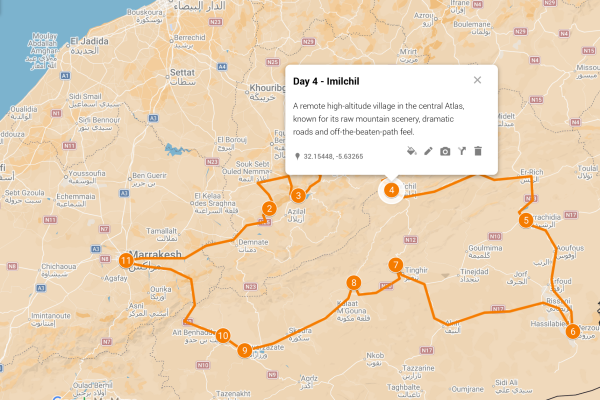
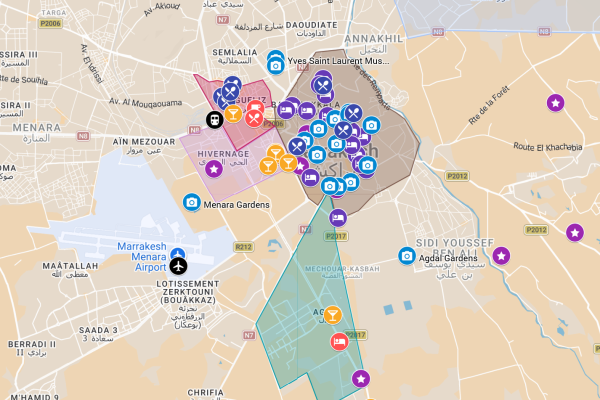
Plan your Morocco Trip with our Free Morocco Travel Maps
Ready-made itineraries for 3, 7, 10 and 14 days
Best spots by city, coast, desert & mountains
Handpicked hotels, riads & resorts
Restaurants, viewpoints & activities
Key neighborhoods & transport tips
Free access. Regular updates. No spam.
Avocado Smoothie: The Moroccan Interpretation
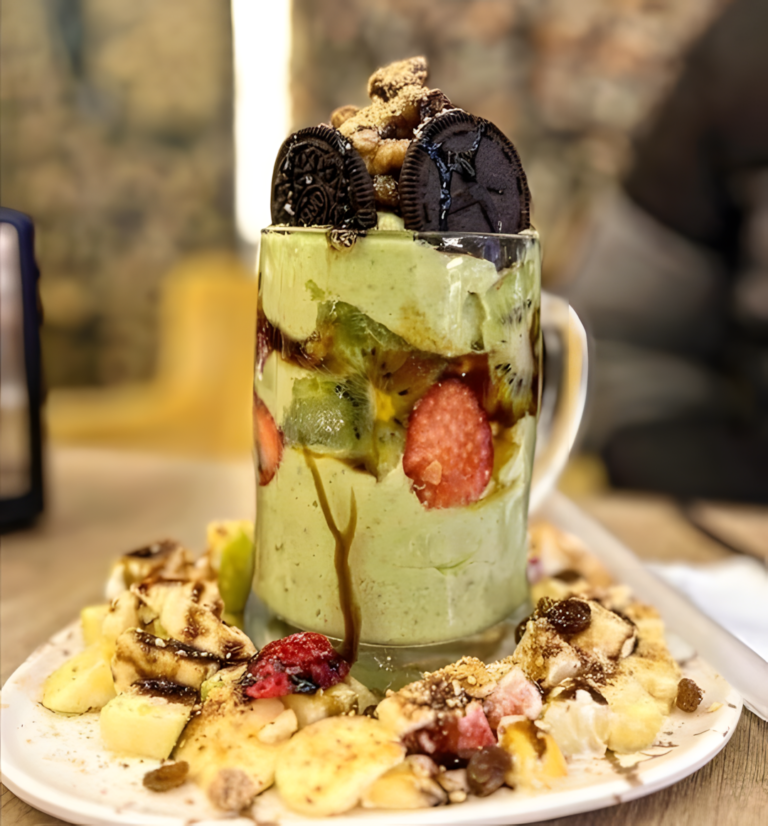
Avocado smoothies – thick, cold blends of ripe avocado with milk, sugar, and sometimes a splash of orange blossom water – have been a fixture of Moroccan juice bars for decades, predating the global avocado trend by a considerable margin. Morocco grows avocados along its Atlantic coast and in the southern regions, and the fruit has long been treated as a smoothie ingredient rather than a savory one in the local food culture.
The most celebrated version is zaazaa – a drink that exists on a wide spectrum between the indulgent and the wholesome depending on who is making it. At its most decadent, zaazaa is a layered production: avocado blended with milk and sugar, topped with a pour of honey, a drizzle of chocolate syrup, a scattering of chopped nuts, and sometimes a crown of whipped cream. At its more restrained end, the same base is served simply with honey and a few drops of orange blossom water, letting the quality of the avocado speak without interference. Both versions are legitimate, and the gap between them tells you something about the establishment serving it.
The result, in any form, is thick and substantial – closer to a cold dessert than a refreshment. It is not a thirst-quencher. Ordered in the mid-afternoon as a break from walking, it functions more as a small meal, and should be approached accordingly. In Marrakech, Casablanca, and Agadir, dedicated juice bars offer versions of considerable quality, and zaazaa has become something of a signature drink – the one locals recommend when visitors ask what to order.
Raib: Fermented Milk Worth Understanding
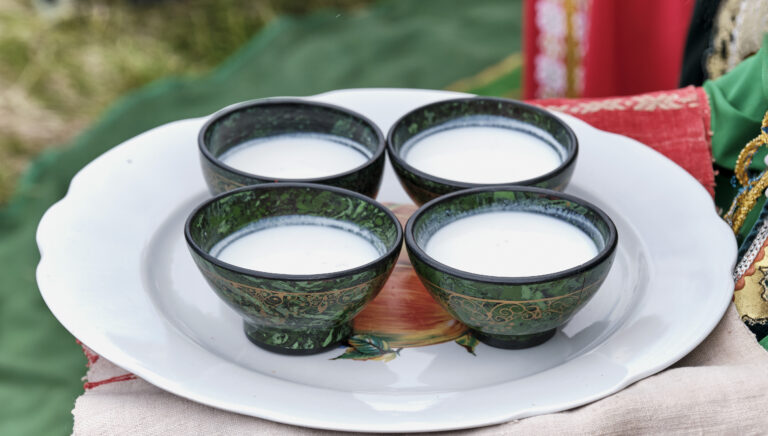
Raib is a Moroccan fermented milk product – thick, cold, slightly tart, and set like a loose yogurt. It is made from whole cow’s milk fermented with a starter culture, producing a drink-eat hybrid that sits somewhere between drinking yogurt and a very soft set yogurt. The flavor is clean and lactic, with a freshness that is not sour in the way that European-style yogurt drinks can be.
It is sold in small plastic cups or glass bottles at corner shops, supermarkets, and dairy counters throughout Morocco, often alongside other fermented dairy products. Several Moroccan dairy brands produce it commercially, and the quality is generally reliable – raib is one of those products where the industrial version is genuinely good.
For travelers, raib is most likely to appear at a Moroccan breakfast spread or as a standalone purchase from a local shop. It is an excellent heat-weather drink – cold, satisfying, and less sweet than juice. Visitors who approach it expecting something similar to a commercial smoothie are sometimes caught off guard by the sourness, but those who come to it with an open frame of reference tend to find it immediately appealing.
Lben: The Buttermilk That Runs Through Moroccan Daily Life
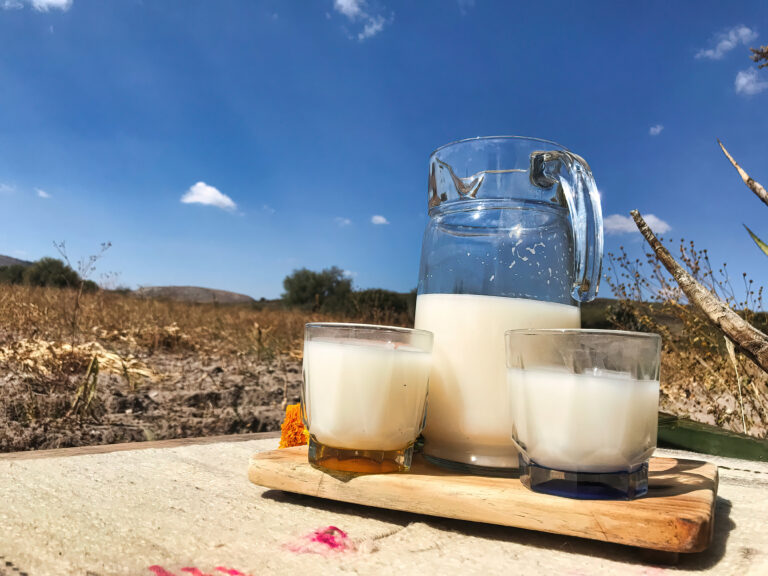
Lben is Moroccan buttermilk – the liquid left after butter has been churned from fermented cream – and it is one of the most deeply embedded drinks in the country’s food culture. Thin, sharply tangy, and slightly effervescent when fresh, it is drunk cold and straight, without sweetening, and it is extraordinarily good at what it does: cooling the body, cutting through fat, and providing a kind of reset between mouthfuls of rich food.
It is drunk at meals, between meals, and in summer as a thirst-quencher in its own right. At roadside stalls in the countryside, particularly in the Atlas mountains and in rural areas of the south, cold lben sold in small plastic bags or recycled bottles is one of the most refreshing things available in hot weather. In cities, it is found at dairy shops and in the refrigerated sections of most supermarkets.
The flavor is an adjustment for visitors who have not encountered genuine buttermilk before – it is more acidic and thinner than yogurt drinks, and it is not sweet. But it pairs exceptionally well with Moroccan bread, couscous, and fried food, and understanding it as a food-pairing drink rather than a standalone refreshment makes its place in the culture immediately logical.
Alcohol in Morocco: What Travelers Should Know
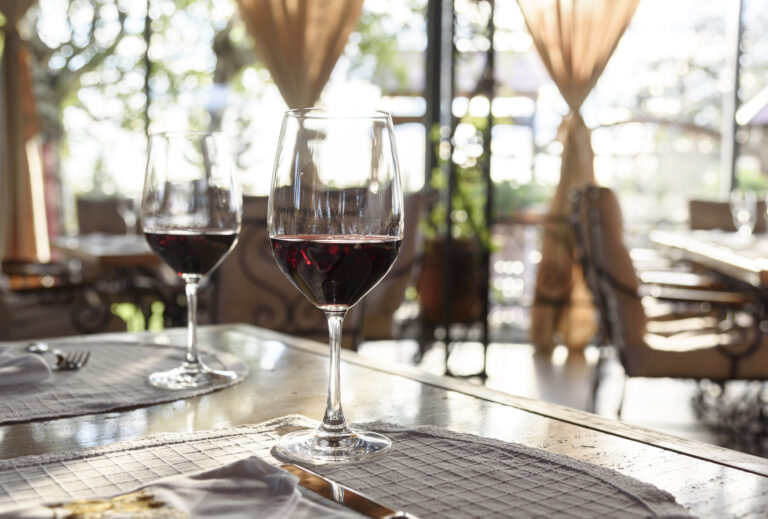
Alcohol is available in Morocco, especially in larger cities, beach destinations, and tourist-friendly areas, where many hotels, resorts, restaurants, bars, and selected shops serve it without difficulty. For most travelers, enjoying a drink is straightforward as long as it is done in the right setting. Morocco is simply a country where alcohol is approached with a bit more discretion than in many Western destinations, so the experience tends to feel more low-key and relaxed rather than openly visible everywhere.
For visitors, the most interesting alcoholic drinks to try are usually Moroccan wines and local beers. Morocco has a long wine-making tradition, with the Meknes region being especially well known for its vineyards and production. Local wines can be a pleasant surprise, and they often pair very well with Moroccan food. On the beer side, travelers will commonly come across Moroccan labels such as Casablanca, Flag Spéciale, and Stork. In many cases, local wine and beer are also the best-value options compared with imported drinks.
In practical terms, this is not something travelers usually need to worry much about. If you would like a glass of wine with dinner or a beer at a hotel, beach resort, or licensed restaurant, you can generally do so quite easily. Availability may be a bit more limited during Ramadan or in more conservative areas, but in the main tourist destinations, alcohol remains easy enough to find. The simplest way to frame it is this: Morocco is not a party destination in the European sense, but travelers who enjoy wine or beer can usually do so comfortably and without hassle in the appropriate places.
Page last updated: June 2026
Anything we can improve? Let us know
Plan Your Morocco Trip
Compare hotels, flights and rental cars
Compare hotels, riads and guesthouses across Morocco on Booking.com:
Compare flights to Morocco on Aviasales:
Find the right rental car for your Morocco trip with EconomyBookings: