Moroccan Architecture & Design
Morocco’s built environment is one of the most distinctive in the world. From the inward-facing courtyard houses of the medinas to the earthen towers of the southern valleys, the country’s architecture is immediately recognizable – and deeply worth understanding.
What you see is the result of centuries of exchange between Amazigh, Arab, Andalusian, and sub-Saharan African traditions, refined into something entirely its own. The more you notice, the more rewarding it becomes.
An Architecture Turned Inward
The defining principle of Moroccan architecture is privacy. Where European buildings present themselves to the street, Moroccan ones conceal their richness behind plain facades. The grandeur is saved for what lies inside.
This reflects deeply held values around family life and the separation of public and private space. The street belongs to everyone. The home belongs to its inhabitants.
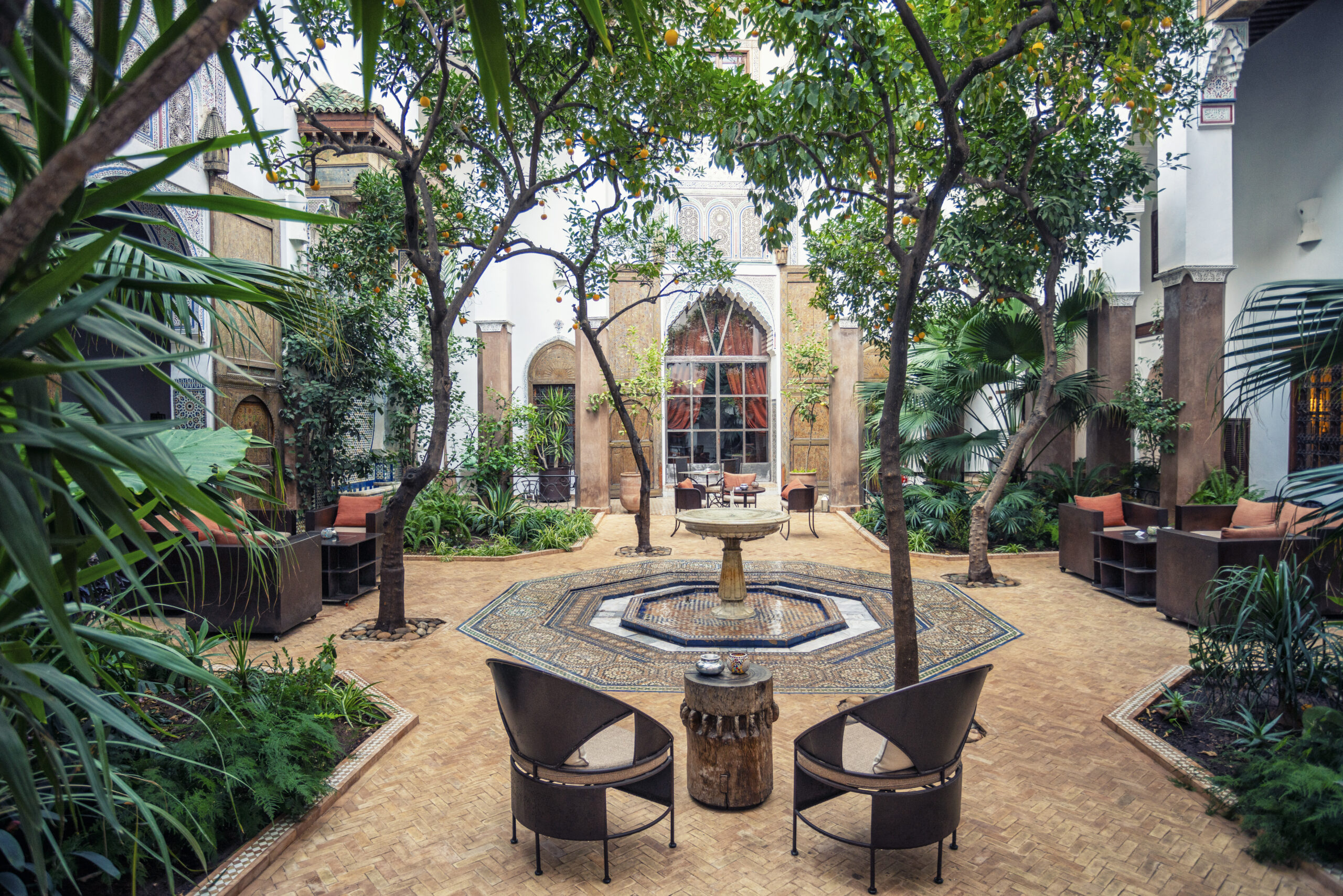
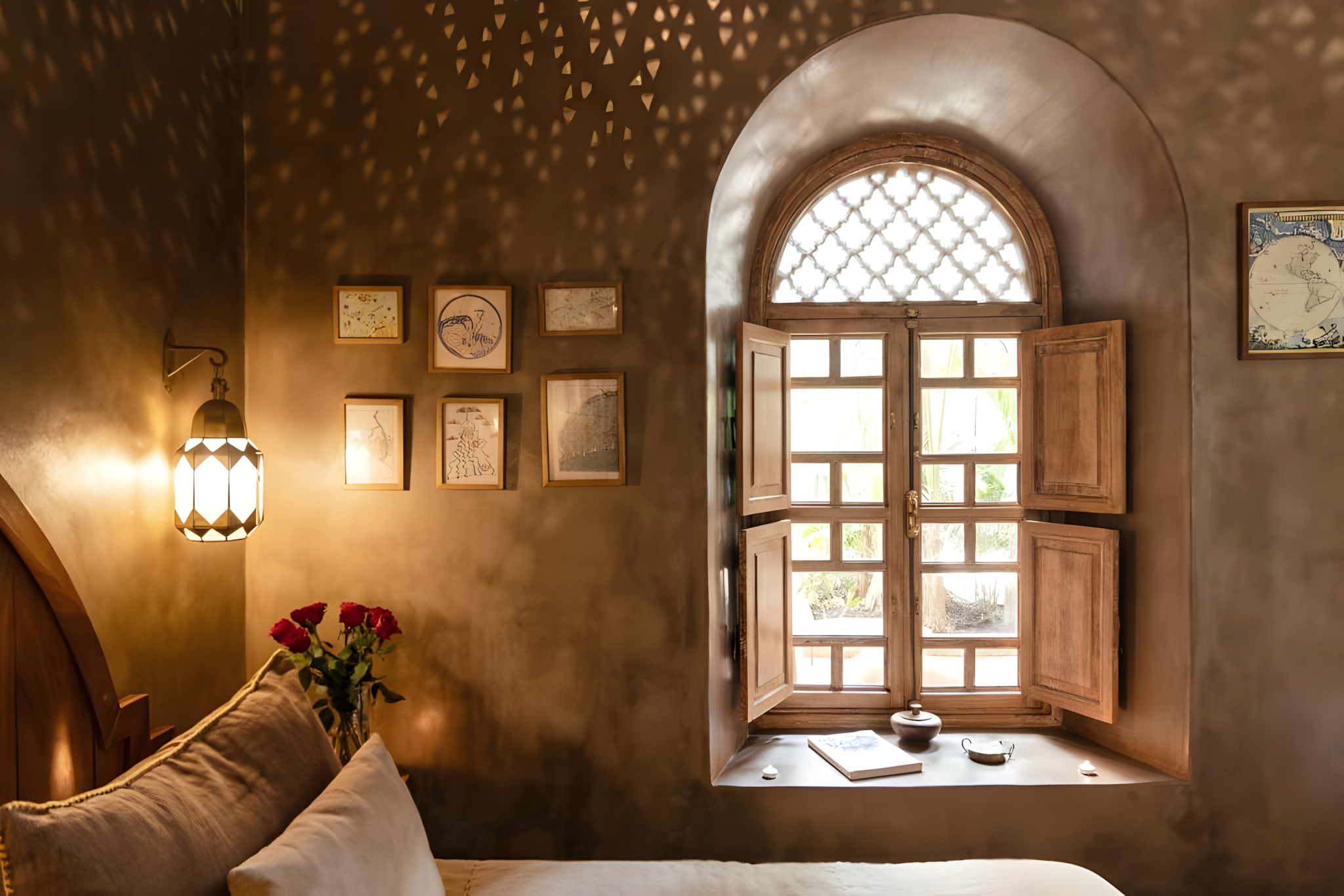
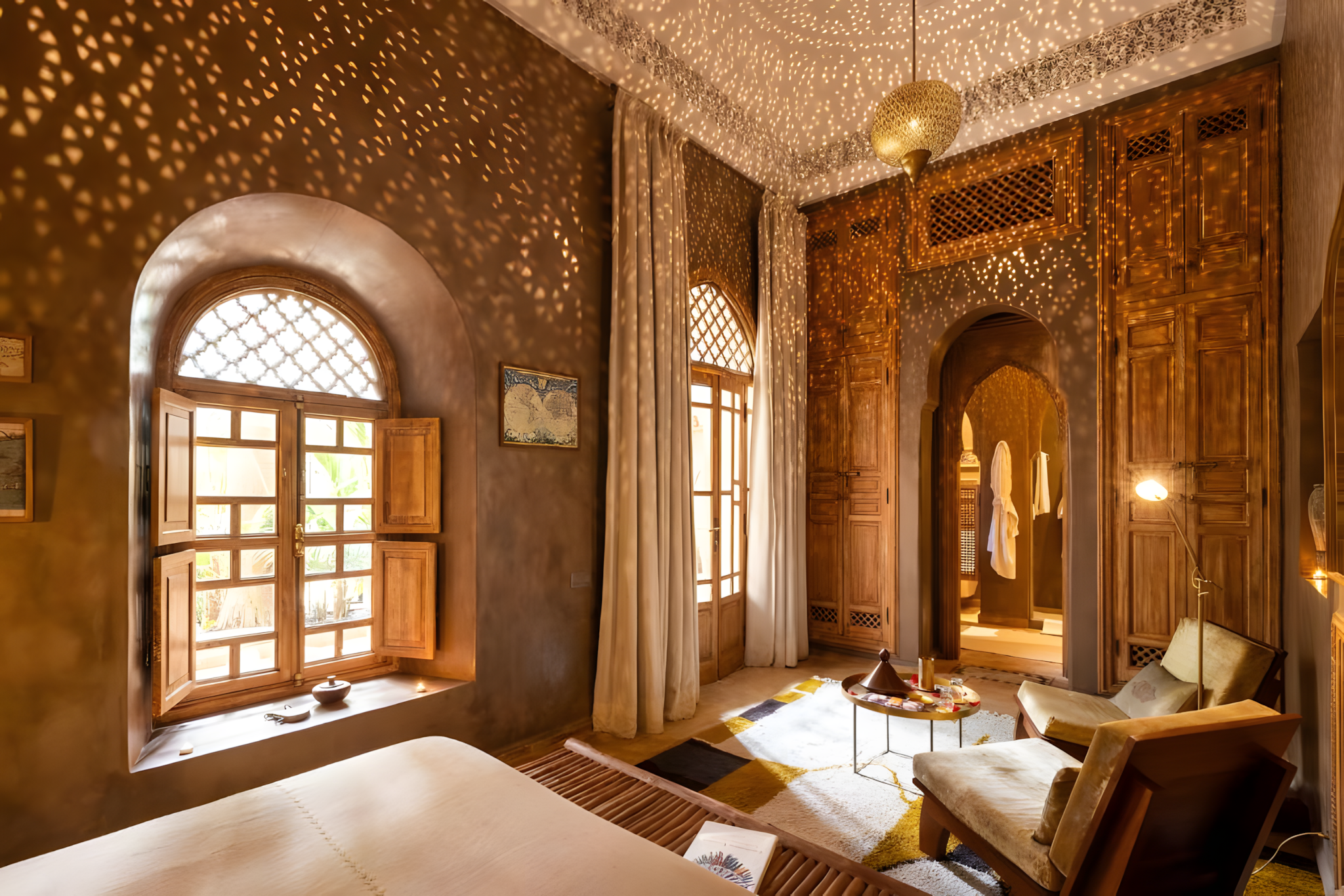
The riad – a traditional urban house organized around a central courtyard – is the clearest expression of this logic. Rooms face inward. Light enters from above. A fountain or small pool sits at the center, cooling the air and anchoring the space.
Riads are also practical responses to a hot, dense urban environment. Thick walls insulate. High ceilings let warm air rise. The open courtyard creates natural ventilation. Form and climate work together.
Many of Morocco’s finest riads have been restored as boutique hotels. Staying in one gives you direct access to this spatial experience – and changes how you read the medina around you.
The Design Elements That Define Moroccan Interiors
Moroccan interiors are built from a specific set of materials and techniques. Each has its own craft tradition. Together they create a visual language that is immediately recognizable and endlessly varied.
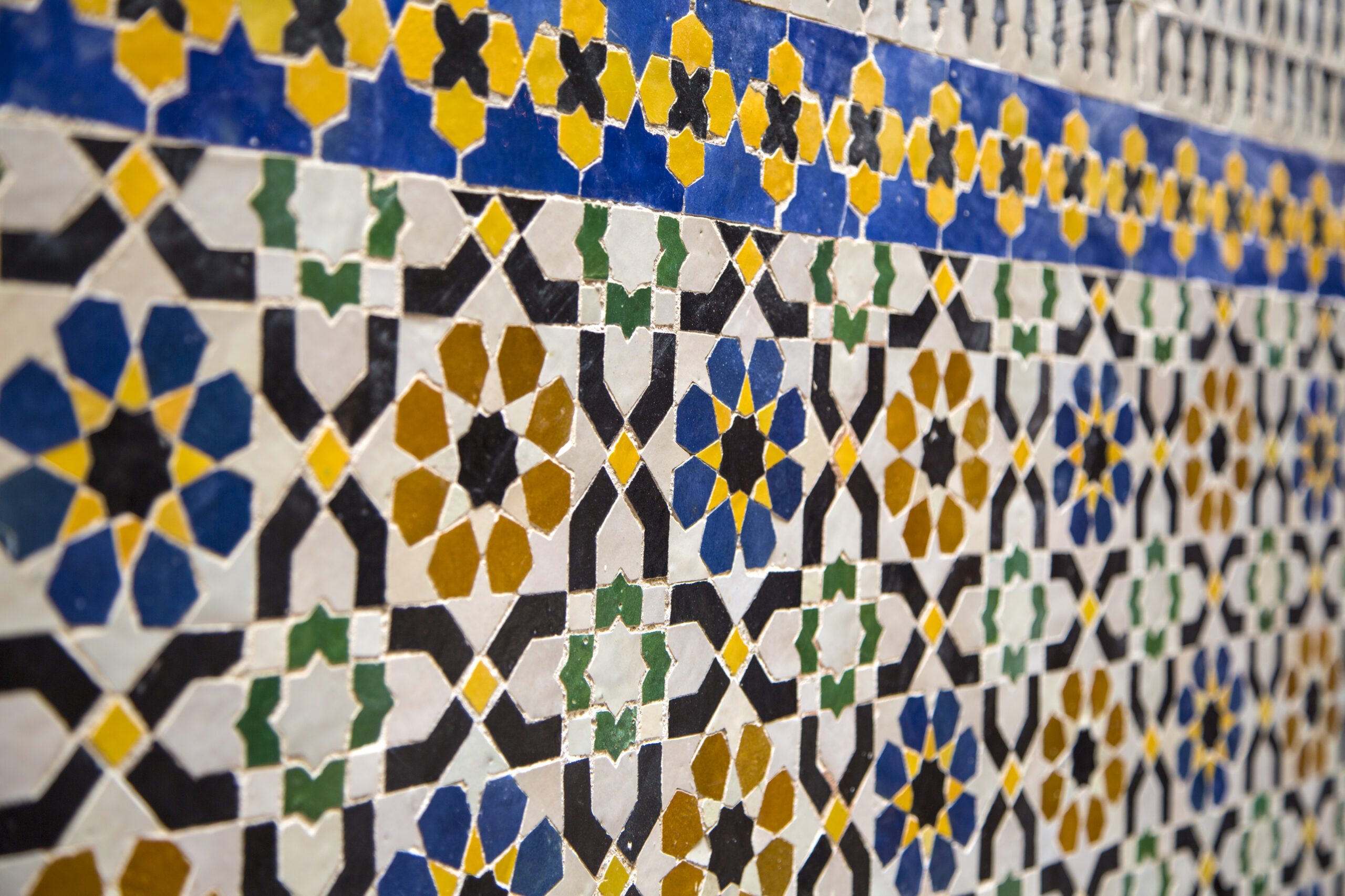
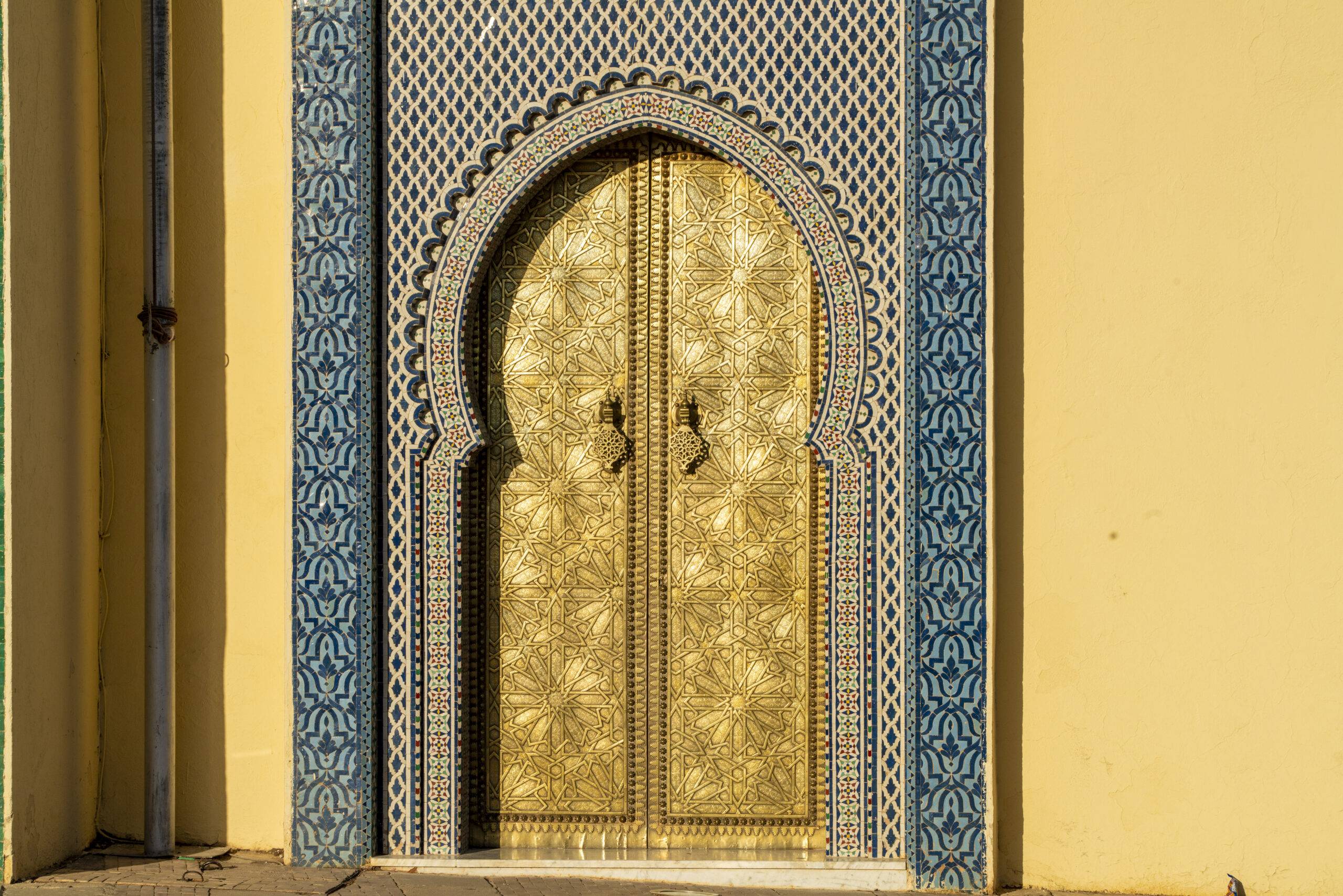
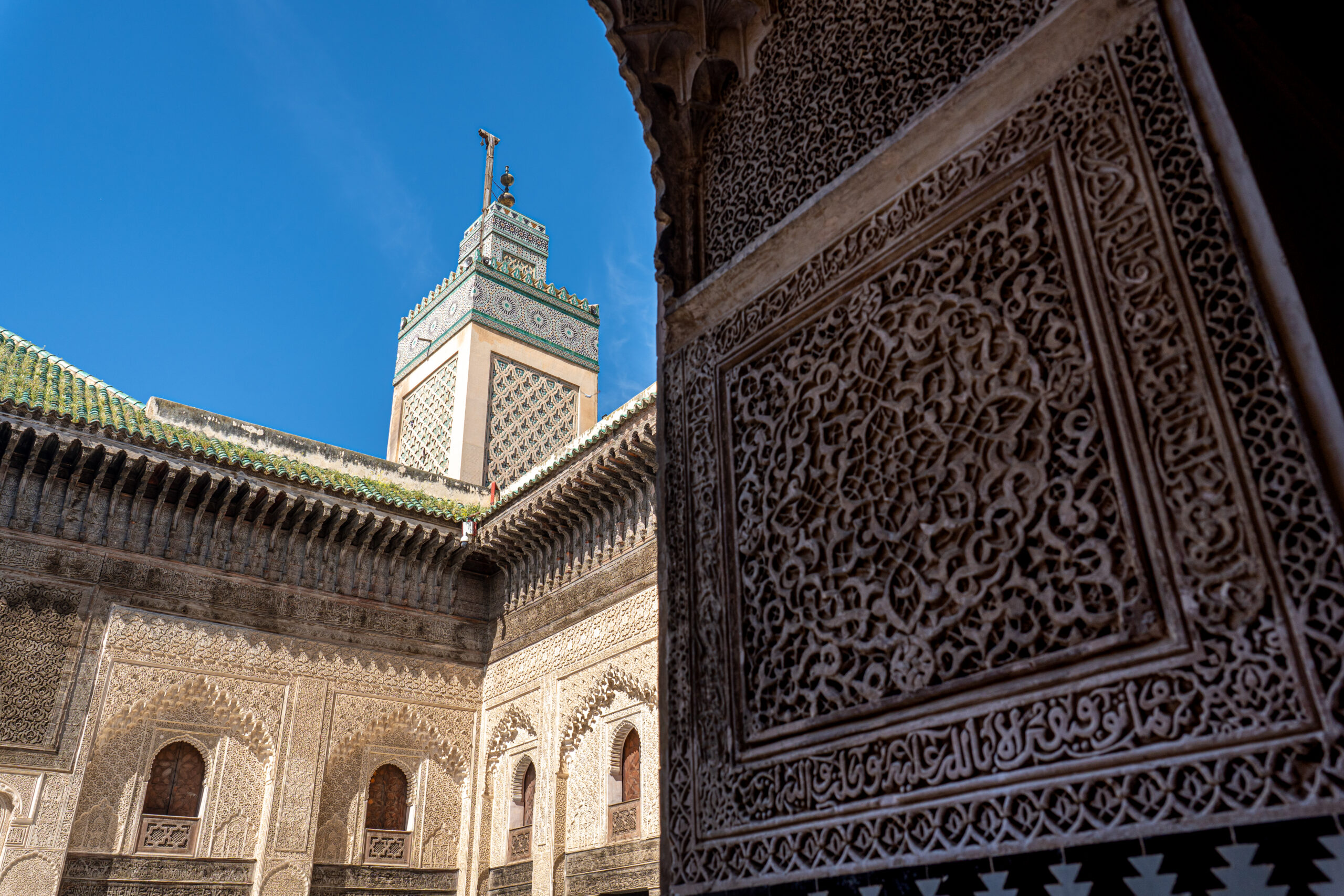
Zellige is hand-cut geometric tilework, assembled piece by piece from individually glazed ceramic chips. The patterns draw on mathematical principles developed in the Islamic world, producing designs of extraordinary complexity from simple repeated units. The finest work is found in Fes, where the craft has been practiced for over a thousand years.
Tadelakt is a polished lime plaster native to Morocco, traditionally used in hammams for its water resistance. Burnished with flat stones and sealed with black soap, it produces a surface that is smooth, slightly luminous, and warm in tone. Contemporary designers worldwide have adopted it, but the craft remains rooted here – particularly in Marrakech.
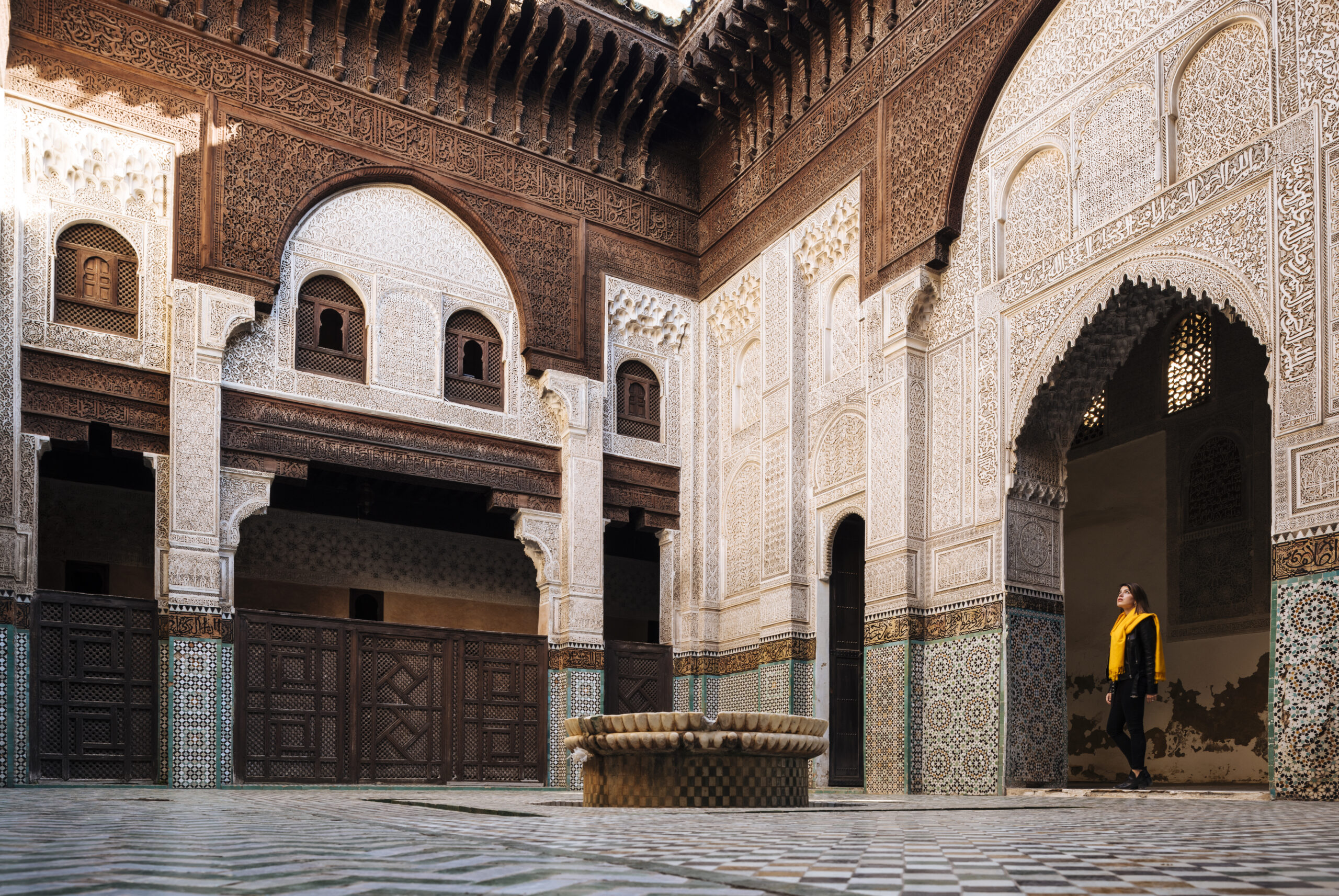
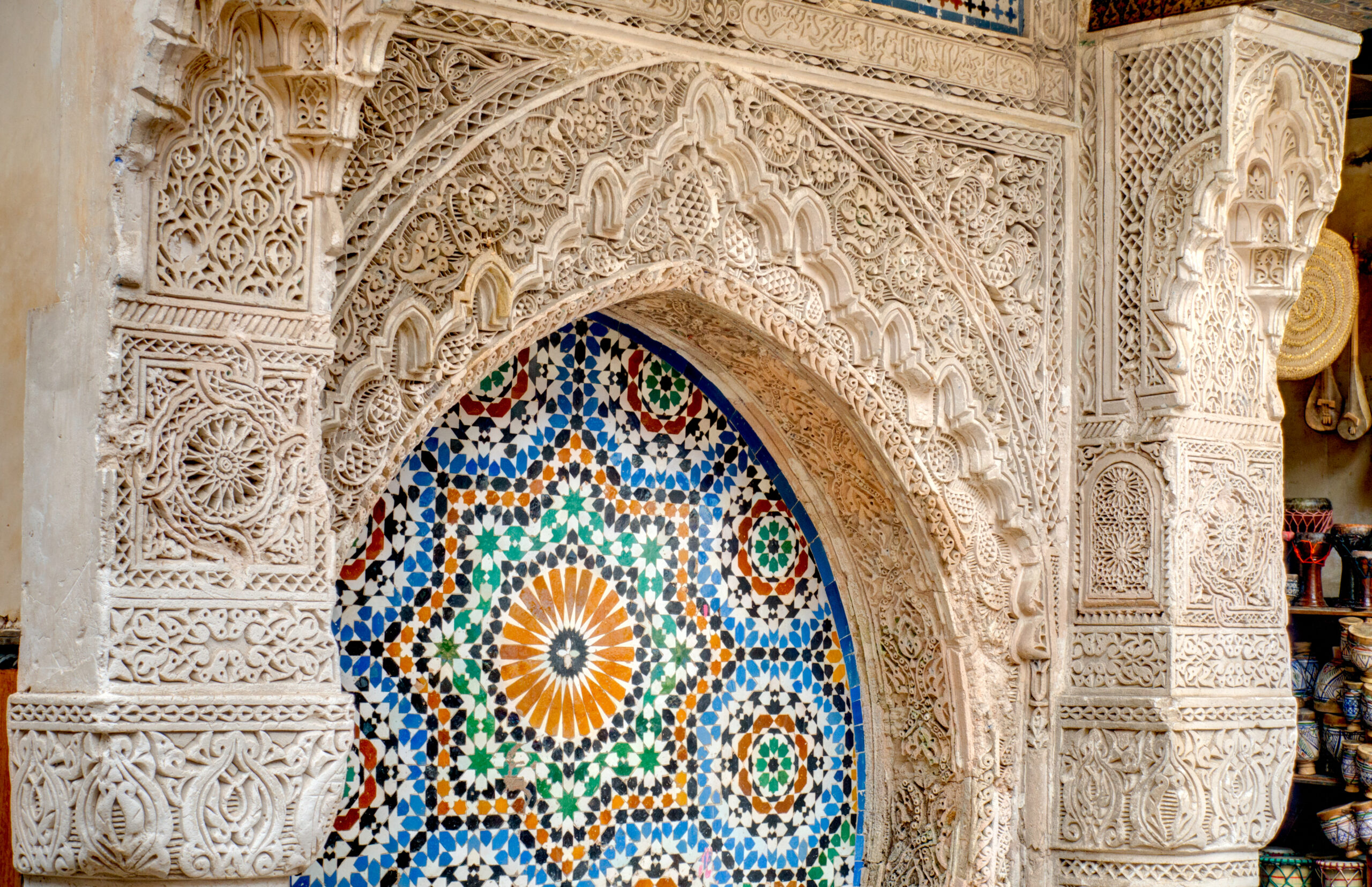
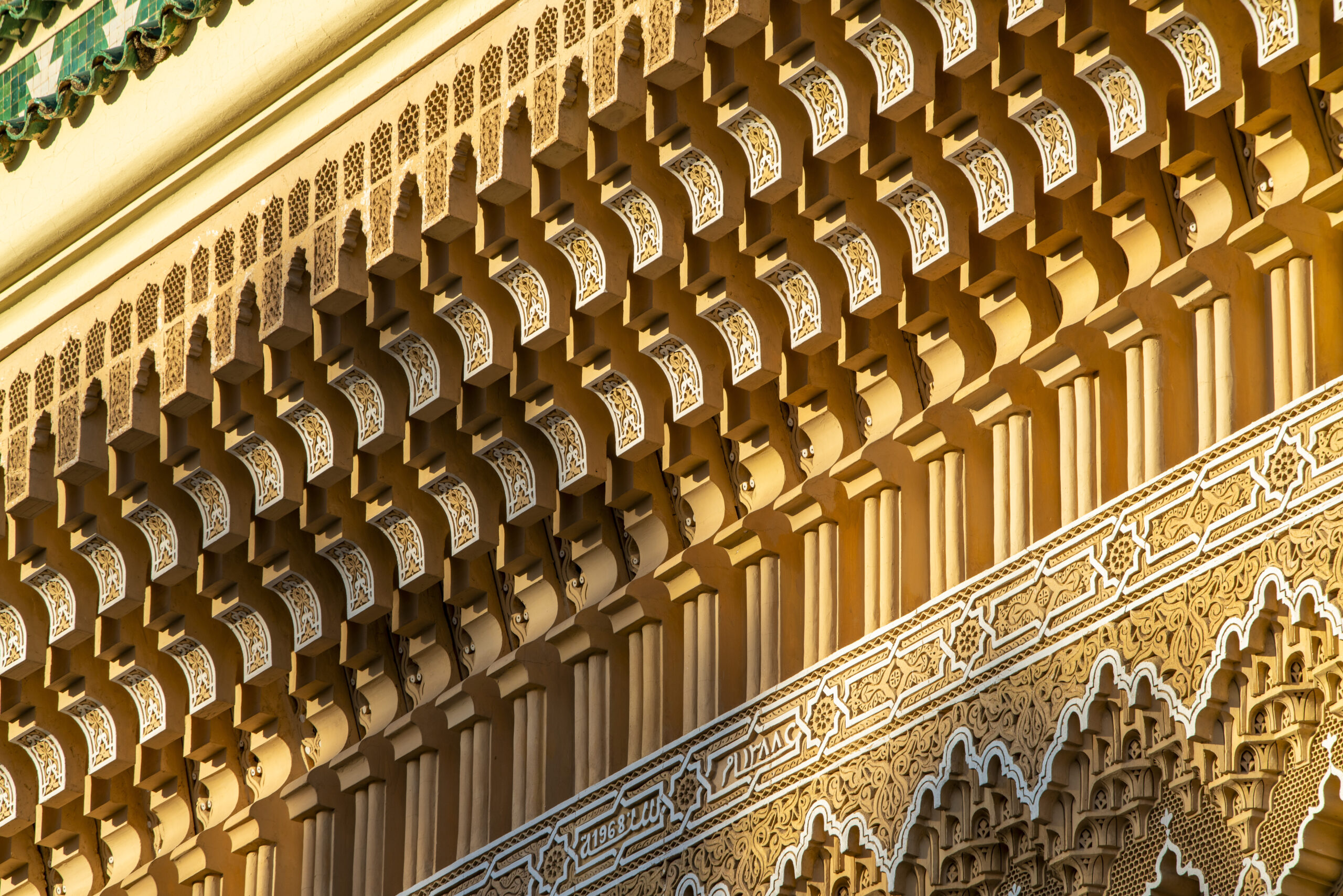
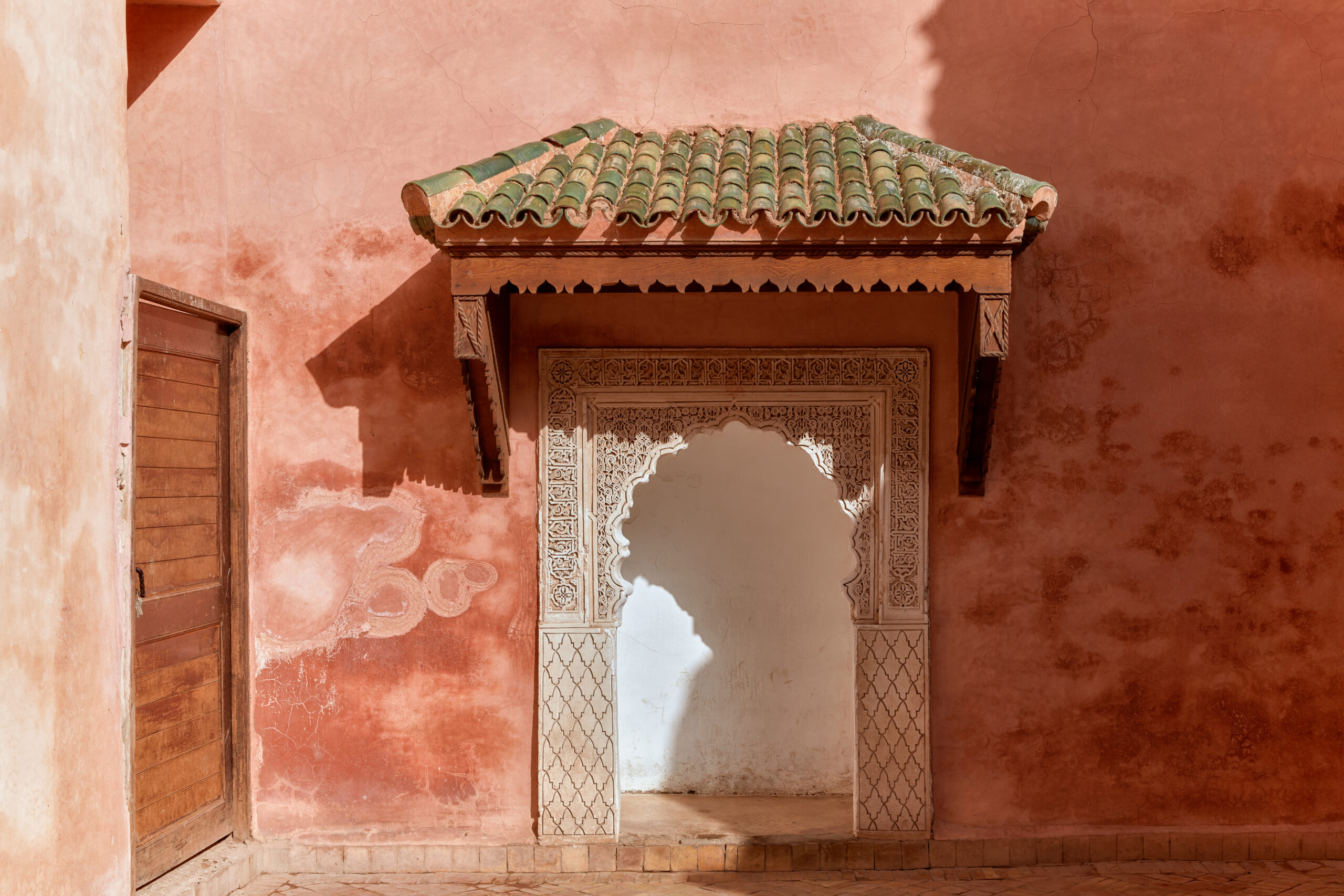
Carved plaster and cedar wood complete the picture. Moroccan interiors are typically layered in horizontal zones: zellige tiles at the base, carved plaster panels in the middle, and carved cedarwood ceilings or screens above. The plasterwork is chiseled by hand after drying. The cedarwood – sourced from the Middle Atlas – is used for painted ceilings, latticed screens, and the muqarnas vaulting that fills arches with fractured geometric light.
Arches and doors give Moroccan architecture much of its street-level character. The horseshoe arch – inherited from the Moorish tradition of Andalusia – appears in medina gates, mosque doorways, and the arcades of riads. Studded cedar doors mark the entrances to homes and palaces, often the only ornamented element on an otherwise plain facade.
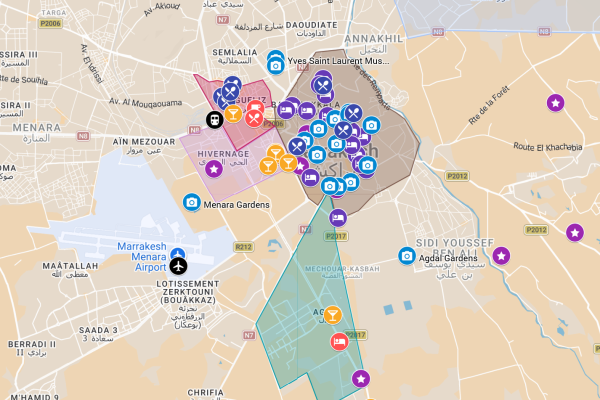
Plan your Morocco Trip with our Free Morocco Travel Maps
Ready-made itineraries for 3, 7, 10 and 14 days
Best spots by city, coast, desert & mountains
Handpicked hotels, riads & resorts
Restaurants, viewpoints & activities
Key neighborhoods & transport tips
Free access. Regular updates. No spam.


Earthen Architecture: Kasbahs and Ksour
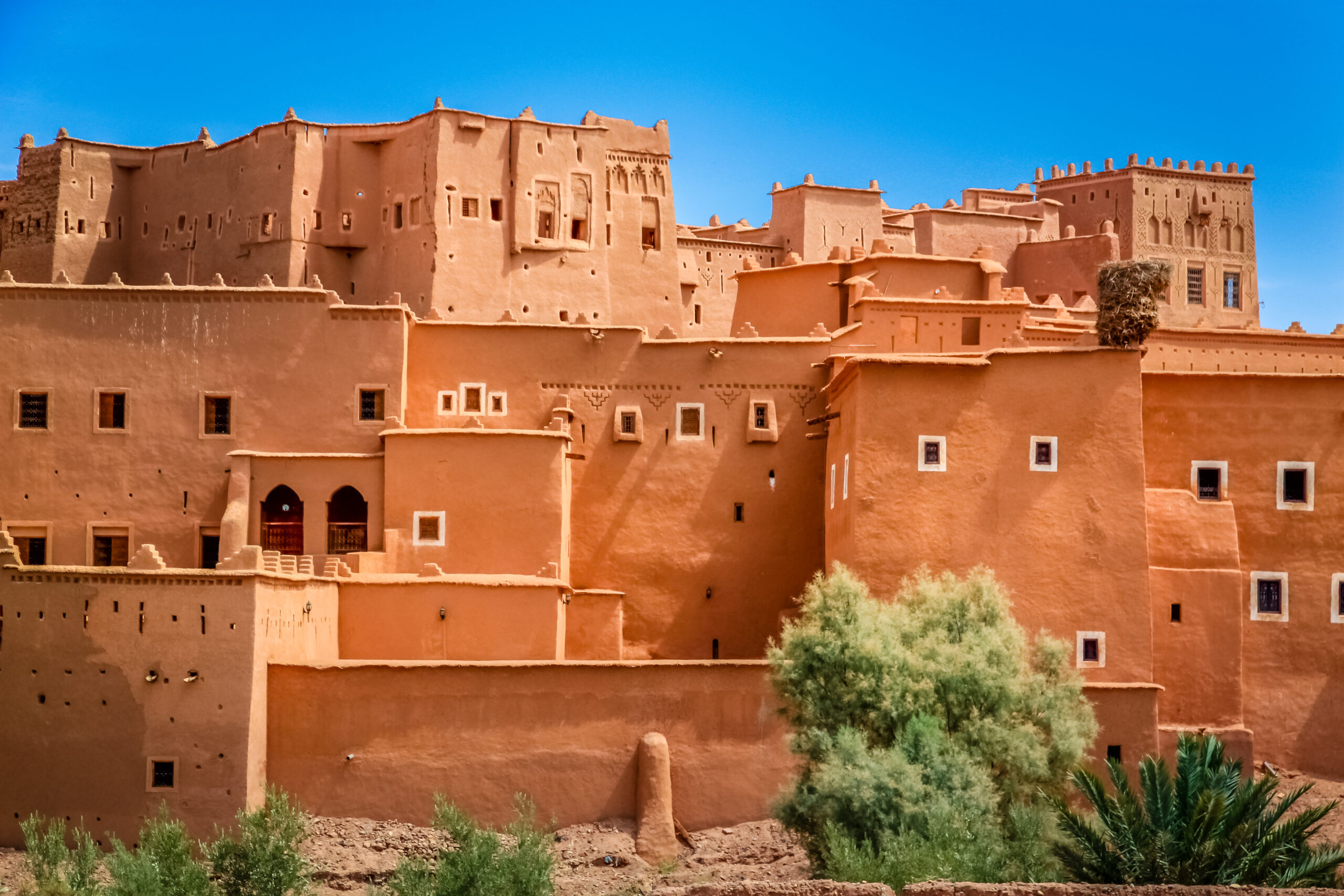
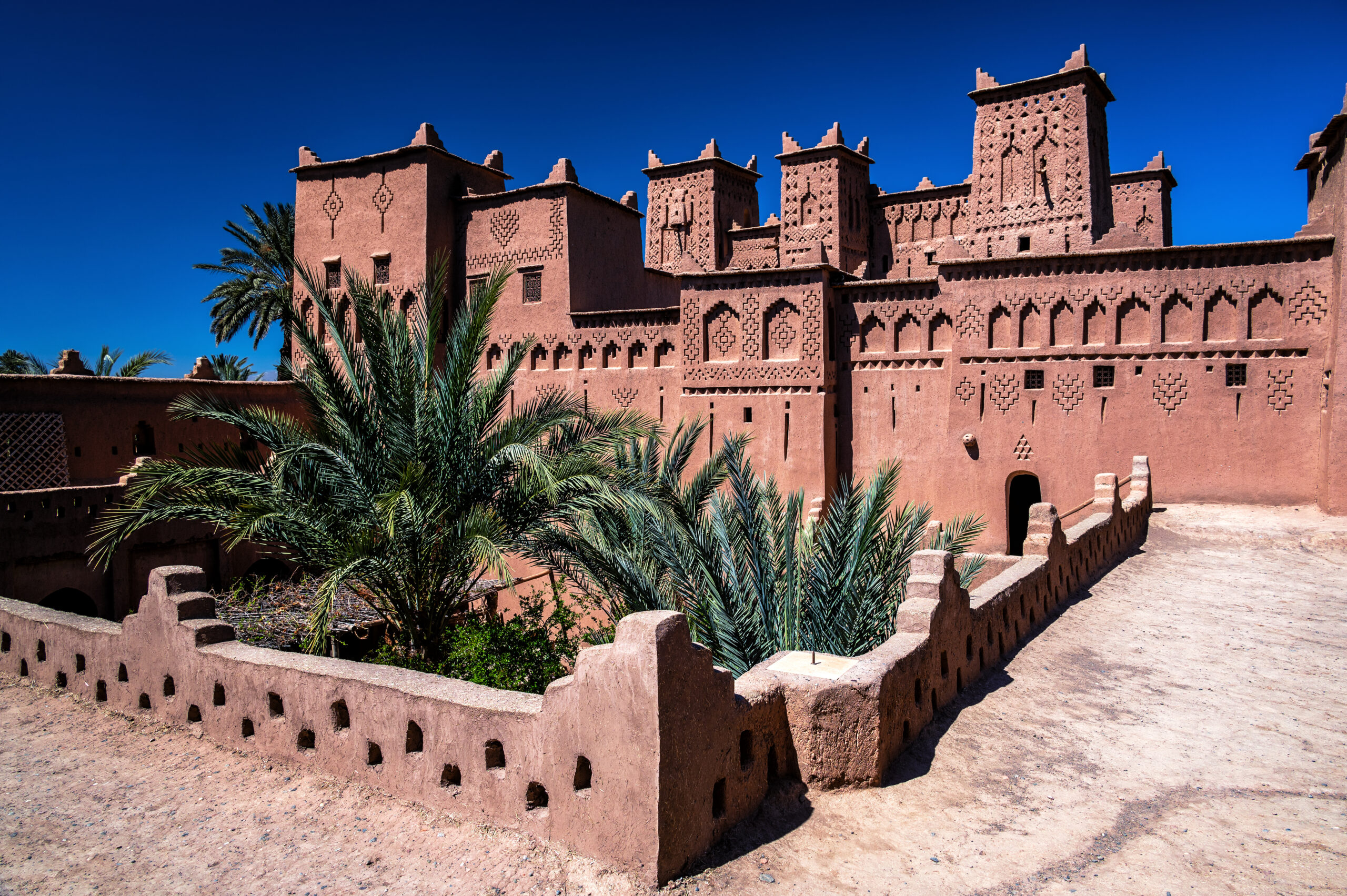
Beyond the medinas, Morocco’s most dramatic architectural tradition is built from rammed earth and mud brick. The kasbahs (fortified residences) and ksour (fortified villages) of the south are among the most striking structures in the country.
The Draa Valley, the Dades Gorge, and the routes through the pre-Saharan region are lined with these towers. They rise four or five stories, tapering as they climb, their surfaces decorated with geometric patterns pressed into the mud before it sets. Warm ochre tones merge with the surrounding rock and desert so completely that the buildings seem to grow from the landscape.
The thick mud walls are also highly functional: they absorb heat through the day and release it slowly at night, maintaining stable interior temperatures without any mechanical system.
Aït Benhaddou – a UNESCO World Heritage Site on the old caravan route between the Sahara and Marrakech – is the most visited example. Smaller ksour along the Draa Valley often feel more intact and less frequented.

Regional Character
Moroccan architecture is not uniform. Each city and region has its own distinct character.
Fes is where historic Islamic architecture reaches its most formal expression. The medina – one of the largest car-free urban areas in the world – contains the country’s densest concentration of monuments: madrasas, mosques, fondouks, and historic mansions layered over a thousand years of continuous urban life.
Marrakech is warmer and more sensuous. Its signature terracotta-pink walls give the city an immediate visual identity. Interiors lean toward lush planting, garden courtyards, and Andalusian-influenced pavilions. The Bahia Palace and the ruins of El Badi give the best sense of the city’s historic palatial scale.
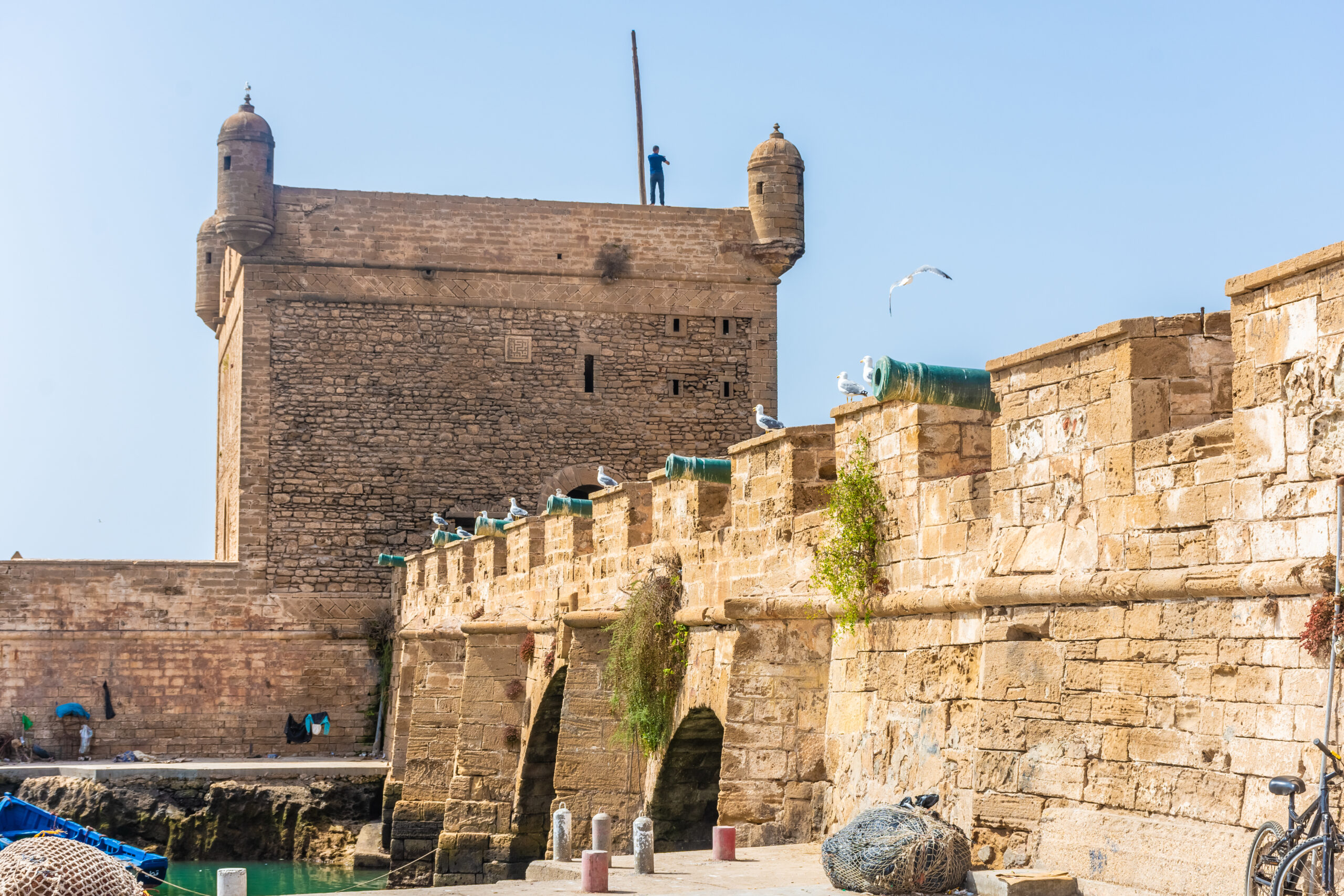
On Morocco’s Atlantic coast, Essaouira stands apart. Shaped by Portuguese and later French influence, its medina is built from whitewashed walls, blue shutters, and barrel-vaulted arcades. The ramparts and fortified harbor face the Atlantic, giving the city a maritime character unlike anywhere else in Morocco.
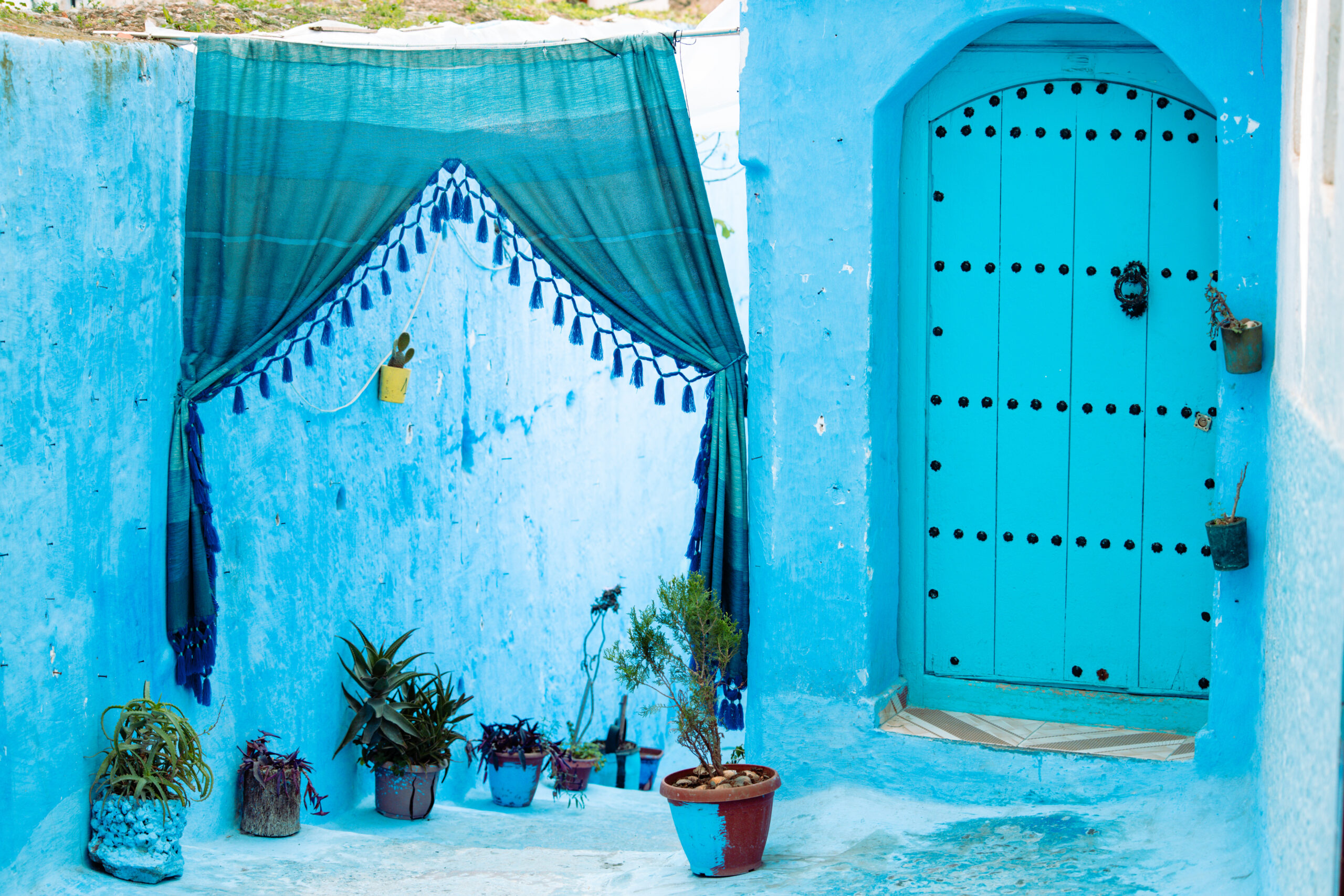
Set in the Rif Mountains, Chefchaouen blends a strong mountain identity with a clear Andalusian imprint shaped by waves of refugees from Spain after the Reconquista. Its blue-washed walls, tiled roofs, intimate lanes, and hillside setting give it a softer, more inward character than Morocco’s great imperial cities.
Moroccan Design and Its Global Influence
Moroccan interior design has traveled far beyond its borders. The visual language – zellige tile, tadelakt plaster, brass lanterns, carved niches, jewel-toned textiles – has been absorbed by designers worldwide and appears in boutique hotels, restaurants, and homes across Europe, North America, and beyond.
Part of the appeal is balance. Moroccan interiors are richly patterned but not chaotic. Color is saturated but disciplined. Texture is layered but purposeful. The result is warmth without clutter.
Traveling in Morocco gives you a reference point for all of it. You begin to understand what authentic zellige looks like compared to a machine-printed copy. You feel the difference between hand-burnished tadelakt and painted plaster. Visiting the craft workshops of Fes or Marrakech – where these techniques are still practiced – sharpens that understanding further.
Page last updated: June 2026
Anything we can improve? Let us know
Plan Your Morocco Trip
Compare hotels, flights and rental cars
Compare hotels, riads and guesthouses across Morocco on Booking.com:
Compare flights to Morocco on Aviasales:
Find the right rental car for your Morocco trip with EconomyBookings: